



 Audio 2G
Indiana Line is deeply rooted in the history of local HiFi, they were the budget speakers par excellence and accompanied a good part of the systems of those who could not afford products with big names like AR or Infinity. They competed, but cost significantly less, with RCF or ESB, other big names in sound broadcasting at the time. Thanks to a good communication campaign with the magazines of the time and a massive presence in stores Indiana Line literally depopulated, becoming a must-have for those who wanted performance while staying within a moderate budget.

In 2006, Coral bought the company, distributing it in many markets, including those in the East, where the quality/price ratio of the products was a decisive element, immediately getting it noticed by Audio Klan, Poland’s largest technology distributor, who became first its distributor and then its owner, investing heavily in research and development, until the present day, where Indiana Line has five lines of speakers and one of subwoofers, and where the Diva 6s under test are the new top of the line.
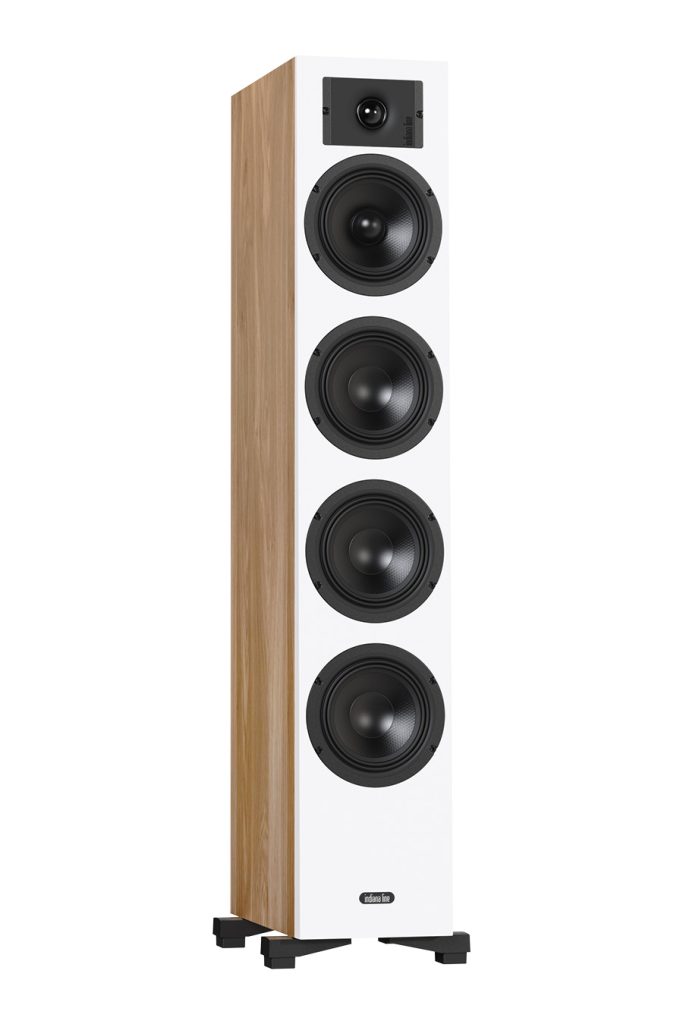
Diva 6 are floorstanding loudspeakers, available in two finishes, woodgrain black and white oak with bass-reflex loading, equipped with 3 woofers and a real 13-cm midrange as well as a 2.6-cm silk dome tweeter. Beware of manufacturers’ specifications that mention the diameter of the components by including the mounting flange, which, however, does not -obviously- contribute to the output, and this is also done by “very” excellent manufacturers. In this case while Indiana Line’s specifications mention 15cm, we consider them to be 13cm net, as indeed they are.

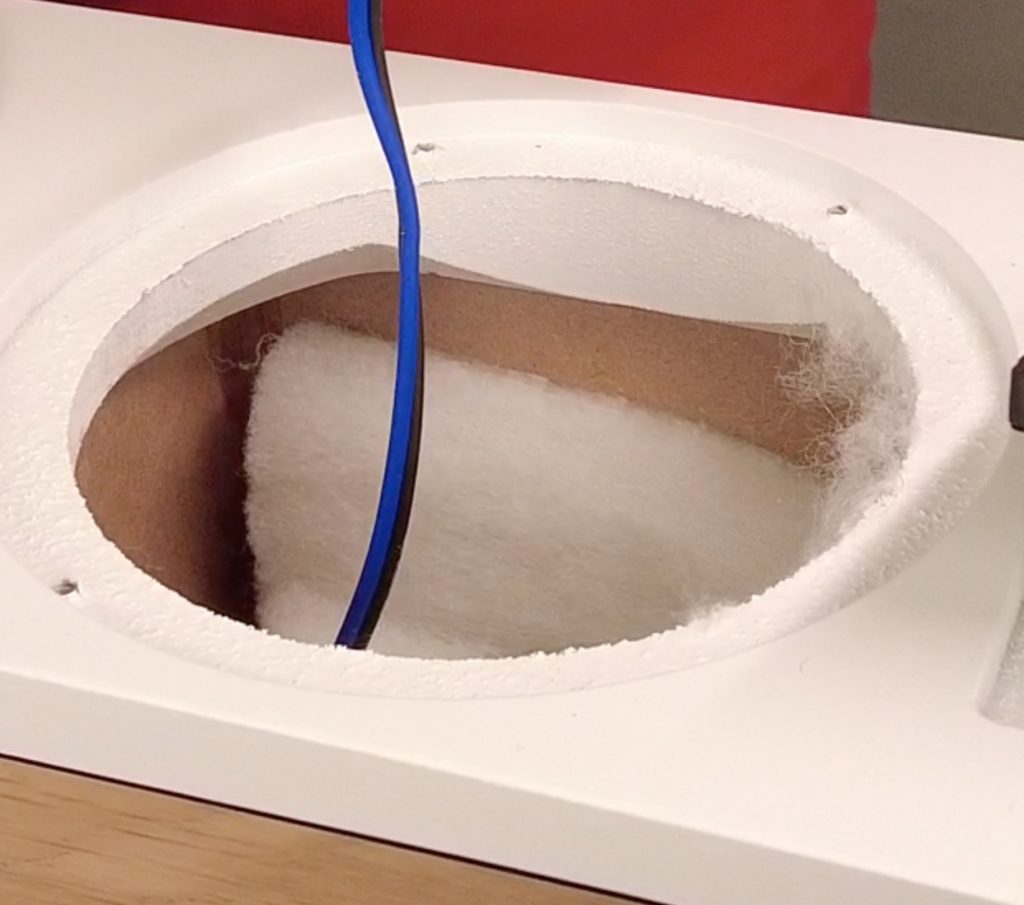
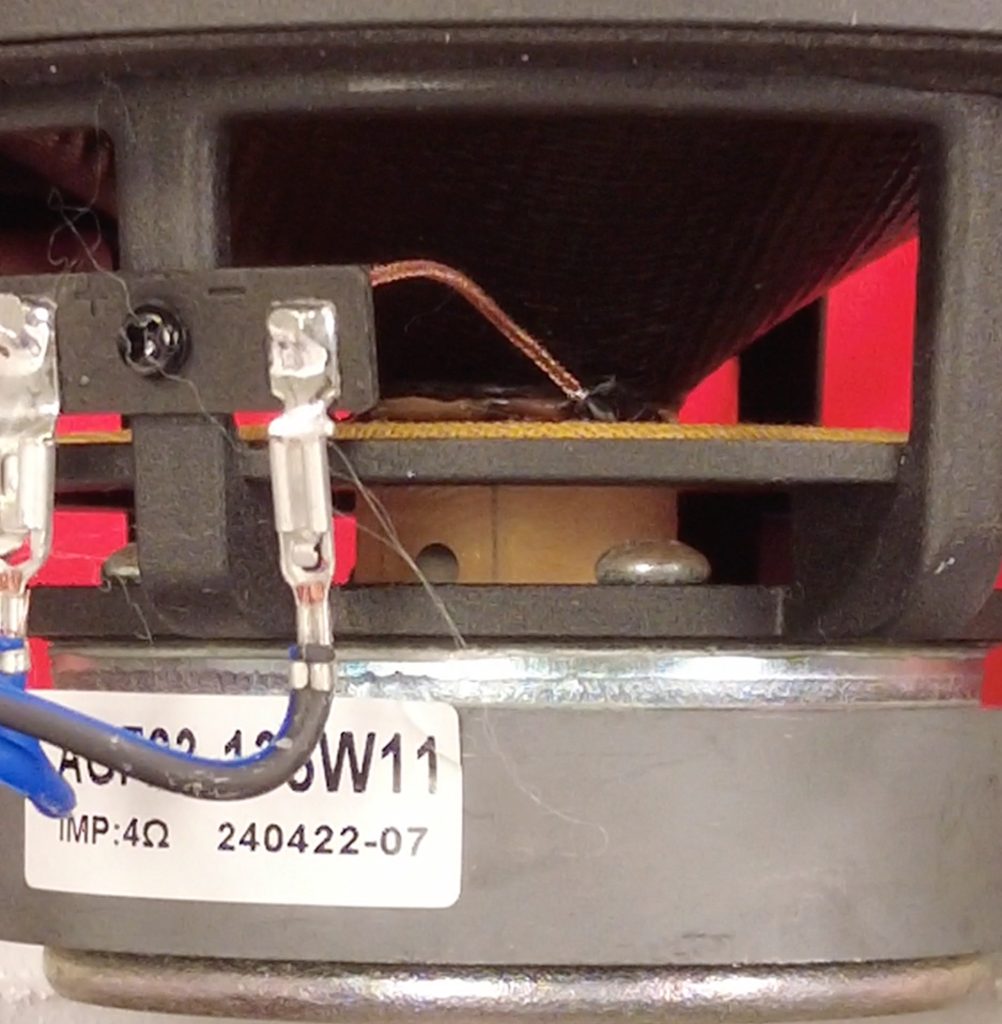
Interesting is the efficiency figure, of as much as 93dB, with a stated impedance that is not very clear, since the specifications mention compatibility with that of the amplifier, 4-8 Ω, and not the nominal of the speaker, which at a rough guess should be around 4Ω, since the 3 woofers are each 12Ω and placed in parallel. The cabinet is built quite well, MDF of adequate thickness, 2.5 to 3 cm with the front buffle machined so as to orient the emission slightly, by a few degrees, upward, and braced with numerous bracing baffles running all along the cabinet, damped with classic white polyester.
The woofer and midrange basket is made of aluminum with spokes structured to ward off reflections, and a diaphragm, which Indiana Line calls Curv Cone, is used for both, a combination of special fibers with high stiffness and internal thermoformed damping in a conical profile that is easily identifiable aesthetically because of the fine texture with which it is formed. A special feature we had already seen in the Thesis 6 the dual-wave rubber suspension, called Dual-Wave by the manufacturer, which they say extends the linear operating range for the speaker. The midrange then has a conductive aluminum shorting ring, called Aluring, and it serves to linearize the impedance as well as act as an additional dissipating element.
Convincing mono cross-over filter, good in the tweeter cell with air coils and plastic film capacitor, less rich in the midrange and midbass section, with the adoption of coils with air gap and non-polarized electrolytic capacitors, but after all, we are still dealing with a product of less than 2000 euros. Finally, the tweeter, with rubber front, has a rather sized double magnetic complex and a rear decompression chamber. Last note concerns the input terminals, which are single, and averagely robust. The speaker is finished quite well, with the front painted white or black depending on the version, while the rest of the cabinet is laminated.
Listening
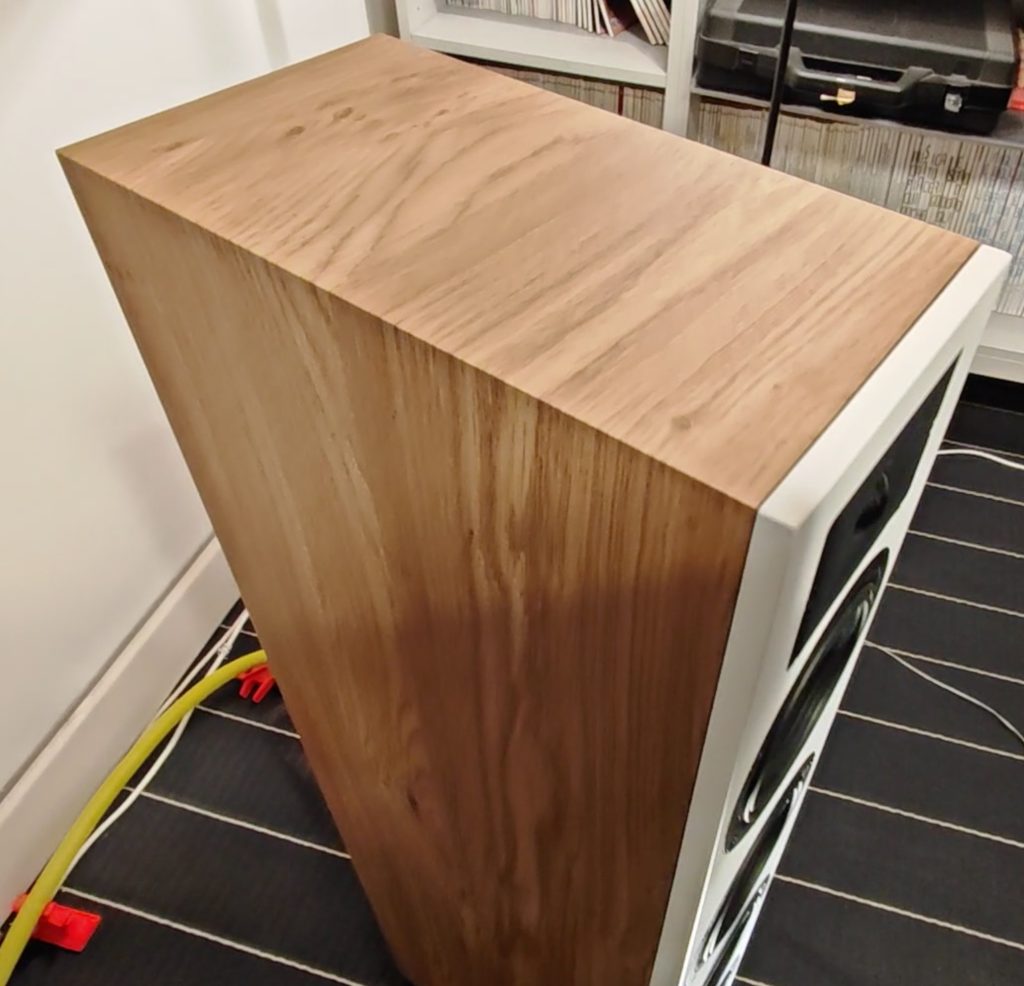
The Diva 6s are a more sophisticated speaker, without a doubt, than the Thesis 6s we had already tested. They cost twice as much, after all. The pairing must be done with an amplifier of a certain rank, one that is able to bring out the nuances of which these speakers are capable. The lower register, in particular, is very analytical and dry, suitable for all types of music and attentive listening. The midrange offers depth and speed, decent transparency and well-constructed sound planes. We are then towards the high range, which never appears too bright or even evanescent, in short convincing. The message is carried in a gritty, fast, pleasant way, and what is not insignificant, the power handling is remarkable. The finishes are laminate for the cabinet while matte lacquer for the front only, slightly inclined toward the listening point, with magnetic grills. It is the classic finish found in products of this class, nothing more nor less. Diva 6 recommend them with amplification and sources of a certain class, at least medium, having tried them with many amplifications where they were able to bring out the merits and flaws quite well.
- Manufacturer: Indiana Line
Website: www.indianaline.it
Distributor for Italy: A.S.M. Srl Contrada Cereo 2, 36078 Valdagno (VI)
Mail: info@asmdistribuzione.com
Technical characteristics:
- Alignment/type: 2.5-way floor standing
- Acoustic loading: lower bass-reflex
- Speakers: 3X15cm polypropylene Curv woofer, 1X15cm polypropylene Curv midrange, 1X2.6cm silk dome tweeter
- Frequency response: 35Hz-23kHz
- Sensitivity: 93dB
- Crossover: 300/3500
- Amplifier impedance: 4/8 ohms
- Recommended amplifier: 30-160W
- Dimensions: 957X220X335
- Weight: 18.5 kg
- Colors: black, white oak
Price: 1598 € the pair




GIPHY App Key not set. Please check settings