



 Riccardo Mozzi
Musician Audio is certainly a name that needs no introduction to those familiar with the world of R2R D/A converters. In particular, Audio 2G had the opportunity to test the Pegaus model a few years ago, with great satisfaction. The Delphinus, the subject of this review, however, represents a product that—at least on paper—seems to be playing a different game, focusing on a discrete architecture, compact dimensions, and a surprisingly comprehensive feature set.
Introduction
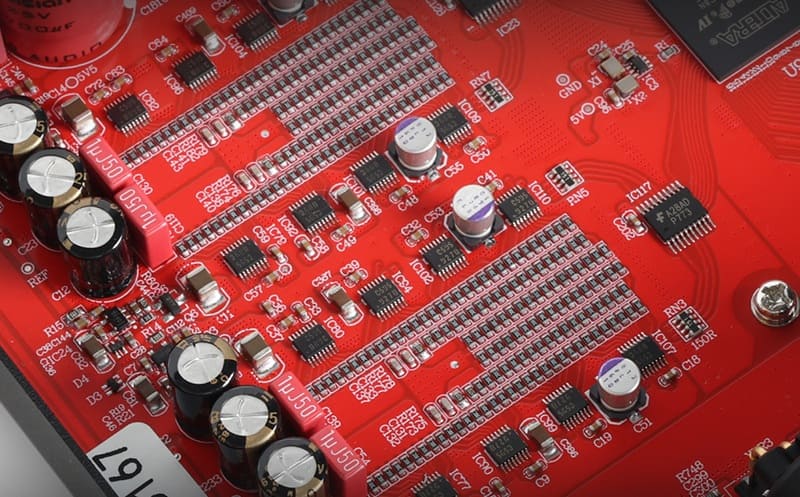
At the heart of the unit is a true R2R network using discrete resistors, with components selected to have a specified tolerance of 0.005%; a design that, at least in theory, should help avoid some of the simplifications typical of integrated DACs. Rounding out the architecture are separate PCM and DSD signal paths, NOS and OS modes, and a power supply section driven by a large toroidal transformer.
In short, this isn’t your typical small desktop DAC that tries to cram a little bit of everything into it: the Delphinus was designed with the very specific goal of being a true converter, simply housed in a particularly compact chassis.
And this, especially considering the price (600 euros), is already a statement of intent.
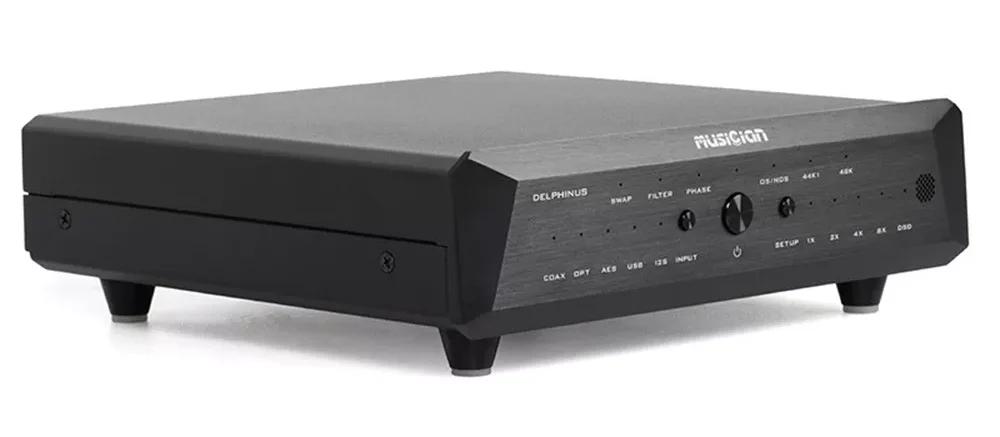
Musician Delphinus R2R DAC:Description
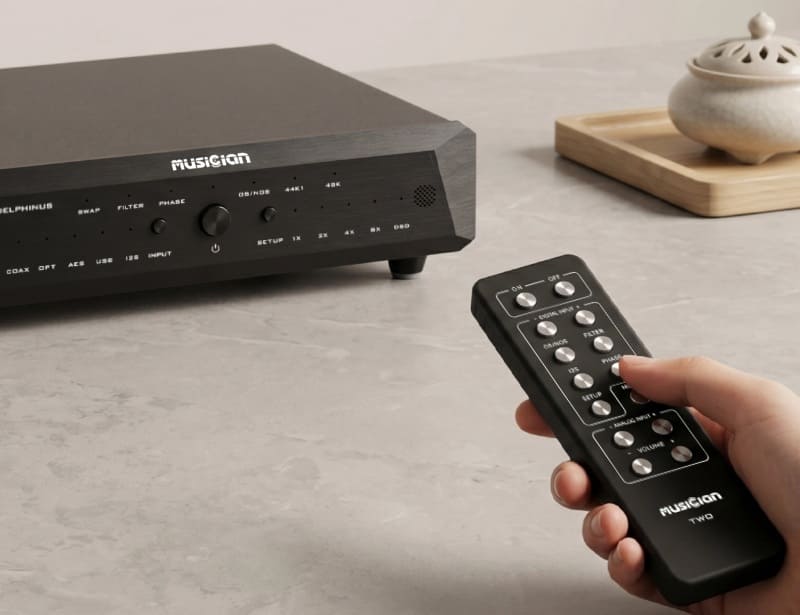
Despite its compact size, the chassis feels solid: no gimmicks, just a neat and well-thought-out design. The front panel features controls and indicators for the selected input, sampling rate, and various operating modes; the remote control allows you to conveniently manage the main functions.
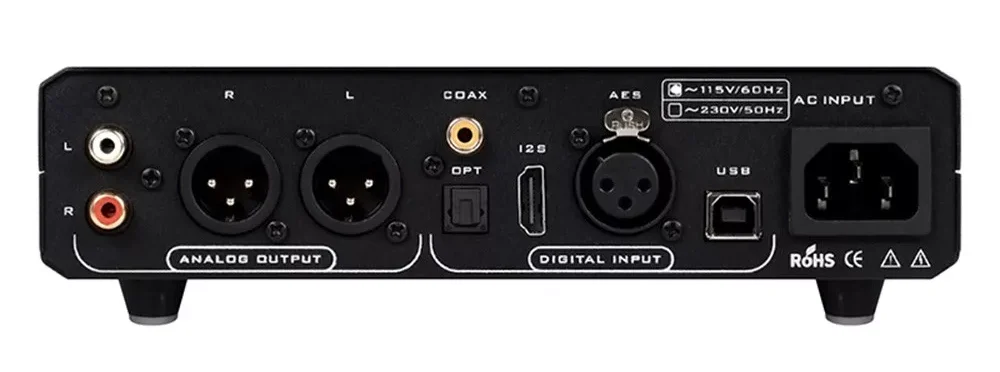
The rear panel is anything but minimalist: USB, I2S, AES/EBU, coaxial, and optical connections allow you to connect virtually any modern digital source; on the output side, there are both RCA and balanced XLR outputs.
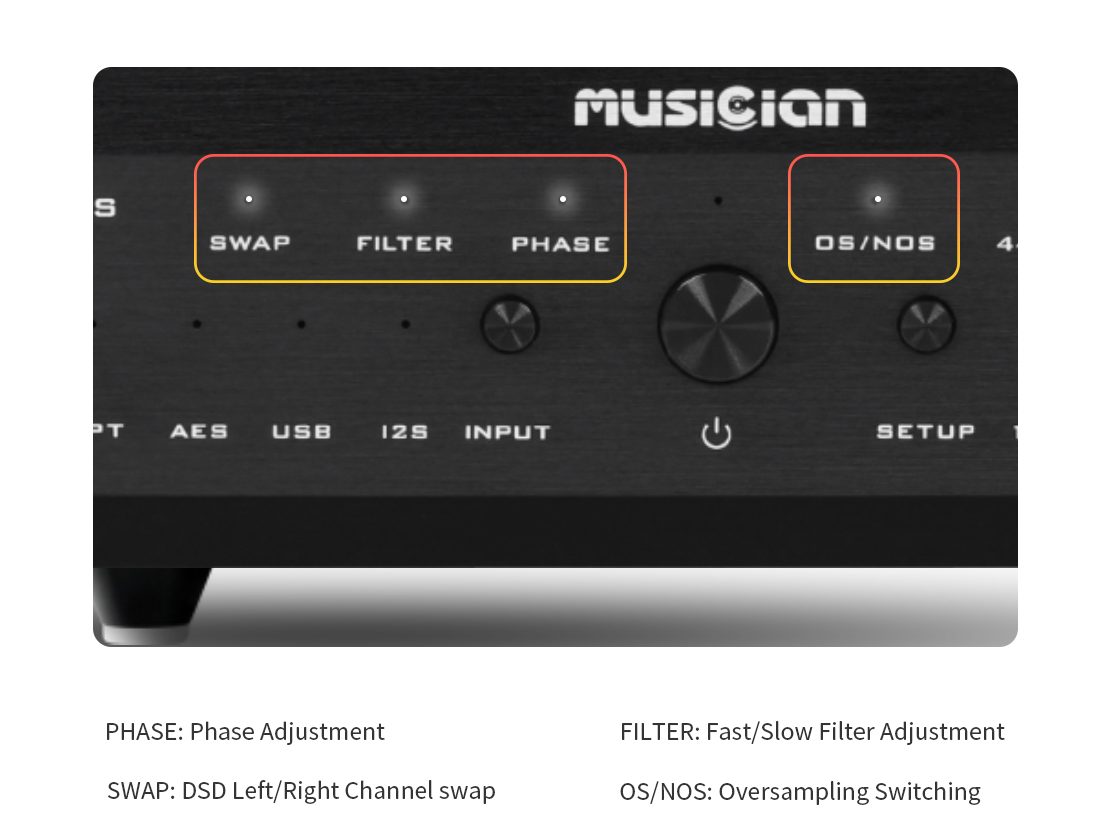
It’s interesting that you can choose between NOS and OS modes, in addition to other options for adjusting signal processing: this flexibility also lets you see how the unit responds to different settings.
Its dimensions, too, are almost surprising: 200 x 195 x 45 millimeters and weighing just over two kilograms. In short, a small “heavyweight”—at least in theory.
The manufacturer recommends a break-in period of about 300 hours; so it’s best to exercise caution before making any definitive judgments. In this case as well, we preferred to give the machine the time it needed to stabilize.
Sound Analysis
Your first encounter with the Delphinus leaves little doubt about its character: the sound is composed, orderly, and precise. Nothing seems to stand out artificially from the mix, and, above all, there are none of those exaggerations sometimes used to make the first listen feel more spectacular. The low end is one of the aspects we liked the most: well-defined, clear, and articulate, without that “muddy” effect that sometimes makes the various components of the bass register indistinguishable. The bass goes as low as it needs to, but above all, it maintains a good ability to follow the musical phrasing without turning into an indistinct mass.
The midrange is equally accurate: the vocals are well-centered, the instruments have well-defined contours, and the reconstruction of the soundstage appears coherent. In short, there’s no sense of having to constantly “focus” on the soundstage.
Then comes the comparison with our reference system, the Playback Designs MPD5, and this is where things get more interesting. Because you can’t compare the Delphinus’s sound to that of the Playback Designs MPD5. It would be a bit like expecting two musicians to perform the same piece with identical personalities: they may both follow the score, but the way they present it to the listener can be radically different.
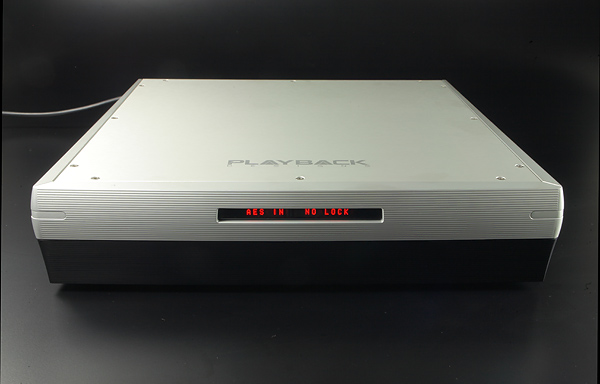
The Playback has a way of letting the music breathe—of giving it space between one note and the next—which makes listening to it feel particularly natural and immersive. The Delphinus is more disciplined, more “scholastic”—if we may use a term that might seem a bit unflattering but which, in this case, describes the situation quite well. It perhaps lacks a bit of breathing room—not in detail, not in range, not in precision: just in breathing room. The information is there; the soundstage is believable; the instruments are correctly positioned and sufficiently defined. But when you switch from the Delphinus to the Playback Designs, you get the feeling that the latter gives the music a few more square centimeters to move around in, almost as if the soundstage were not just a place where the instruments must be positioned, but also a space where they can come to life.
And this is where a word comes into play that, in our understanding of high fidelity, becomes fundamental: spirit.
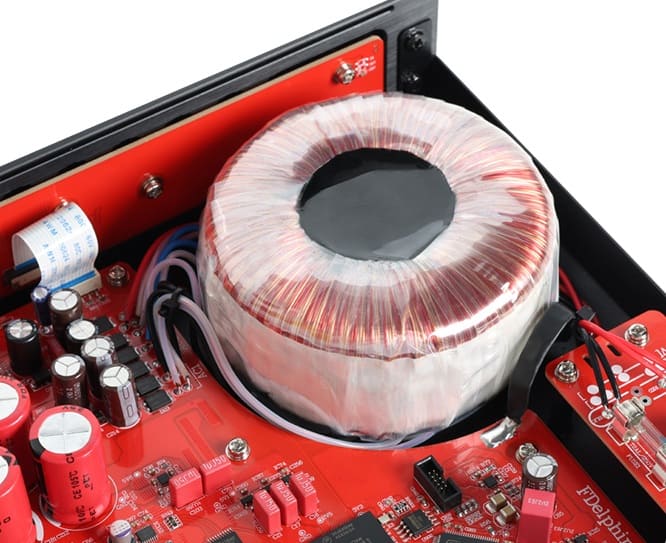
The Delphinus performs its task well. Very well, in fact. But its performance comes across at times as a bit stilted: correct, precise, composed, almost by-the-book. It just lacks a little “spirit.” This isn’t a harsh criticism—far from it. Rather, it’s an observation of a difference that becomes apparent when you compare it to a higher-end system with a particularly distinctive personality. With the Playback Designs, the music seems to breathe more freely; with the Delphinus, everything appears more under control. The former sometimes gives the impression that the performer is telling a story; the latter, on the other hand, seems primarily concerned with executing the score correctly.
The soundstage is well-defined, with good separation between the different layers and sufficiently precise placement of the sound sources. Its ability to track the various parts of an orchestra or ensemble is also thoroughly convincing. And when the musical program becomes more complex, the little Musician doesn’t lose its way: it maintains order, separation, and clarity. It is precisely this composure, however, that constitutes both the strength and the limitation of the system. Because if you listen without comparing it to higher-class equipment, the Delphinus is convincing without any particular difficulty. It is only when you include a converter like the Playback Designs in the comparison that you realize there is an additional dimension to music reproduction: one in which accuracy and precision give way to the ability to convey something that, with a certain modesty, we might call emotion.
And this “something” isn’t easily measurable.





GIPHY App Key not set. Please check settings