

 Audio 2G
For several years now Bluesound has been making excellent audio streamers with small dimensions, equipped with multiple features that are marketed at a competitive price enjoying well-deserved success, this also by virtue of an excellent operating system. However, we have often felt that sound quality in absolute terms was not exactly the “focus” of this brand that is part of the Lenbrook Group. Now, with the Node Icon model, that characterization changes radically, allowing Bluesound to undermine the dominance of its Asian competitors–WiiM above all–thanks to impressive sonic performance that surprised us. The Bluesound Node Icon outclassed in terms of design, features and, above all, listening performance the excellent Powernode Edge tested a few years ago.
Node Icon: general description
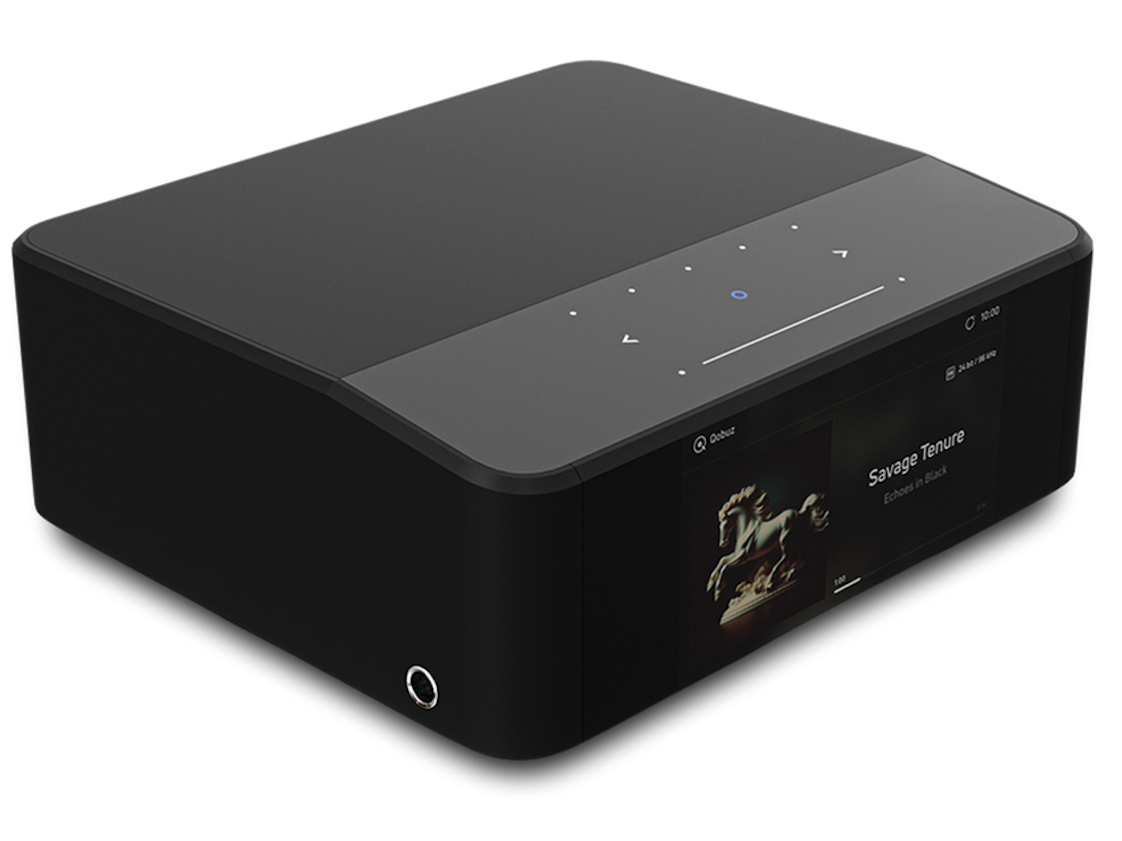
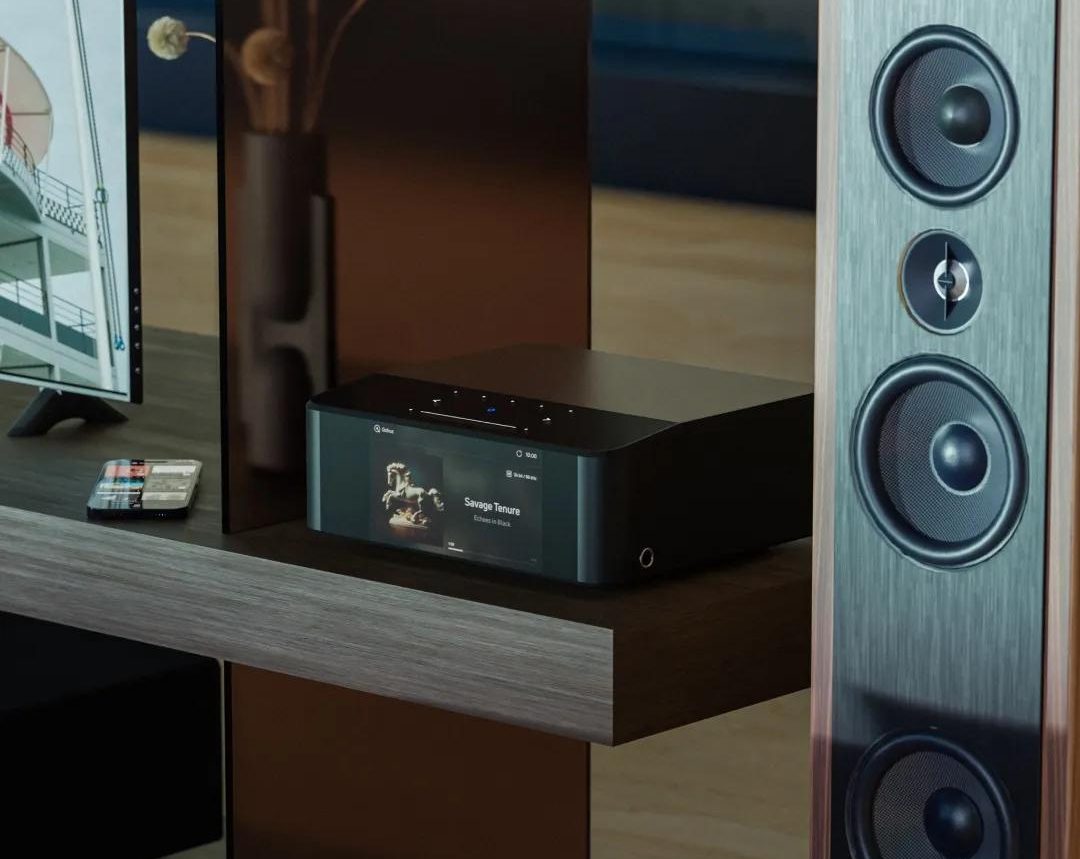
Compared to the other members of Bluesound’s Node line, which feature a very slim design, the Icon is taller and squarer, while still remaining fairly compact. Referring back to what we remembered from the build analysis of the previously tested Bluesound, which was an amplifier/streamer, the build quality seemed to us to be considerably superior: the anodized aluminum cabinet and the polished glass top plate give the Icon a nice feeling of sturdiness and solidity. Where previous models gave the feeling that they were designed to be hidden inside an electronics cabinet, the Node Icon claims an aesthetic dignity of its own that clamors to place it on display. This is certainly helped by the handsome 5-inch color display-a first in Bluesound production-that dominates the front panel. Personally, I appreciated the sharpness and clarity with which information is displayed: the artwork of the album or track being played, as well as file format information. When the unit is in standby or when the music is paused, a large analog clock is displayed. Unlike some screen-equipped streamers such as the WiiMs and Eversolo, the Node Icon’s display is not touch-type. However, the Icon does incorporate clever capacitive touch controls located in the slanted glass section at the top of the unit. These include basic music playback functions (pause, play, previous and next track) and a convenient volume control slider. Even more I liked the ability to set up five programmable presets at will that are easily accessible by tapping on the five illuminated “dots,” through which one can, for example, play one’s own playlist or access one’s favorite radio station with a single tap, without having to resort to the smartphone and app. Of course, for a neat freak like me the flaw is that the touch controls on the glass panel inevitably collect fingerprints. But beyond this “aesthetic” aspect, the controls are responsive and the streamer is overall easy and intuitive to use, especially when commanded by the excellent BluOS app.
Node Icon: cechnical features
Bluesound wanted to characterize this Node Icon in an audiophile sense by equipping it with more refined technology and a greater variety of connections than the other models in production. The excellent streaming platform, which is the same for the entire line, remains-quite rightly, moreover-unchanged.
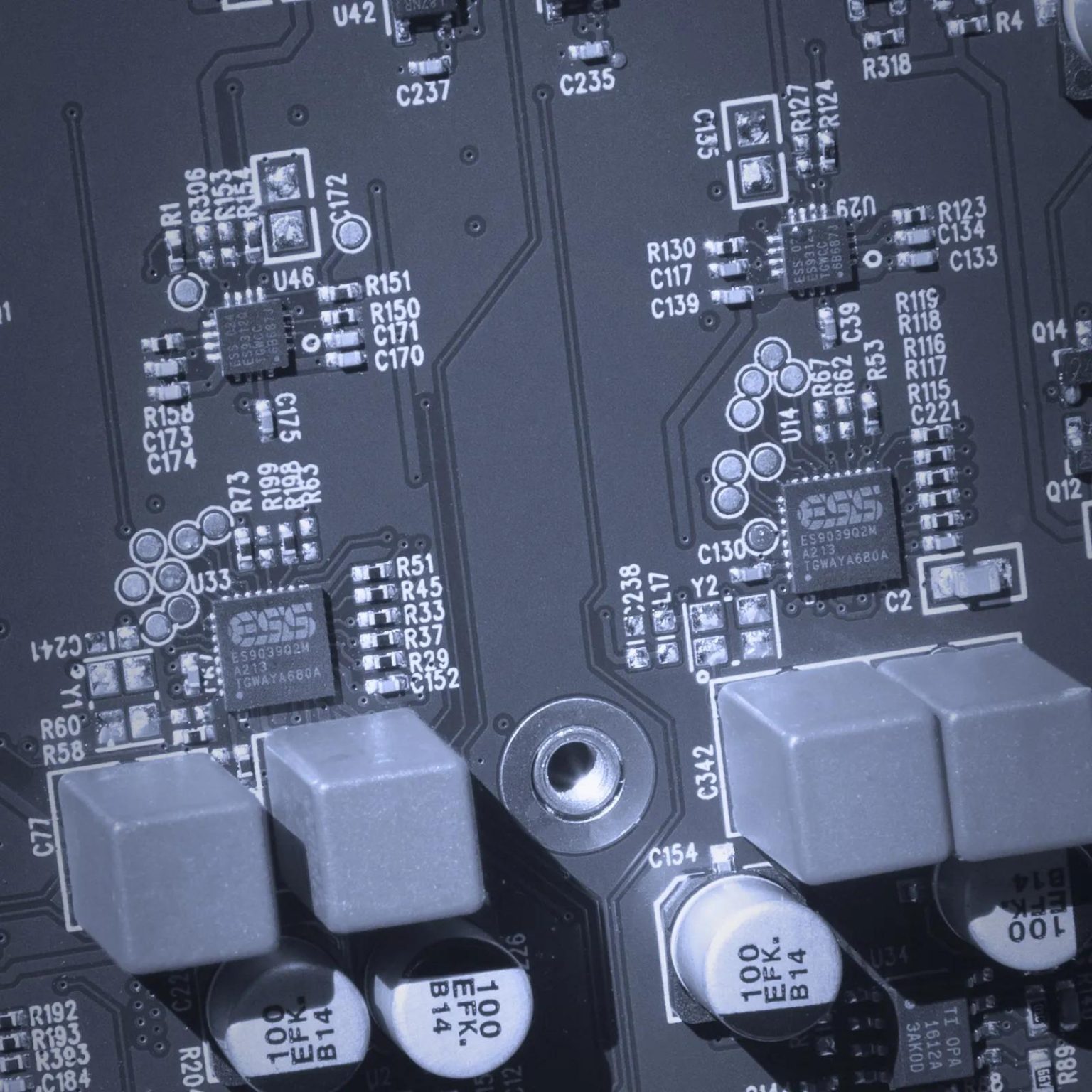
The Icon is equipped with two ESS Sabre ES9039Q2M DAC chips that operate in dual-mono mode. This means that each chip can devote all its processing power to a single channel. The Icon has a large internal switching-type power supply section carefully designed to reduce noise. Supported resolution is up to 24 bits/192 kHz for PCM and DSD256 (Although with on-the-fly conversion to PCM). The Node Icon is the first product to implement MQA Labs’ Qrono digital-to-analog technology, following the company’s acquisition by the Lenbrook Group. This technology aims to refine the response of the DAC in the time domain so that it aligns as closely as possible with the original recording.
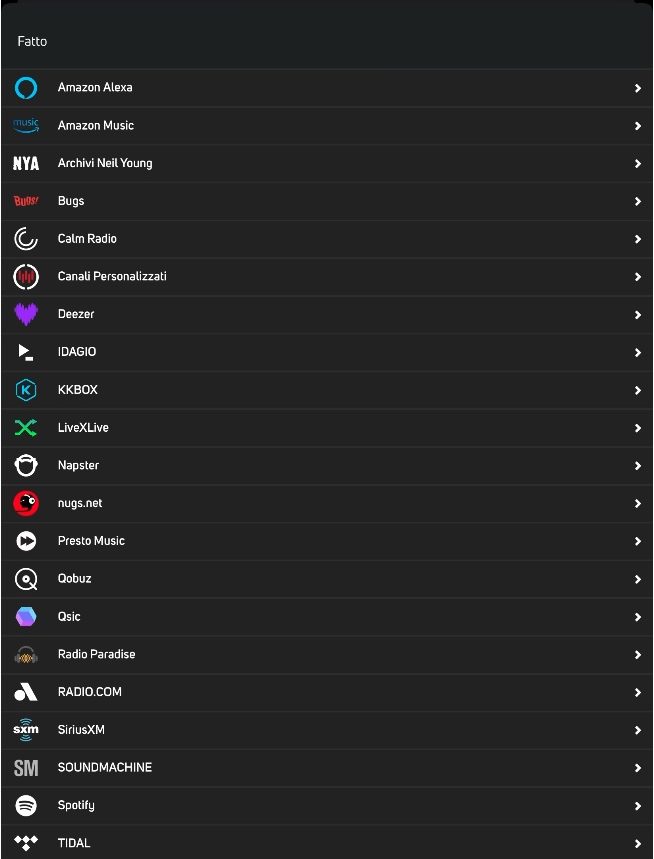
On the software side, the Node Icon bases its operation on the proven BluOS streaming platform, which is feature-rich and has a smooth operation that is completely free of uncertainties. The connection is stable via both Wi-Fi and wired Ethernet-which we prefer and therefore used-not experiencing any problems when playing music from Qobuz Connect, Spotify Connect or Roon. The BluOS Controller app, available for iOS and Android, supports a great many streaming services, some completely unfamiliar to me, and various Internet radio stations and is overall well organized and intuitive to use, even with large music libraries stored on NAS drives. In this regard I want to point out that there is no support for the UPnP protocol, which implies that access to any NAS must be done via an SMBShare. Some, and among them yours truly, may lament this lack. Offsetting this are Spotify Connect (Spotify Lossless is also supported) and Apple AirPlay 2, which will delight fans of streaming from smartphones or tablets. This is probably a wise choice of the most “centered” protocols with respect to the needs of the target audience for a device like this that might also be attracted by support for two-way Bluetooth of the aptX Adaptive type. There is an extensive section in the app devoted to the Node Icon’s audio settings: gain adjustment, mono/stereo playback mode, tone controls, and the ability to turn the fixed output level on or off, depending on whether one wishes to use the Bluesound streamer as a preamplifier, taking advantage of its volume control. Should it be placed within a Bluesound ecosystem, it is possible to manage and combine BluOS-compatible wireless speakers as well as other streaming products (Bluesound, NAD, Cyrus, Dali, Roksan, and others) into a larger multi-room system, all via the app.
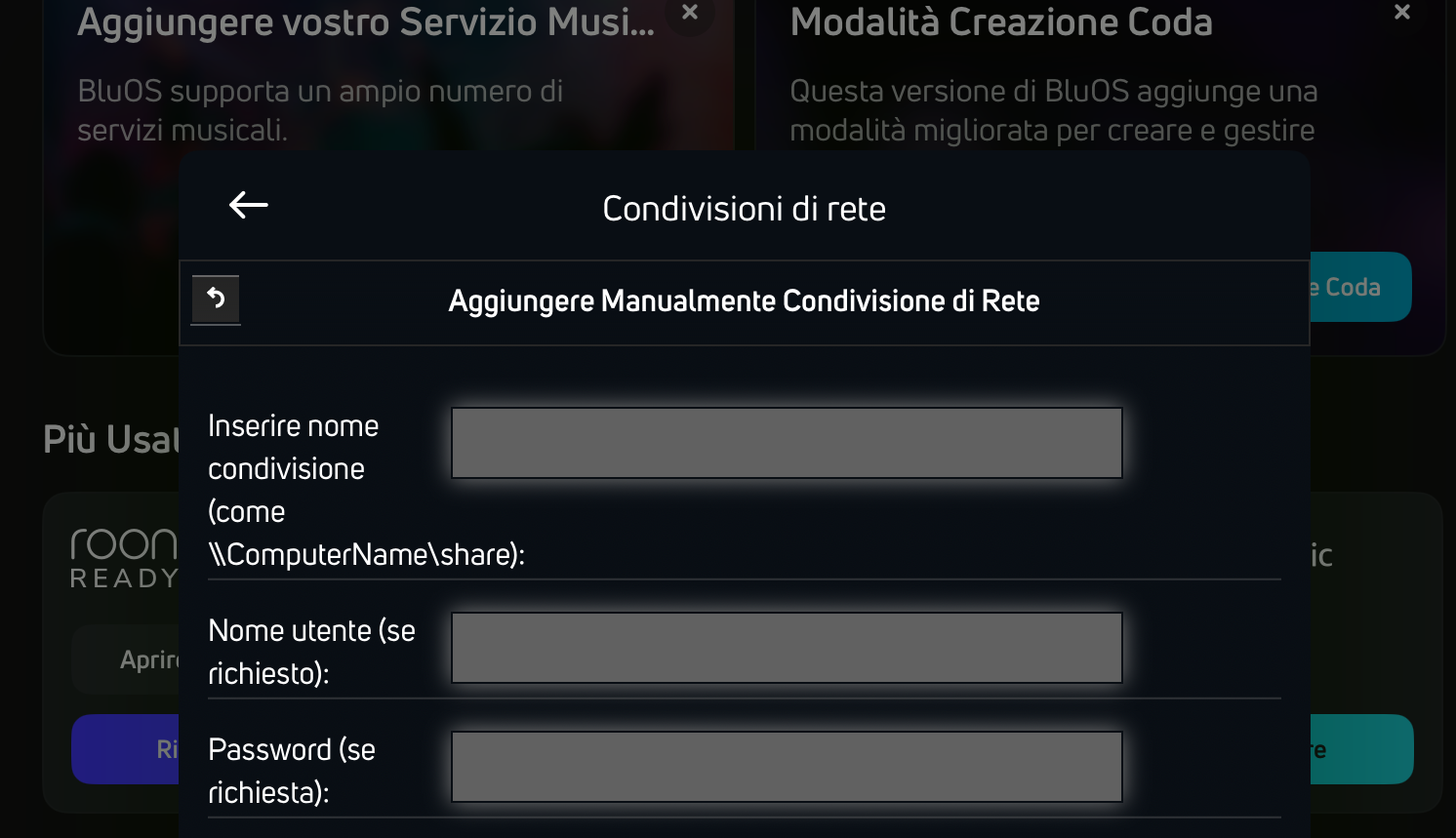
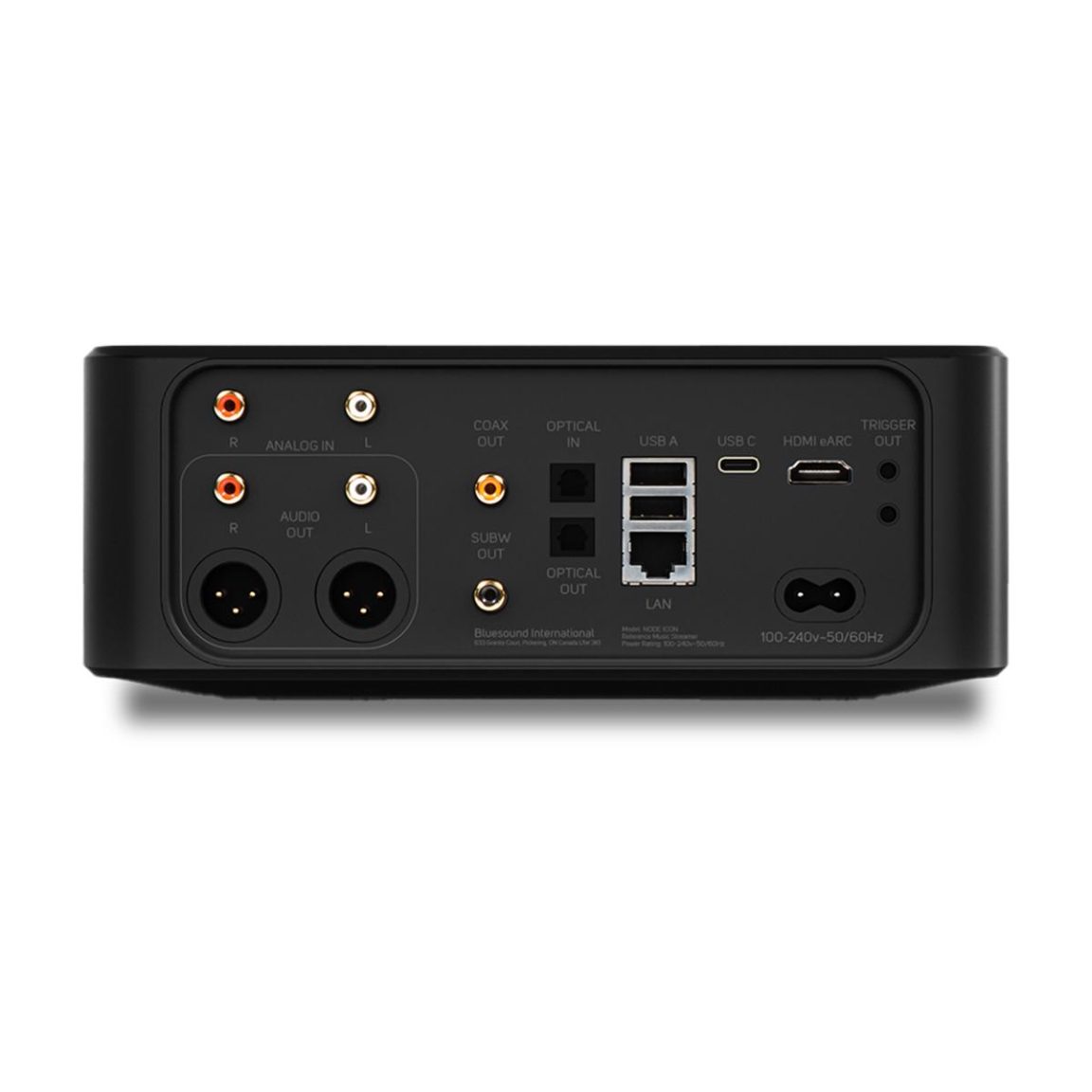
The physical connections on the rear panel are many and include digital outputs in coaxial and optical formats and an HDMI eARC port for connecting the Node Icon to a TV. Here, too, we find a feature that winks at the discerning audiophile: I refer to the pair of balanced XLR analog outputs that flank the RCA line outputs. To extend compatibility there is also an RCA line input, which is digitized by an A/D conversion chip, and an optical input. Then we have USB-A and USB-C ports for connecting a PC or external storage devices.
The Bluesound Node Icon will make headphone listeners happy since it offers not one but two 6.3 mm headphone jacks located on both sides of the unit. This implies that two people can simultaneously listen to the same music or TV program without disturbing anyone. A true blessing in the family sphere! The headphone amplifier features THX AAA feed-forward error correction technology that ensures low distortion levels, great clarity and a wide virtual image.
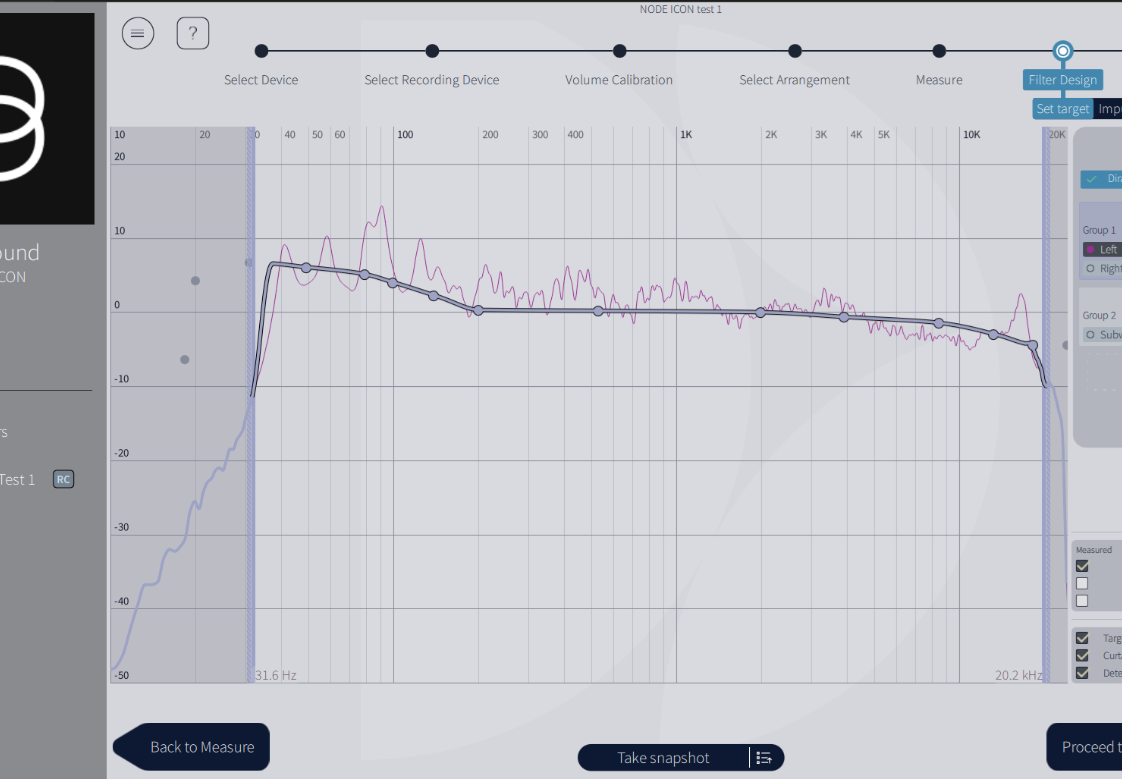
Finally, let us deal with another strength of the Node Icon, which is compatibility with the Dirac environmental noise correction program (Dirac Live Ready). Unfortunately, here I must point out what seemed to me to be a flaw: in order to take advantage of it, it is necessary to purchase separately the calibration kit (45 €), which includes a high-sensitivity microphone and a USB adapter, as well as a Dirac license. Dirac Live is room correction software designed to optimize the performance of the streamer in one’s listening space, which is especially essential if the room in which the sound system is located has some acoustic problems, which is the vast majority. Dirac is available with a limited bandwidth license ($159) and a full bandwidth license ($249). Our experience leads us to say that already the cheapest option is a panacea that can solve the acoustics of the most difficult environments. So we strongly recommend its use, even at the cost of having to bear the burden of the additional cost.
Node Icon: Conclusions
the Bluesound Node Icon costs just over a thousand euros, which puts it unequivocally at the top of Bluesound’s Node streamer range. Its competitors include the Cambridge Audio CXN100, which has an overlapping list price, and the much cheaper WiiM Ultra. Speaking of sonic quality, thus excluding for the moment considerations of software functionality, there is no doubt that in our listening room DACs/Streamers of better sonic performance have passed by, but all were characterized – alas – by a far higher price. The fact that the Node Icon sounds so good means that one must necessarily compare it to the high-end DAC/Streamers, to which sonically it comes close, rather than to the entry level or mid price with which it competes relatively to the amount of money required to get hold of it. This consideration cannot be separated from the fact that it is equipped with an operating system that, as written above, is now a solid and proven reality. Whether this Node Icon constitutes the first piece of a mosaic that Bluesound is beginning to build we shall see in the future. We hope so because it would mean that there is another manufacturer to keep an eye on in the crowded arena of high-quality, affordable digital audio. For those who are looking for a compact, feature-rich, easy-to-use DAC/streamer with quality sound at a reasonable price, we can only strongly recommend that they go and listen to the Node Icon.
Specifications
- Type: BluOS streaming player
- Audio resolution: 24bit/192kHz
- Signal-to-noise ratio: -121 dB RCA / -129 dB XLR
- Distortion THD: 0.0004%.
- Processor: ARM Cortex A53 quad-core 1.8 GHz
- Compatibility: MP3, AAC, WMA, WMA-L, OGG, ALAC, OPUS
- Hi-Res audio formats: FLAC, MQA, WAV, AIFF, MPEG-4 SLS, DSD256 (BluOS upgrade)
- Support for multi-channel audio: Dolby Digital
- DAC: 2x ESS ES9039Q2M
- Inputs: optical; USB Type A (Fat32) – External Storage only Local Server Mode; USB Type C audio; HDMI eARC; analog RCA; IR
- Outputs: analog stereo RCA and XLR; coaxial RCA; TOSLINK digital optical; Trigger; 6.3 mm headphone; RCA sub woofer; wireless subwoofer to Pulse Sub+; Trigger; USB audio
- Headphone output power: 150 mW @16 ohm, 235 mW @32 ohm, 56 mW @250 ohm, 23 mW @600 ohm
- Network: Gigabit RJ45, Wi-Fi 5 (802.11ac, dual-band)
- Bluetooth: two-way Bluetooth 5.0 aptX HD
- Network File Sharing: Server Message Block (SMB) up to 200,000 files
- Control System Integration: Crestron, Control4, RTI, ELAN, URC, Lutron
- Compatibility: AirPlay 2, Spotify Connect, Tidal Connect, Roon Ready, Dirac Live Ready
- Finish : Black or White: Matte Satin Paint
- Dimensions: (WxHxD) 220 x 84 x 193 mm
- Weight: 2.23 kg
Price: $1,099.00
Distributor for Italy: Pixel Engineering S.r.l.
Via San Francesco 4 – 21013 Gallarate (VA)
Tel. +39.0331781872
info@pixelengineering.it




GIPHY App Key not set. Please check settings