



 Giulio Salvioni
FiiO is one of China’s most active audio companies for budget-minded audiophiles. Since 2007, it has been designing and producing a wide range of audio products for different price ranges, both portable and desktop. In the latter area we found streamers, DAC streamers, and DAC amps particularly interesting. In this review we will take a look at one of the latest arrivals in FiiO’s DAC & AMP line, the K11 R2R.
The K11 R2R is a desktop DAC and headphone amplifier with Bluetooth capability.
The product’s web page is available here. The price is €169 on FiiO’s official store, to which shipping costs must be added, while on Amazon the price is about €184.90. We were intrigued by this K11 R2R because it is FiiO’s first attempt in the R2R DAC segment, at least as far as we know, and then because it is the cheapest DAC to use such technology. Indeed, it must be considered an interesting option for those looking for an inexpensive R2R DAC/AMP, since these types of converters tend to have higher prices than their counterparts with standard chipsets such as those produced by AKM, ESS, etc.
K11 Vs. K11 R2R
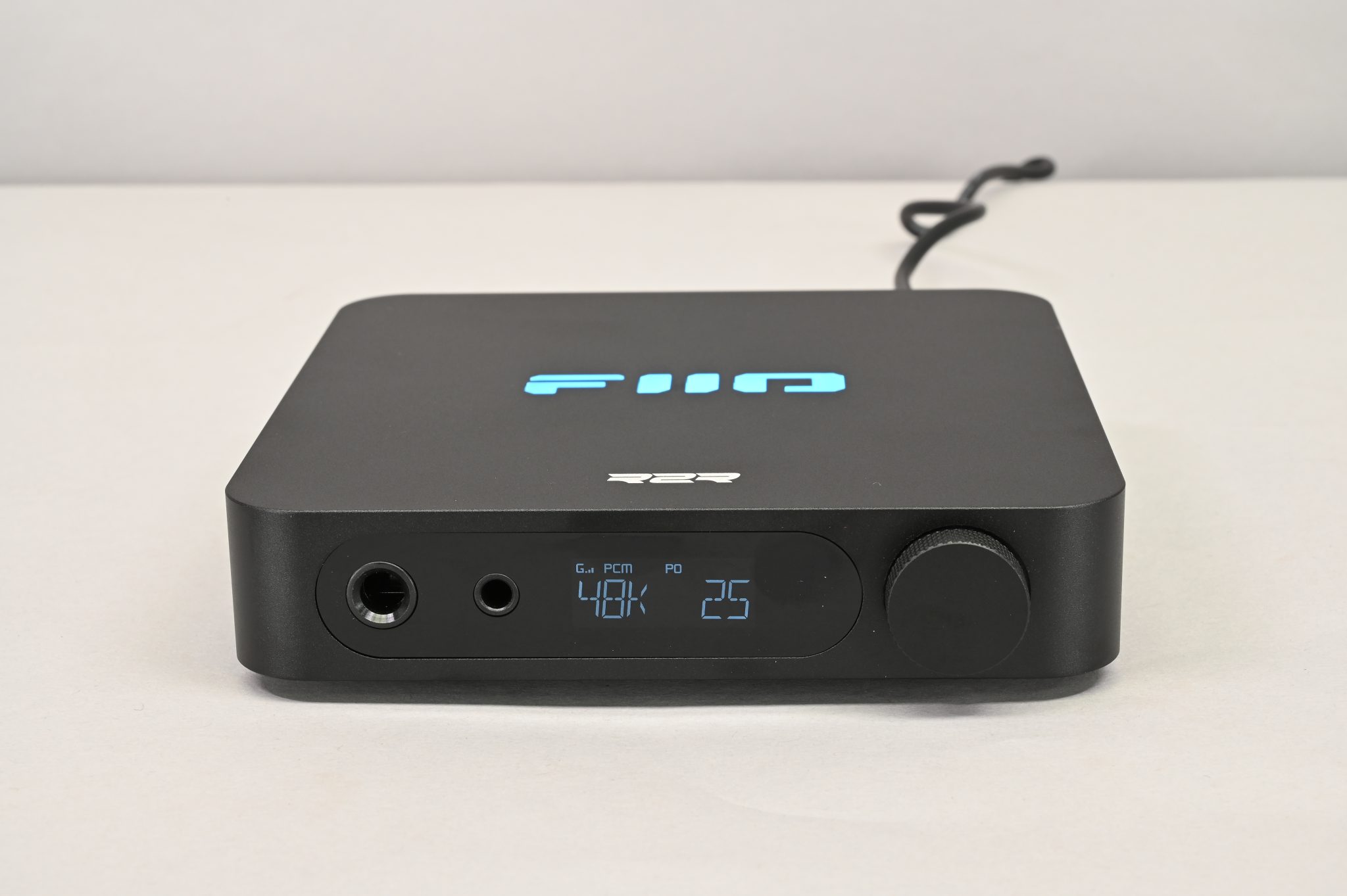
Looking at FiiO’s catalog one notices the presence of the K11 model (€ 139.00), which is aesthetically very similar. In spite of this, the two products differ in some fundamental aspects: where the K11 uses the CS43198 DAC chip, the K11 R2R is equipped, precisely, with an R2R DAC. This change involves slight variations in the corresponding circuits. In terms of performance, the K11 R2R shows slightly worse levels of THD+N and noise floor than the delta-sigma-based K11. This is to be expected, as R2R models generally exhibit lower performance in these areas, however, these measurements do not necessarily accurately reflect actual performance in listening. In addition, there are some differences in software functionality. The K11 model offers the output filter selection function. In contrast, the K11 R2R does not provide this function, offering instead the two modes Non-Oversampling (NOS) and Oversampling, as well as an intelligent standby function not found in the K11.
What is an R2R DAC?
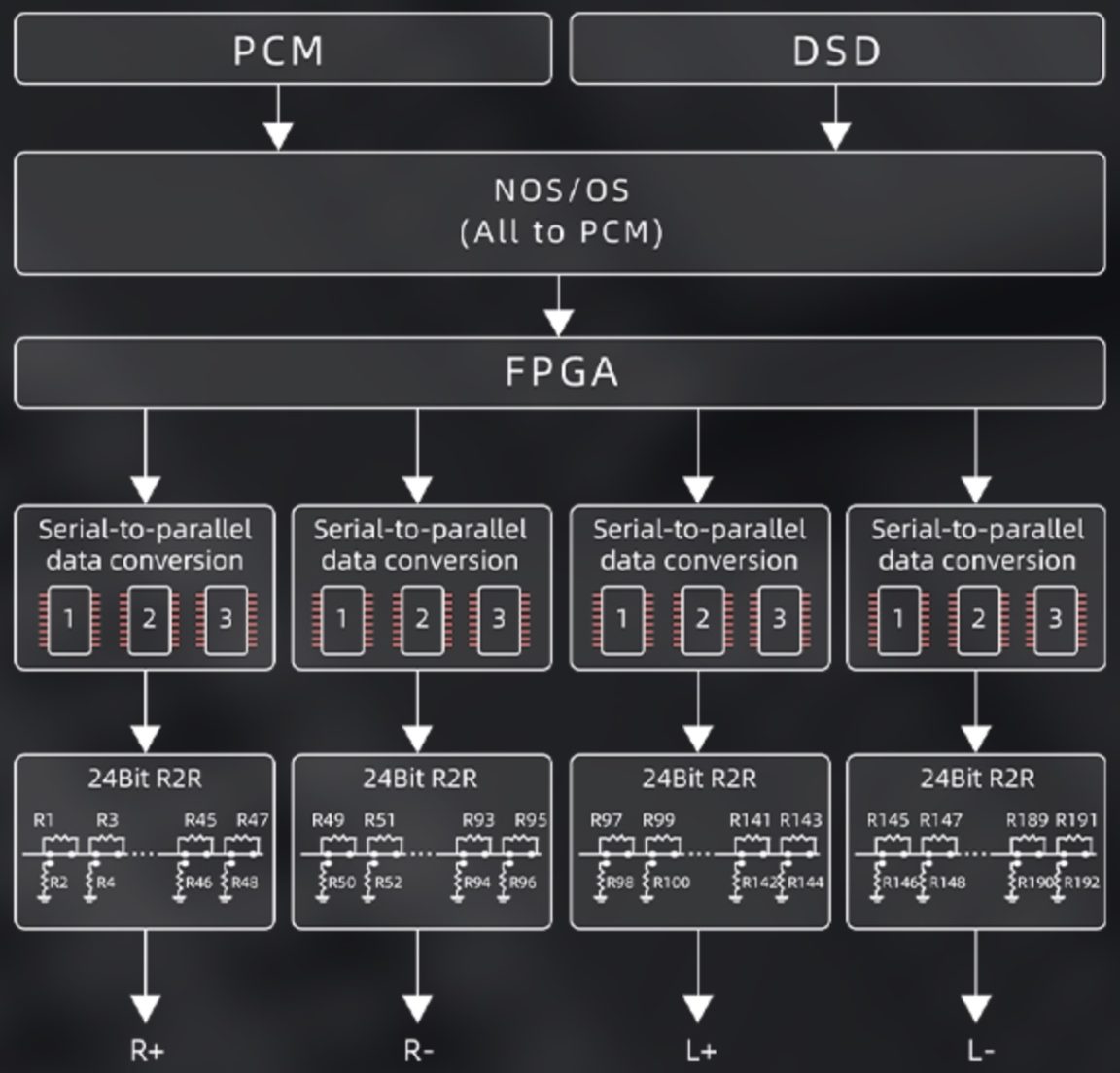
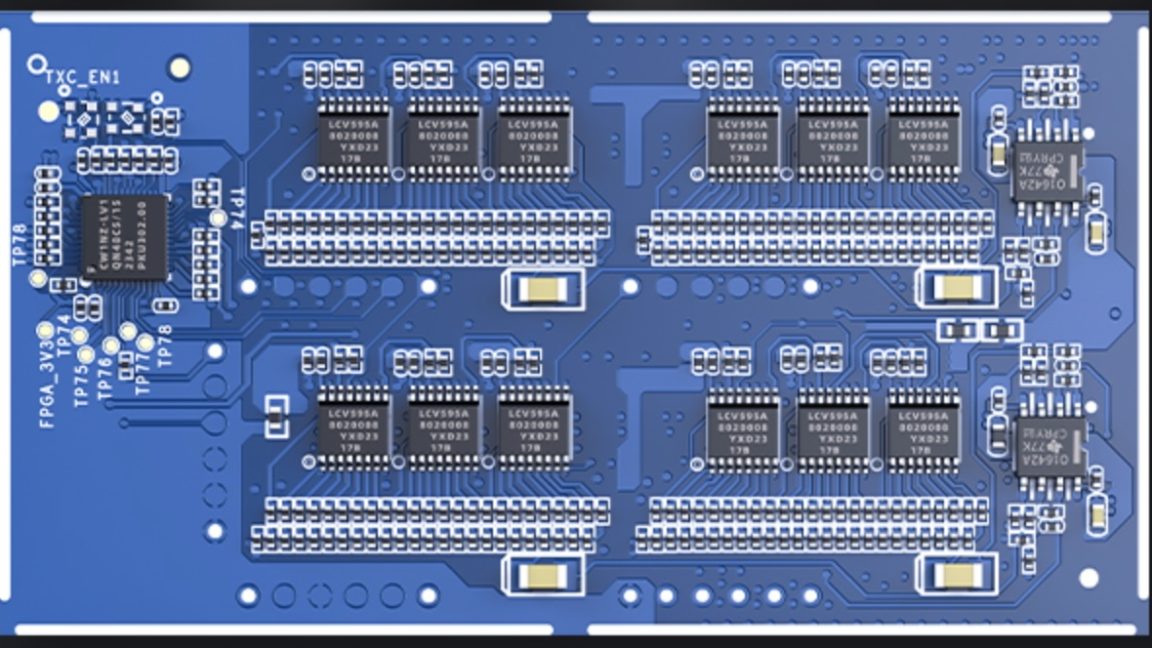
An R2R DAC, or resistor ladder DAC, is a type of digital-to-analog converter that differs significantly from the more common delta-sigma DACs. In an R2R DAC, the digital signal is converted to an analog signal through a network of precision resistors arranged in a ladder configuration. Each resistor corresponds to one bit of the digital signal, and the combination of these resistors enables very accurate conversion of digital audio data into an analog waveform. The R2R architecture is known for its natural and smooth sound reproduction, often described as more “analog” than its delta-sigma counterparts, which can sometimes introduce digital artifacts into the sound. The accuracy of the R2R DAC depends largely on the precision of the resistors used; even small deviations can cause errors in the output signal. This is why well-designed R2R DACs use carefully selected resistors with low thermal drift to ensure consistency and accuracy. R2R DACs also tend to operate in non-oversampling mode (NOS), which means they avoid the additional processing steps that delta-sigma DACs use to oversample the audio signal. The K11 R2R, for example, offers both no-oversampling and oversampling modes, allowing users to choose between a more traditional and direct sound and a more processed and smooth sound, depending on their preference. Of note is the fact that the K11 R2R uses a Sign-Mangnitude scheme, which means that instead of a single R2R network, two separate R2R networks are used. One handles the positive values and the other handles the negative values of the input signal. By adopting the R2R architecture in the K11, FiiO is thus aiming to provide a more natural-sounding version of its K11 DAC, which may appeal to audiophiles who appreciate a sound as close to analog as possible.
Packaging and accessories
The FiiO K11 R2R comes in a well-designed box where the contents are well protected by dense foam. Inside the box, the K11 R2R is accompanied by a number of essential accessories including an external 12V power supply, a USB-A to USB-C cable to connect it to a digital source such as a computer, a 6.35 mm to 3.5 mm headphone jack adapter, a quick instruction and setup guide, and a warranty card.
Construction
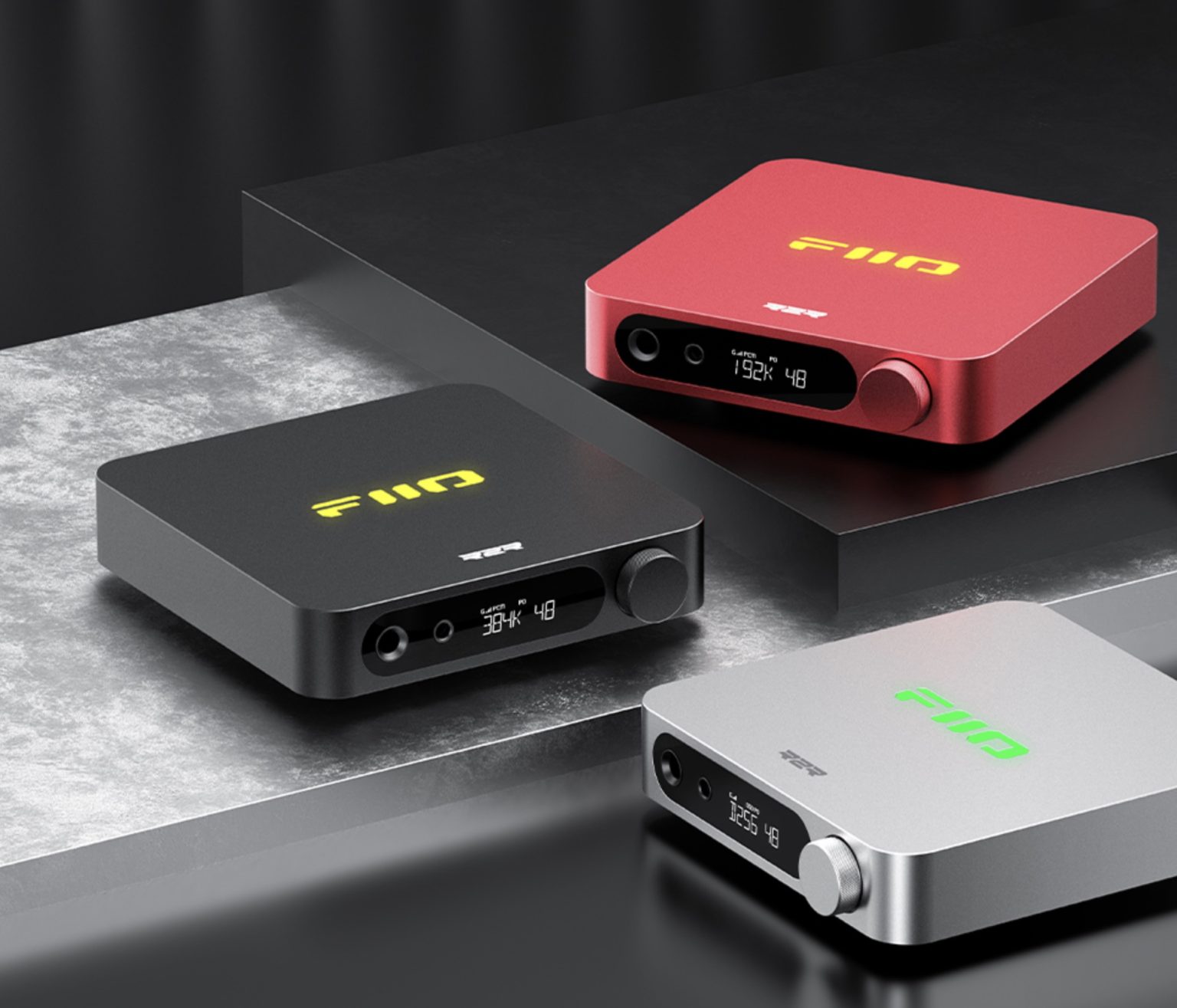
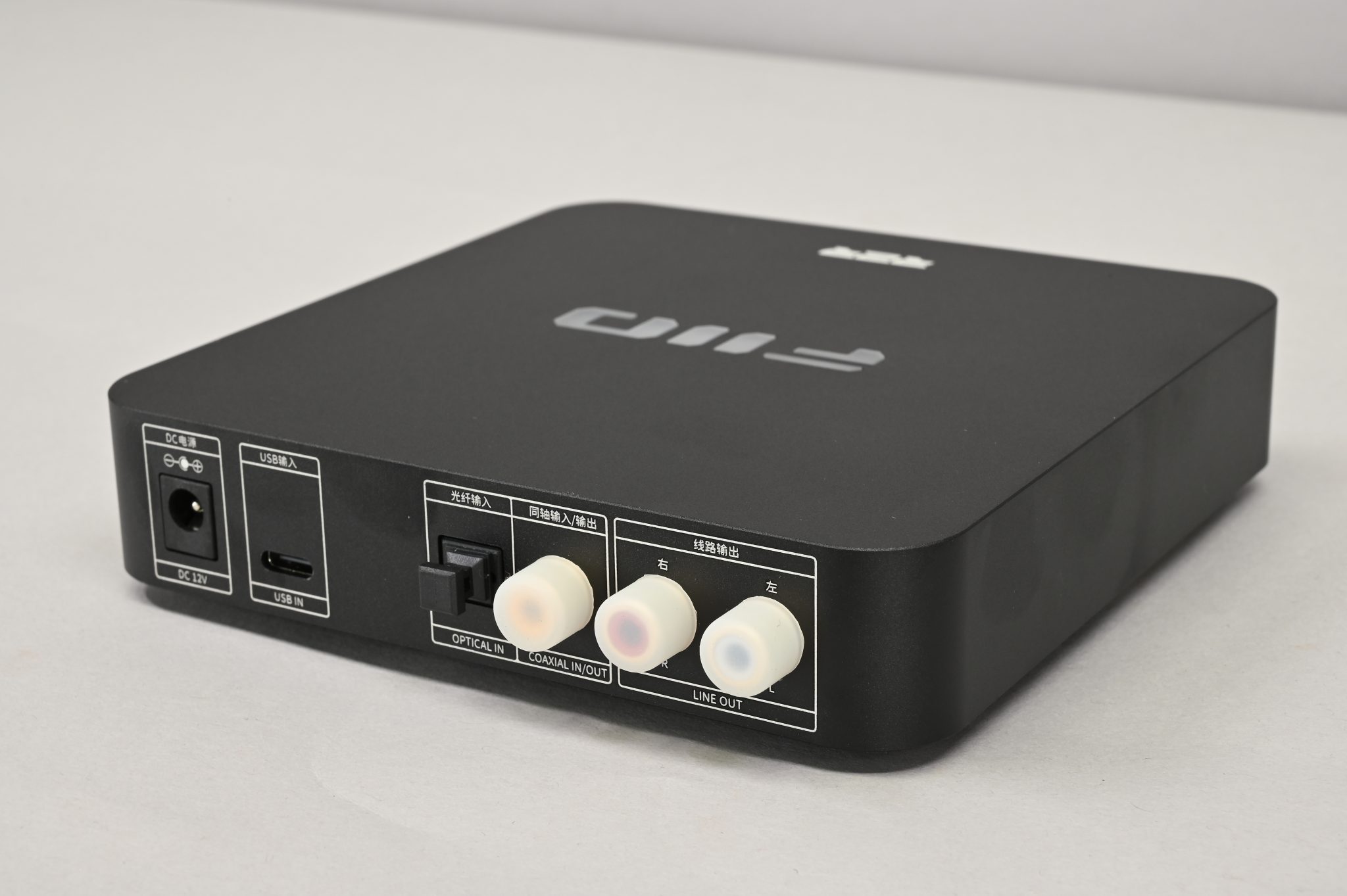
The build quality of the FiiO K11 R2R is excellent and in line with what can be expected from a product from this company. It is a compact desktop DAC that features a sleek and modern design that combines functionality and aesthetics. The device’s cabinet, available in black or silver finish (but there is also a fancy red version), is made of aluminum with an anodized surface. On the front panel is a small monochrome display characterized by high brightness and sharpness, showing the most relevant playback information such as format (PCM/DSD), sample rate, gain level, and active output. Next to the display is a multi-function rotary encoder that, in addition to volume control, also serves as an interface actuator for menu navigation by which the output type (adjustable, fixed, headphone output), gain settings (low, medium, high), input options (USB, optical, coaxial), and navigating the settings menu, which includes options such as USB version, LCD brightness, standby time, firmware update, factory settings reset, and firmware version, can be changed. On the rear panel we have a variety of inputs and outputs, including USB C, optical and coaxial along with RCA line outputs. We appreciated the large and wide silicone non-slip pad at the base, thanks to which the device stays firmly in place on the table top, while the RGB logo lighting on the top seemed frankly overkill even though it allows us to read the sample rate at which playback is taking place at a quick glance, provided, however, that we know what the various colors mean.
FiiO K11 R2R – Listening Impressions
We did most of the listening by connecting the FiiO K11 R2R to our Copland CSA 100 integrated amplifier driving Opera Prima V2 speakers. As a digital source we used a self-built music server with components from JCat on which the Audiolinux Operating System was running. There was also no shortage of headphone listening.
Entry-level DACs are, in my opinion, those that have benefited most from the technological advances of recent years. Performance such as that of the FiiO K11 R2R was, until a few years ago, the preserve of far more expensive machines. This is not to say that there has been a general upward leveling of DAC performance. One only has to listen to a High End or mid-range product to realize this, however, it is undeniable that precisely in the entry level range nowadays there are well-sounding products at decidedly affordable prices. The DAC under test offers a sound with a distinct personality, in some respects evocative of analog, which differentiates it from delta-sigma achievements in the same price range. We have written several times that we consider the D/A conversion section to be one of the elements that contribute to defining the sound of a DAC, but not the only one. The output stage, for example, is another element that strongly connotes the overall result. Whatever the technical reason, we feel we can say that, when listening, the hallmark of the FiiO K11 R2R’s sound is undoubtedly its being organic, dynamic and engaging, in a way that is surprisingly superior to the more neutral, sometimes aseptic sound of DACs in the same price range. A further point in favor of this small converter is the flexibility allowed by the two modes of operation Non-Oversampling (NOS) and Oversampling (OS), which offer a markedly different “presentation” of sound. In NOS mode the emphasis is on the warmth of analog memory, smoother transients and, overall, a more natural and engaging sound. In OS mode, on the other hand, the presentation is more precise, thanks to a bit more detail and clarity, particularly in the mids and highs, with sharper but sometimes edgy transients. In both cases, the low end is well defined and with a satisfying “punch,” forming a solid foundation for the rest of the spectrum. Very good-especially considering the economic range to which the product belongs-the density and layering of the sound planes that contribute to the realization of the virtual soundstage.
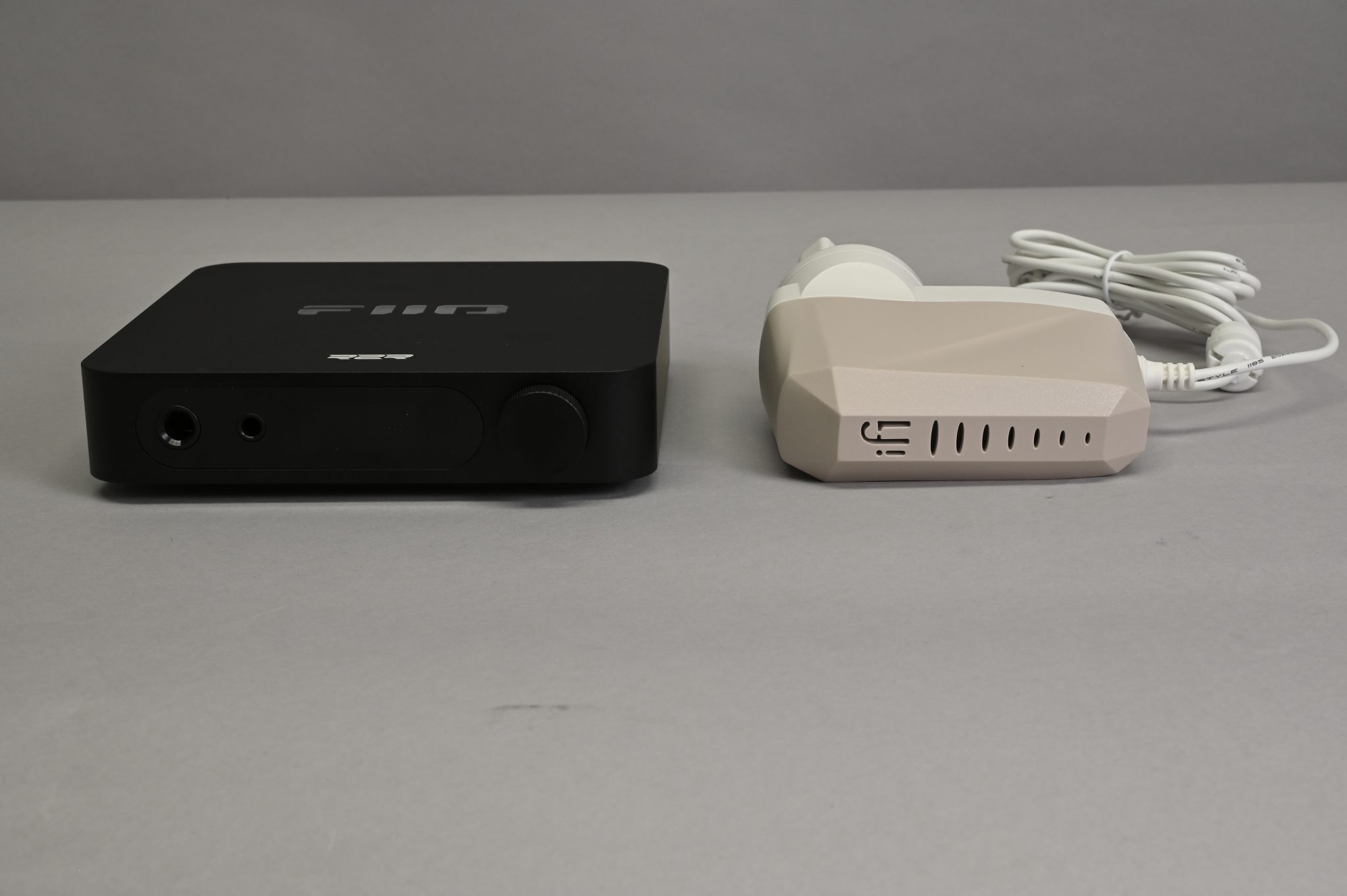
We then wanted to carry out a further test by replacing the stock power supply with an iFi iPower X whose cost, in fact, approaches that of the DAC under test. Once again we were able to see for ourselves how much the quality of the power supply matters, since in such a configuration the FiiO X11 R2R substantially increased its already excellent performance. To be honest, it seems that this DAC definitely deserves a power supply of superior characteristics to the admittedly good one with which it is distributed.
Conclusions
I must admit that I approached the FiiO K11 R2R with some misgivings. Primarily because I thought it was a purely commercial operation designed to ingratiate itself with some potential buyers attracted by the appeal of R2R technology by virtue of a certain “vintage” and (mistakenly) “analog” aura. After listening to it for some time I can say that my reservations were unfounded and that the FiiO K11 R2R constitutes an excellent entry point into the R2R DAC arena. After all, there are not many options in this price range, so if you wish to try this DAC architecture without spending too much, this is the choice to make. The ability to switch between NOS and OS modes allows users to tailor the sound to their preferences, whether they are looking for a smoother, more analog feel or a cleaner, more detailed presentation. To all this must be added the rich array of inputs and outputs, as well as the comprehensive feature set. Very interesting.
Giulio Salvioni
Technical specifications.
- DAC: 24-bit fully differential R2R resistor array;
- Volume control chip: NJW1195A;
- USB input decoding: 384KHZ/32bit, DSD256;
- Coaxial input decoding: 192kHz/24bit;
- Optical input decoding: 96kHz/24bit;
- USB connector: Type-C;
- Display: LCD screen;
- Dimensions: 147 x 133 x 32.3 mm;
- Weight: about 420 g;
- Power supply: external adapter DC12V 2A
- Frequency response: 20Hz~50kHz: attenuation < 1.3dB;
- SNR: ≥115dB (A-weighted);
- Noise floor: PO < 7.2uV (A-weighted); BAL < 14.1uV (A-weighted)
- Output impedance: PO < 1Ω (32Ω load); BAL < 1.5Ω (32Ω load)
- THD+N: LO < 0.02% (1KHz/10kΩ)
To buy it on Amazon: https://amzn.to/44HCQ7Q






GIPHY App Key not set. Please check settings