



 Audio 2G
A top-of-the-line high-performance amplifier from the well-known manufacturer, it delivers breathtaking performance in an extremely refined and refined aesthetic.
Nothing new or different in stating that Marantz is an integral part of Hi-Fi history. Some time ago at a well-known store in Turin we found a Model 7 with perfectly restored wooden cabinet from 1958, and it was not even the first product of Saul Marantz, which debuted a few years earlier, in 1952, with Audio Consolette and then continued to the present day, with mixed fortunes, passing through various hands, including Philips (many will remember the CD63KIS, a reinterpretation of the “consumer” version of the Philips CD63 and which was a huge success). Today Marantz is permanently part of the D&M group-Denon&Marantz-which also includes Polk Audio, Bowers & Wilkins and other brands.

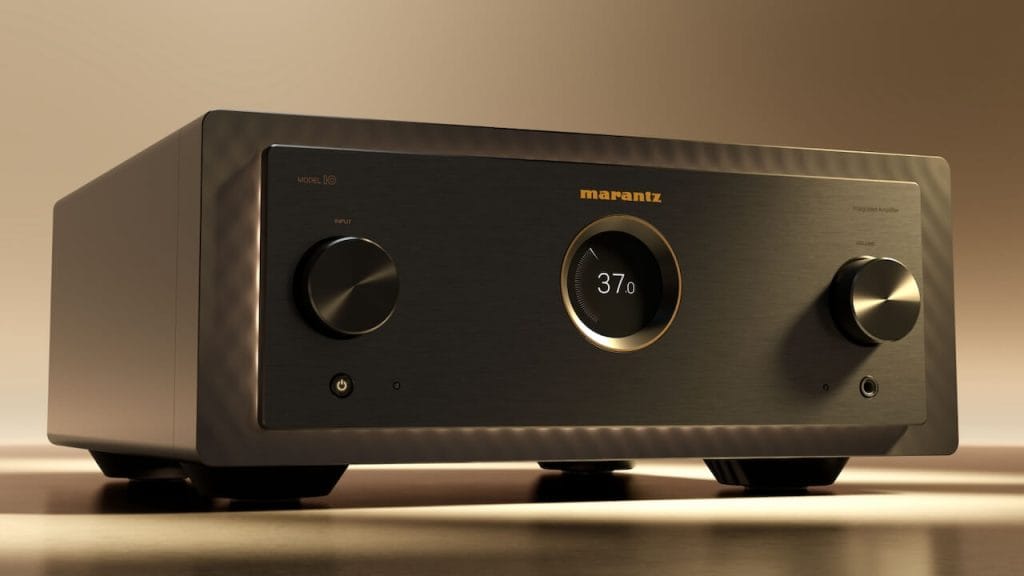
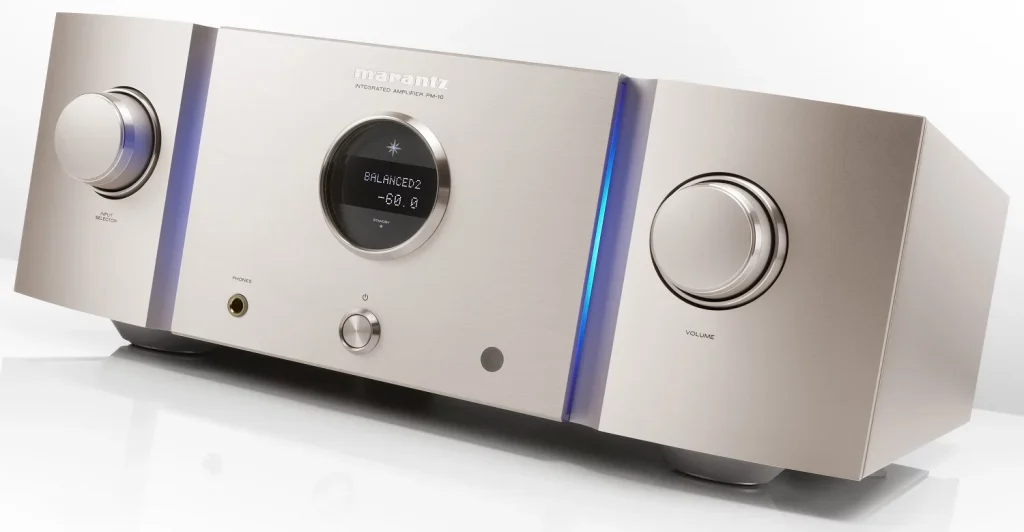
Our days, the last few years, have been characterized by a stable and multifaceted production with both audio-only and audio/video solutions of great scope capable of meeting every need. The choice, in the two-channel, in the new course of Marantz, not to propose two-frame solutions, then preamplifier and power amplifier, traveled instead in Audio/Video, has proved successful. After all, much of the market is concentrated down to the mid-range segment, and a global manufacturer like Marantz successfully distributed in much of the globe, can offer great economy of scale and thus value for money, market hold, service, distribution, all very important values. Production, therefore, stops at a top, high-end integrated amplifier, still “reasonably” priced, 14500€, and expressing all Marantz quality and philosophy. This Model 10 retires the PM-10, a super-integrated of 2018 that had a power output of 200W per channel and had received numerous awards, including an EISA; Model 10 is a completely new design, Marantz says it changed 84% of the components and used only a few things from the old one, including the screws, which were and remain copper.
The aesthetics are breathtaking, the “floating” front panel that we had seen on Model 30 and on Model 60n (albeit simplified) that we had tested, is in this model made of aluminum machined from a 3-cm billet completely carved from solid with a 6-axis CNC machine that also realizes the hammered effect of the front frame: each milling machine can only make 6 pieces per day given its laboriousness. Between the two planes of the front frame a very discreet blade of light finely emphasizes the complexity of the matrix. But perhaps most beautiful is the large eye towering in the center, which is inspired by that of the Model 9, a legendary tube final amplifier, and which in that case served to control tube bias. That design has remained iconic, and has been taken up now for many years on Marantz electronics. In the Model-10 it finds its fullest expression, and it houses an OLED display that can provide a lot of different information, including two beautiful vu-meters, one on top of the other, unobtrusive, very fine in design, and which we really appreciated; of course it also assists in set-up operations. Model-10 is also a tactile experience, touching such finely crafted surfaces is really a pleasure. Besides the eye two knobs, volume and input selection, power button, and headphone output. Nothing else.

Unique construction
It is not easy to describe all the aspects that characterize Model-10 without the risk of forgetting some of them. The construction is done in such a way that everything is separated, electrically the left and right channels, the front from the back, the bottom from the top, with a hierarchy aimed at minimizing interference, both of the channels with each other (crosstalk) and induced electromagnetic interference between circuits. Let’s start with the construction of the cabinet, all plated with a 1.2mm copper layer and made in planes. On the 3.2-mm aluminum plinth take their place the 4 tapered feet with copper core, where an additional thinner layer is then secured to house the end sections with their power supplies.
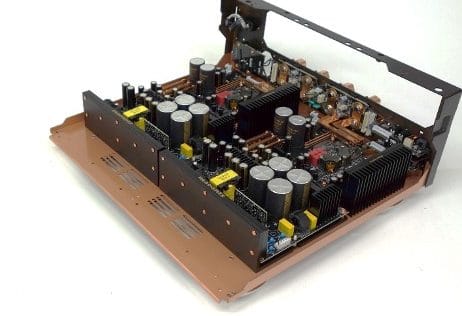
Above it is the “second floor,” the one that houses the preamplifier, and here the additional screens are numerous, one separating the relevant power supply section, located on the front, two others for AC filtering and phono, and finally a front one where the control sections and headphone amplifier are housed. Then the front panel of which we have already spoken, and the splendid finely perforated top cover with a beautiful fine embossed texture that echoes that of the front panel.

Extremely refined technique
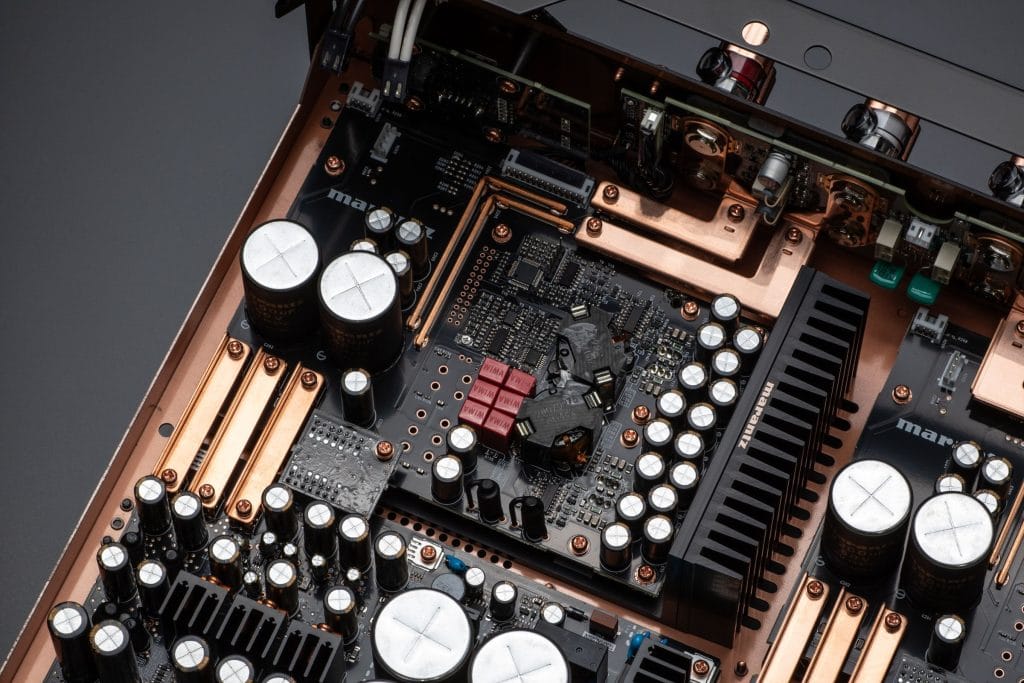
Model-10 is a concentrate of unique “visible” technical solutions and an equal number of less obvious but no less fascinating ones. Let’s start with the one that will turn some audiophiles’ noses up, namely the power amp sections, relegated to the “foreground” of the enclosure and therefore not visible, made with Purifi technology, designed according to a layout exclusive to Marantz and built in house in Shirakawa. Speaking of the Japanese location, the brand’s best achievements, as is the case with Denon, are built on the island, so as to ensure maximum accuracy and precision, Model-10 obviously being no exception. There are two power supplies, one per channel, and they are in switching technology, are huge, exceptionally oversized (60A) and equipped with capacitors made to specification and branded Marantz. We go up one floor, and as we said, here we find the preamplifier section, leaning against the rear panel as a matter of course. Model-10 is fully balanced, and obviously adopts HDAM modules
HDAM, a bit of history
Hyper Dynamic Amplifier Modules, exclusive to Marantz were born in 1992 in the PM-99SE integrated amplifier. In the primitive version they exhibited about 70 dB of gain and a slew gate of 70-80 V per microsecond, truly astounding numbers for the time, which had to make do with the more modest performance of op-amps of the time, such as NE5534, or discrete circuitry. In 1994 the new version, NEW HDAM, with better performance, to arrive in 1997 with the adjustable version, which allowed precise adjustment of the DC offset within the unit. We come quickly to the present day, with the development of two different modules, HDAM and HDAM-SA3, both of which contribute, with different functions, to signal preamplification. In the Model-10 they are both used at different points in the circuit, as buffers, for converting unbalanced signals to balanced, for variable gain, and as voltage amplifiers and voltage-to-current converters, in addition, of course, to use in the phono stage.

Separate feeds
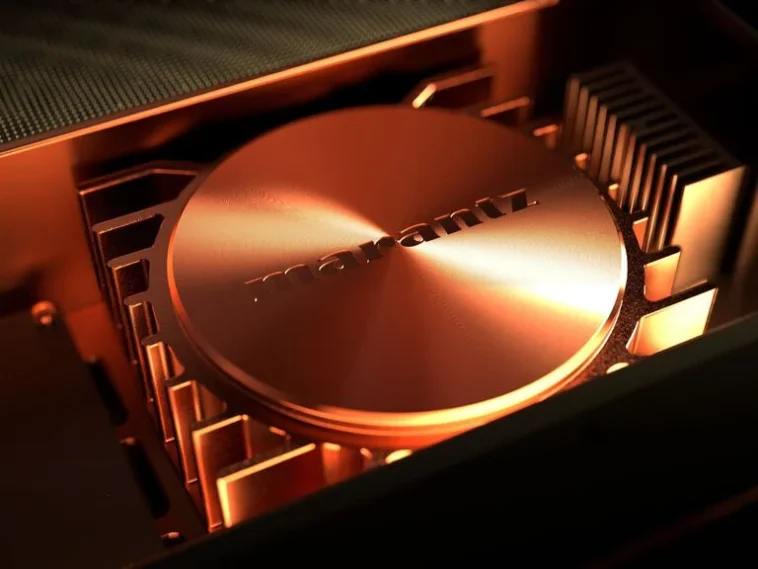
As we have just mentioned, the power sections have their own switching power supplies, one per channel, while the preamp part has its own toroidal transformer (which we see illuminated under the lid grille) adorned with a dissipation system that has only an aesthetic function, with on the right the filtering and stabilization circuits, obviously separate for each branch, and on the other side a robust RF filtering section with two large coils. The services and controls part is powered by an additional dual power supply, a linear power supply that operates when the amplifier is on, and a switching power supply that provides power for standby services and shuts down when the machine is on.
Cutting-edge components and solutions
People now make the quality of internal components a marketing message. Operationals or emblazoned capacitors are used, making the enthusiast believe that simply their presence, or possibility of interchangeability, is a guarantee of good sound. Unfortunately or fortunately, this is not the case. It is knowing how to put the right component in the right place, knowing how to devise the circuit, knowing how to design the paths, all of this makes a difference. Like a painting, a sculpture, any artistic work: it is not just a schematic, but the making of it, the choice of components, the layout, a work of art, the result of a man or a team who know what they are doing. Marantz Model-10, like so many “esoteric” achievements differ in this from the rest of the competition. Here, first of all, we were very impressed by the power transmission that is done with copper bars as short as possible and increased in cross-section thanks to L-profiles screwed with screws obviously made of copper.

And this is for all speaker connections with binding-posts and paths from the power supplies or power sources to the users. Here, too, of course, there are many valuable components. In addition to the ubiquitous red Wima but not only, there are MELF resistors, low-tolerance mica SMD capacitances, high-speed SiC Schottky diodes, a volume control made with the MUSES72323 chip, and many other special features that would take too much space to describe.
The most powerful ever produced
Marantz is keen to point out that the Model 10 is the most muscular amplifier ever made by the company, and is in fact capable of 250W per channel into 8 ohms doubling to 4, across the whole band, and with a THD distortion of 0.05%, and that means they are “real.” Interesting is the absorption figure, which seems to be “wrong,” only 270W, but which is actually calculated according to the IEC 62368-1 standard, i.e., at 1/8th of the maximum undistorted power at 1kHz loaded at typical impedance (8 Ω). And this really makes sense, taking into account the musical signal and the much higher efficiency of class D. The most interesting figure, however, is the damping factor, 500 stated and we have no reason not to believe it. The dimensionless number (indicating driving capability) was normally quite low in digital amplifications; as research progressed, extremely higher working frequencies were obtained, and they were able to make them particularly capable not only of driving, but more importantly of doing so at any frequency. In fact, class D was previously relegated to subwoofers only, because in that region of the spectrum the presence of high-frequency spuriousness was not a problem, whereas it would have been for full-band products, today and every day more and more this problem has been solved and we are able to achieve performance that is absolutely superimposable-if not superior-to traditional amplifications with a frequency response that is totally immune to the load. We at Audio 2G simply think that an object, a technology, should be judged by what you listen to and not by the technique used, that is the designer’s problem, not the listener’s ! So, we have said it before, custom made Purifi Eigentakt modules for Marantz with separate 60A power supplies per module, allowing a current draw of 30A per channel.

Analog just
Model-10 is a “simple” analog amplifier, without internal DAC or streamer, of the rest it is joined, staying in Marantz, by the SACD-10 player and the LINK-10n streamer for those functions. Two balanced inputs, two RCA, one tape-loop, one MM/MC phono the latter with 3 different sensitivities. Model-10 can also be used in pairs with a twin, and then there are both input as a power amplifier, skipping the preamp part, and pre-out, both XLR and RCA for both. The binding posts are beautiful, massive, granitic clamping, accepting any kind of termination and cable section. You can use it in passive multiamplification, and then having it amplify one channel per unit, and in this helps the proprietary F.C.B.S. connection that is used to make different Model-10s talk to each other. Operation is very simple, from front panel few operations are possible, from remote control you can choose many options, from display brightness to display type (Vu-Meter, beautiful, volume in large and input or vice versa), tone controls with bypass, etc. etc.
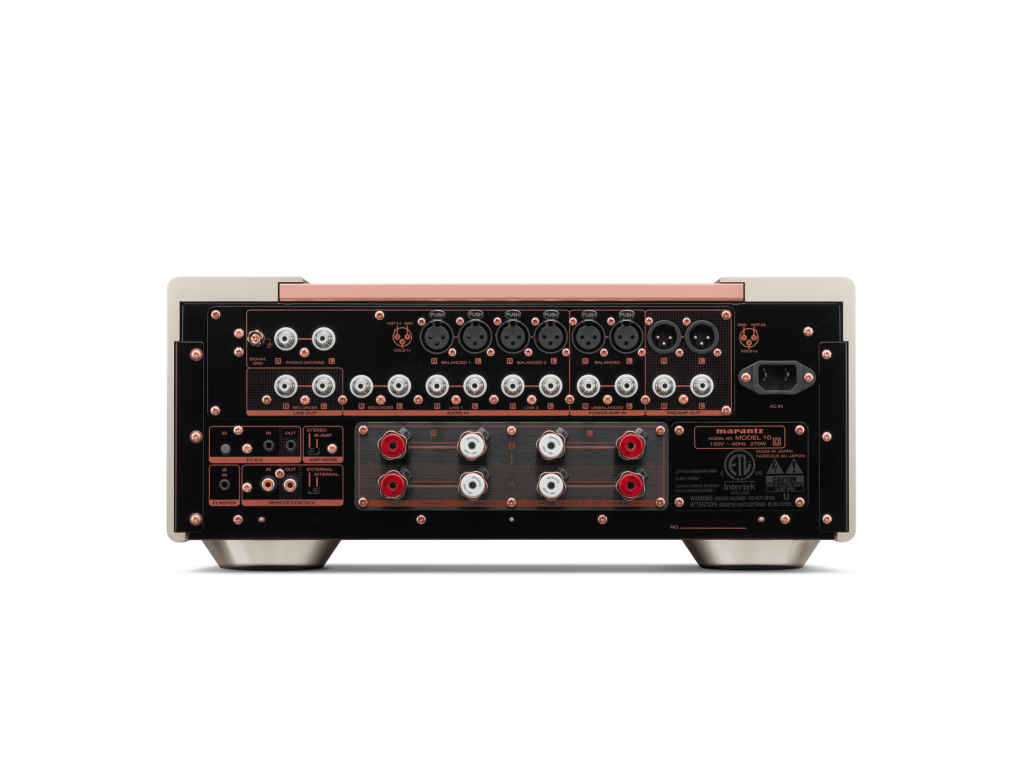
The only problem we have encountered is poor sensitivity with respect to sources with relatively low output voltage. Not that they can’t be heard, we would miss it, but the position of the knob has to go beyond 12 o’clock, in the region in which the Muses chip (which contains an array of resistors, among other things) does not have the same granularity, and then you risk calibrating the desired level with some difficulty. Marantz asked about this told us that the sensitivity is calibrated for the new generations of sources that come out with a much higher level than in the past, but that a software patch is being distributed that will allow the sensitivity to be adjusted individually for each input, so that any source can be connected without having to go “past noon.”
Silence
Daniel Baremboim in the book “Music Awakens Time” states that the most important part of music is silence. A statement that seems trivial, but which is not trivial, and which encapsulates the very essence of music. And respect for silence, which is a note on par with other notes, is very difficult to respect in an electronic or electroacoustic device. It is precisely when energy is lacking that residual forces, noises, disturbances, are more likely to be “heard” and thus to pollute the message itself with content that does not belong to it. This Model-10 appears to be a particularly “silent” electronics that is respectful of the musical message, that can perfectly respect silences as well as the great masses, that can perfectly follow the mutability of the message. Do the others do ? Certainly they do, but in this one it is particularly evident, immediate, making material all the techniques used in its realization. The structure, we have said it far and wide, made in such a way as to best transfer the energy without the sections disturbing each other is immediately evident to the listener. Very quiet and with bursting energy. It is not always the case that the engineering effort is so immediately apparent to the listener.
Unparalleled speed
Model 10 has an ability to follow the music, to go along with any energetic demand with lightning-fast speed and, above all, with a damping that is hard to find except in electronics of totally different cost. In any region of the spectrum, what one hears really seems to be the live instrument, without discount. The power is bursting, the dynamics overwhelming, and at the same time the sound generated fills the space, not stopping between the speakers but appropriately, just right, filling the room, reconstructing a granitic and stable image. In short, a truly realistic amplifier that is difficult to categorize. The price does indeed place it in the middle ground between the middle class and the Hi-End, but for all intents and purposes it is a very high-end product, which can sit without any uncertainty next to many absolute integrated amps, such as Soulution, Gryphon, Mola Mola, CH Precision, Vitus. It just becomes a matter of taste which one to choose, at that level, at that of Marantz Model 10, there is no ugly and beautiful, light and dark, there is only what you like, what you prefer.
Technical characteristics:
- RMS power: 250W/500W on 8/4 Ω ( 20hz-20kHz THD 0.05%)
- Frequency response: 5Hz-60kHz (+0/-3dB)
- T.H.D. distortion: 0.005%.
- Damping factor: 500
- MM/MC Phono Sensitivity: 400µV/3.6mV
- XLR/RCA sensitivity: 700mV/350mV
- XLR/RCA S/N ratio: 122dB
- Power supply: 230VCA
- Dimensions: 440X192X422
- Max/stby power consumption: 270W/0.5W
Manufacturer: D&M Holdings Inc, Nissin Cho Kawasaki Japan. Phone: +81-44-670-2665
Distributor: Marantz Italy, Via Giuseppe Manfredi 98, 29122 Piacenza. Tel. 0523716899





GIPHY App Key not set. Please check settings