



 Audio 2G
In the comments we receive daily on YouTube, many of you have asked us for a review of a Rockna product. Given the importance of this brand, we got to work and had the privilege of testing the Romanian company’s top-of-the-line model for you. It’s the Rockna Wavedream Reference Signature, a DAC/streamer that embodies the impressive technical capabilities of this company, which challenges the competition by consistently adopting original and highly innovative solutions. So join us for this review, which will focus heavily on the technical aspects, without neglecting its impact on the listening experience.
A Few Notes on Rockna Audio
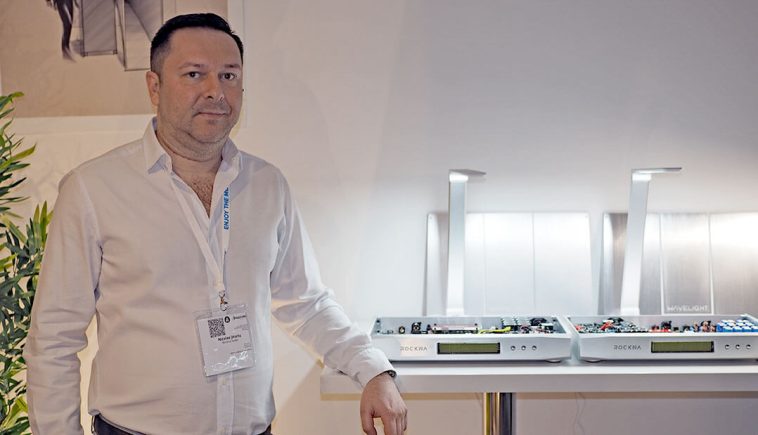
Rockna Audio was founded in 1999 by Nicolae Jitariu in Romania, born out of this engineer’s passion for creating audio equipment that is not only innovative but also capable of delivering a musical reproduction that is rich in detail, musically coherent, and emotionally engaging. The company consists of a team dedicated to technological innovation, which from the very beginning has favored unconventional approaches to the design of digital audio components. Rockna develops original products in the high-end segment of the market, relying exclusively on its own expertise. This approach has allowed the company to circumvent the limitations imposed by solutions developed by third-party companies. Thanks to its digital systems based on FPGAs and custom R2R DACs, Rockna has earned a solid reputation among audiophiles worldwide. The original Wavedream, which dates back about a decade, marked a pivotal chapter in the brand’s history and served as the foundation from which the Rockna team built the current model, which stands out for its many innovative technical solutions.
Rockna Wavedream Reference Signature: Technical Analysis
I’d like to begin this technical description—which is necessarily long and detailed given the sheer number of innovations incorporated into the device—by immediately addressing the issue of the chipset, or rather, its absence. There is, in fact, a tendency among audiophiles to associate a certain sonic signature with the manufacturer and model of the chipset used. We will not cease to emphasize that, however important it may be, the chip is not the only factor that determines the sound of a digital audio device. Staying within the digital realm, the oversampling section, the filters, the clock, and the software implementation of the various communication protocols are equally—if not more—crucial factors. Furthermore, the hardware—PCB layout and type, internal connections, components, etc.—plays a decisive role. Therefore, to think that the “sound” of a digital device depends largely on the chipset used is, in our opinion, misleading to say the least. The Rockna under review does not contain a chip in the traditional sense, but rather an evolution of the D/A conversion modules found in the original Wavedream DAC: a hybrid, discrete,“sign-magnitude”resistive ladder array, controlled at the logic level by an algorithm encoded within a dedicated FPGA (field-programmable gate array). These DAC modules are capable of handling sampling frequencies up to 6 MHz, and their output is unbuffered.
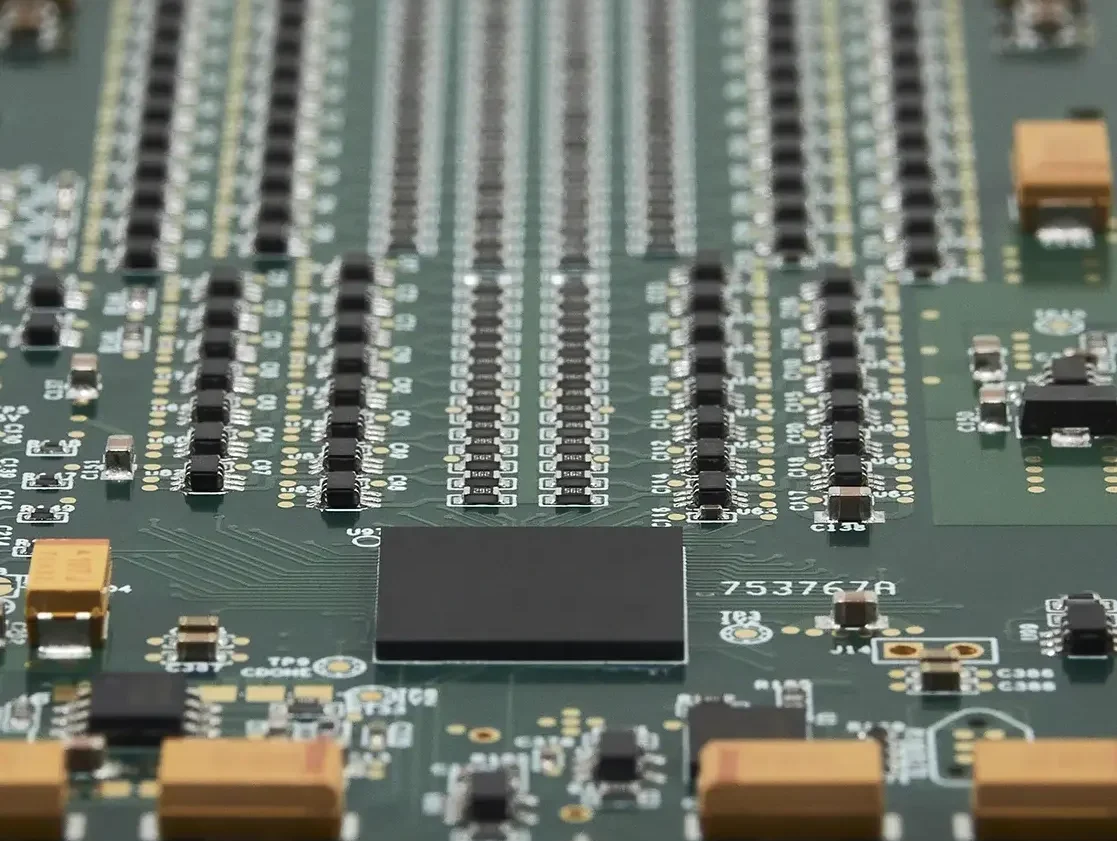
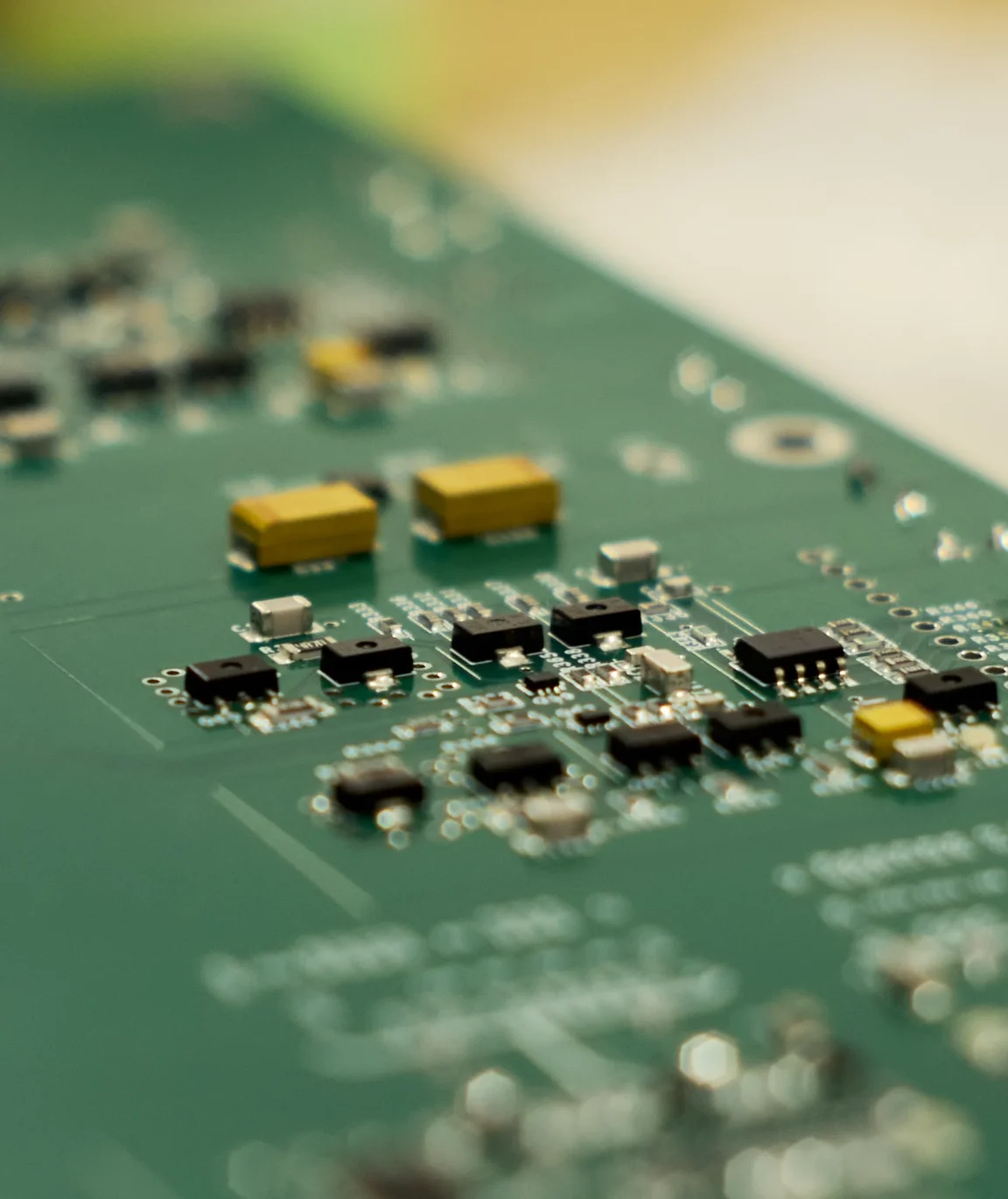
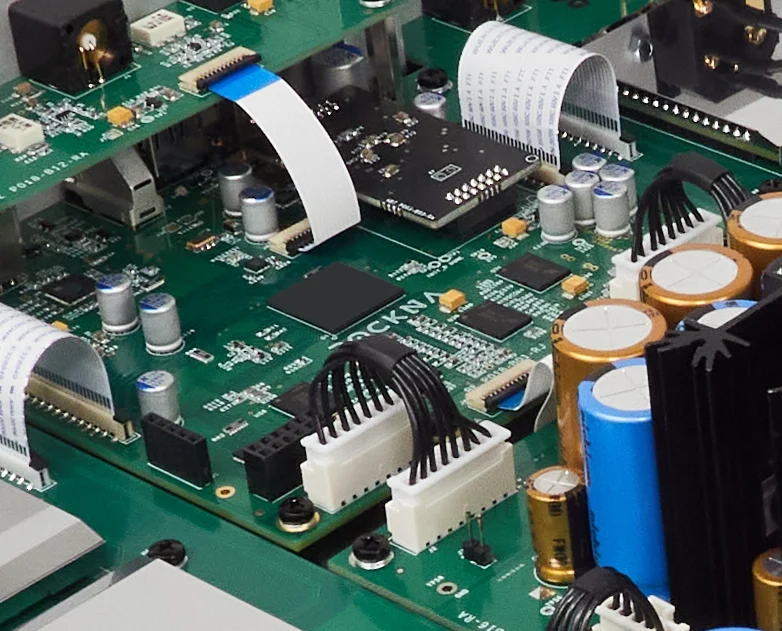
Although there are logical similarities between the old and new models, the circuit layout differs significantly. This is because the design team optimized the signal paths, which, at this sampling frequency level, are subject to complex issues. Inside the machine, digital signals physically travel as high-speed analog signals and must be handled accordingly. To put it another way: “Bits are bits,” but only at an abstract level; on PCB traces, connectors, and cables, they appear as a sequence of ultra-high-speed analog signals (square waves), which may not be perfect: each has a rise time, a fall time, and may be subject to ringing, spikes, reflections, crosstalk, phase noise (jitter), etc. This is why Rockna has implemented certain techniques used in radio frequency to mitigate these issues, which have the potential to degrade the sound after the D/A conversion stage. The Wavedream Reference Signature therefore features a10-layer central printed circuit board (PCB) for the digital front-end processing and the network renderer. There is also a new low-noise power supply section and new conversion boards in a balanced configuration, with two per channel. To preserve and maintain signal integrity, the clock and data signal paths have been shortened as much as possible and are equipped with high-quality board-to-board connectors.
Linear power supply
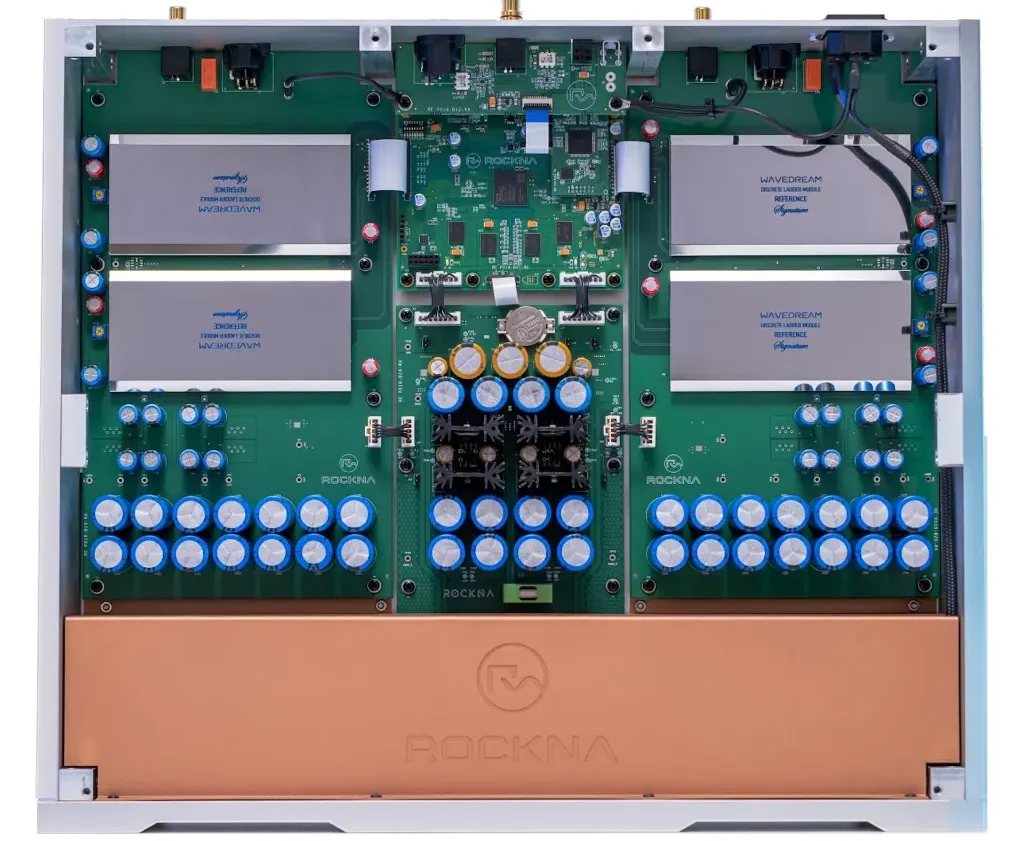
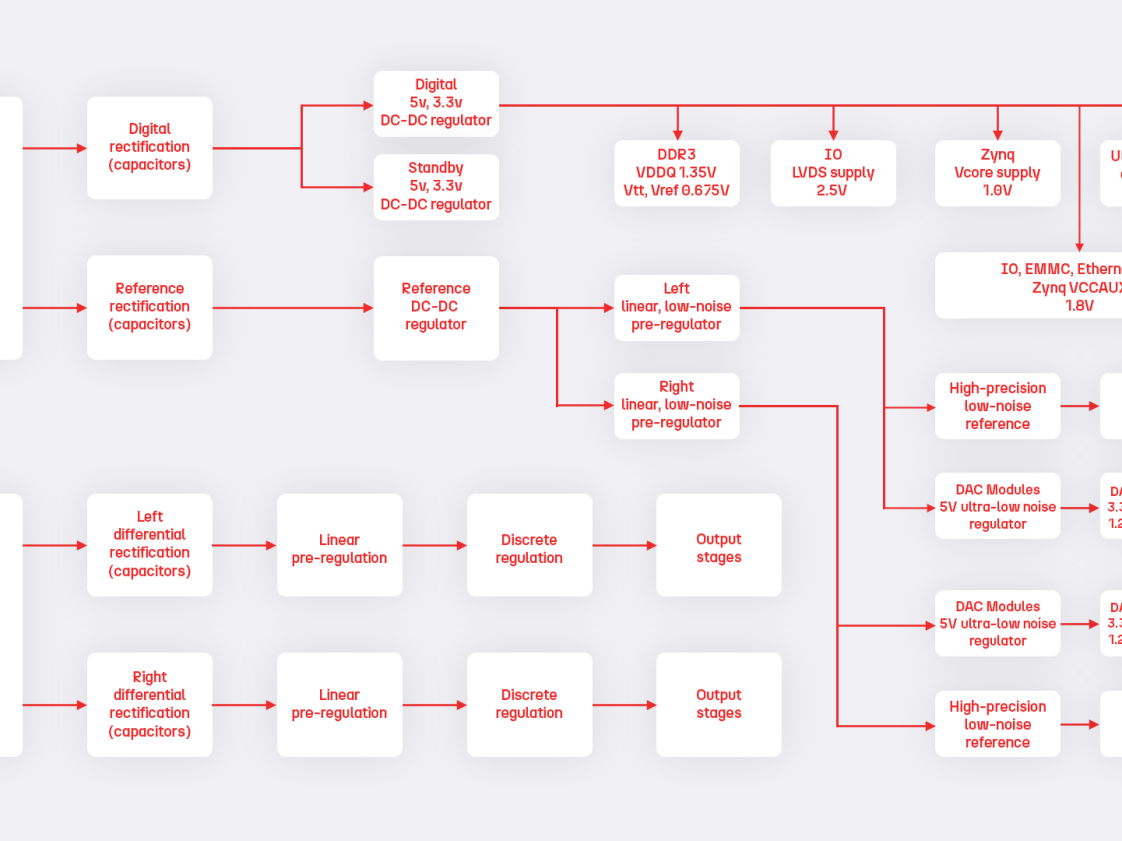
Unlike many DACs we’ve had the chance to test recently, the Rockna Wavedream Reference Signature primarily uses linear power supplies that invariably feature pre-regulation stages and additional local regulation. In total, there are no fewer than twenty different circuits managing approximately 90,000 µF of capacitance. The toroidal transformers—separate for the digital and analog sections—are concealed from view by a sort of copper “chest” that serves as shielding. A similar design approach was also used for the display.
General processing is handled by an AMD ZynQ MPSoC (Multi-Processor System on Chip) running a customized Linux kernel. It is worth noting that the ZynQ is significantly over-engineered, offering more than enough processing power to handle even the most demanding audio operations. The final stage of the signal path is the analog output stage, designed to work in conjunction with the new conversion modules. It is built with discrete components and functions as a high-speed buffer. By combining JFET and bipolar devices in a Class A configuration, the output stage of the Wavedream Reference Signature features a low closed-loop output impedance and very low input noise.
Clock Management and Oversampling
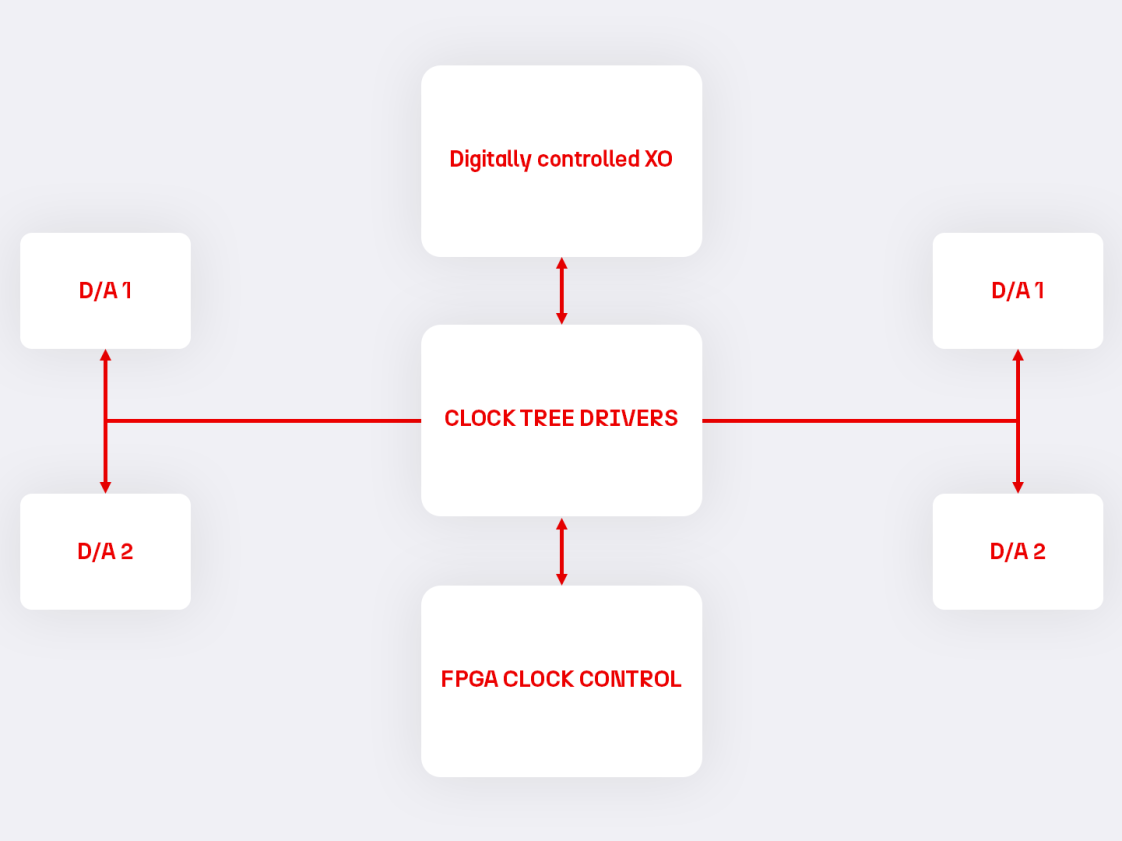
One of the most significant differences that sets this Rockna apart from most of its competitors is the elimination of any ASRC (asynchronous sample rate converter). When transferring audio information from the digital to the analog domain, the clock system plays a fundamental role in giving the sound a sense of realism and three-dimensionality. Most DACs on the market use an ASRC integrated into their chipset. The quality of the ASRC implemented in DAC chips is primarily influenced by cost and the limited space available on the chip rather than by actual performance—despite the fact that this detail can actually result in a perceptible sonic signature. The Wavedream Reference Signature uses an advanced digital PLL clock solution without an ASRC. Any input signal is upsampled at a fixed rate of 16x. The DAC modules decode the digital stream at 768 kHz or 705.6 kHz, depending on the input sampling rate. Rockna claims that these sampling rates are optimal for the analog performance of the DAC modules.
Renderer
Another feature that impressed me about the Wavedream Reference Signature is its network renderer, which integrates seamlessly into the DAC’s digital front end. There is no separate “streamer section” on board, as is the case in the vast majority of devices, since it is part of the software loaded into the FPGA. This eliminates the need for a dedicated external connection and any harmful interference in the digital signal path. It also features 32-bit digital volume control that operates in 0.5 dB increments. I imagine that most users of this sophisticated device will opt to use a preamplifier to handle this delicate task, but it’s still an option worth considering.
Computing Power
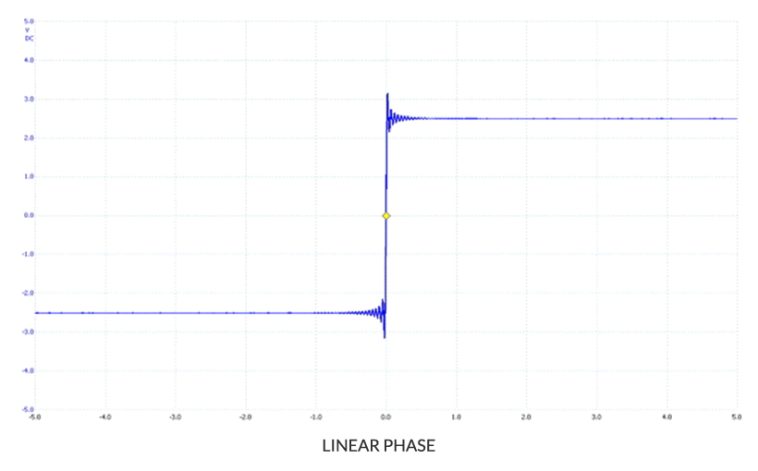
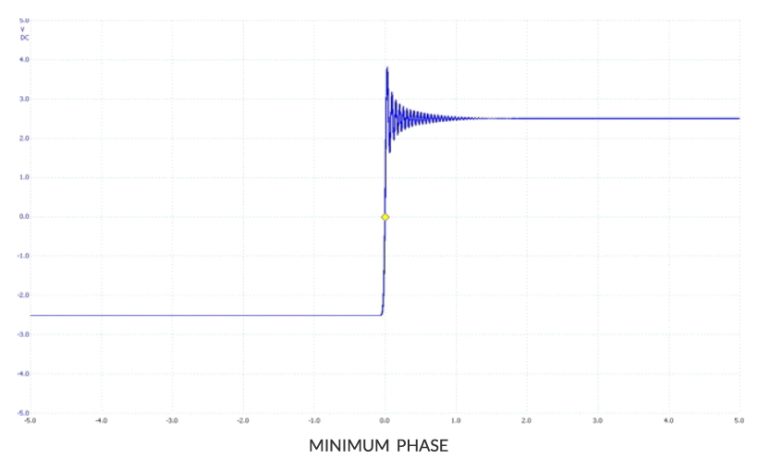
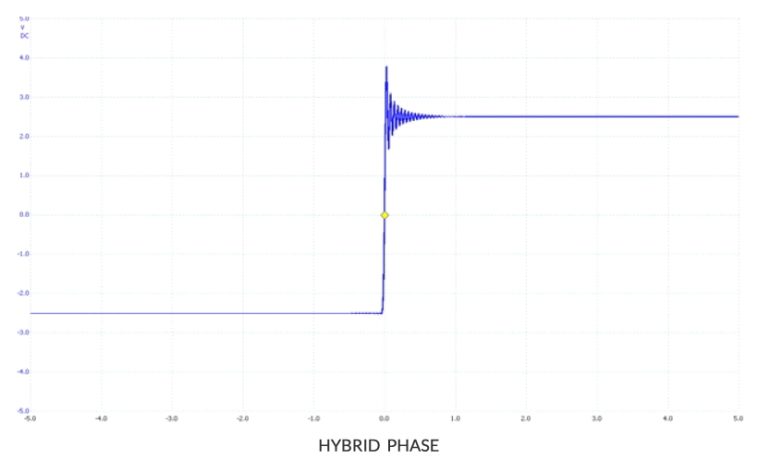
Upsampling is closely tied to filtering options and relies heavily on processing power to function effectively. Rockna does not use standard Nyquist-Shannon filters, believing that the performance achievable with them does not meet the expectations for this DAC. After conducting in-depth mathematical simulations and meticulous listening tests, Rockna developed a custom Parks-McClellan upsampling filter with variants for linear-phase, minimum-phase, and hybrid-phase responses. In the linear-phase mode, the ringing energy (overshoot) is distributed evenly before and after the impulse. In the minimum-phase filter, all of this energy occurs after the impulse. In contrast, the hybrid-phase filter features a response that combines elements of both the linear and minimum-phase responses, exhibiting very low overshoot before the impulse. We also note that there are menu-selectable settings for dither and DSD bandwidth.
Aesthetic design
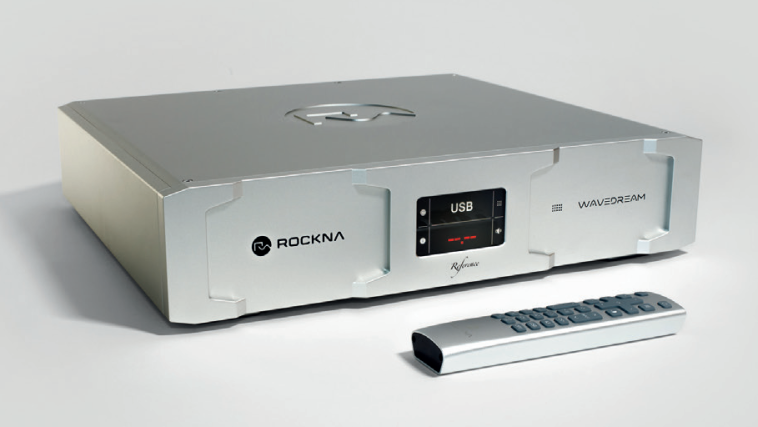
As far as the product’s design is concerned, we can say that the WDRS has a well-defined personality that sets it apart from competing products, while still falling within the category of products with a conventional form factor (45 x 39 x 10.5 cm (WxHxD)). In the center of the front panel is a 3.5-inch touchscreen display with a resolution of 800×480 pixels, more than enough to clearly show the selected input, the sampling rate of the currently playing file, and the set volume level when using the built-in digital volume control. All configuration operations can be performed via this touchscreen; however, these functions are also replicated in a very convenient control app (intended for configuration, not for daily use as player software), which provides access to all settings and the ability to perform firmware updates, which are released regularly. On the rear panel, there are low-impedance XLR and RCA outputs, as well as various digital inputs, specifically: LAN, USB, I2S via HDMI (configurable for different pinouts), AES/EBU via XLR, coaxial S/PDIF, and Toslink. I found it particularly convenient and enjoyable how easily you can select the LAN interface and then choose the rendering protocol you want to use (Roon, UPnP A/V, OpenHome, HQPlayer NAA, AirPlay, Spotify, Qobuz Connect, Tidal Connect, or Squeezelite). A real gem for digital audio enthusiasts is the native support for the Diretta protocol, which is relatively unknown in our part of the world but is actually very interesting. It’s worth noting that the cabinet is constructed from thick aluminum plates held together by structural struts made of the same material. This is a classic construction method, quite different from the approach now common in high-end systems, which involves cabinets made from blocks of aerospace-grade aluminum machined from solid blocks using CNC machines.
Rockna Wavedream Reference Signature: Listening Test
For our critical listening sessions, we paired the Rockna Wavedream Reference Signature with the Soulution 511/525 amplifier system driving the Vivid Audio Giya G2.1 speakers. We used the Playback Designs MPD 8 as our reference DAC, while the Antipodes Audio K30 (G4) served as the audio server. The cables used were Audioquest for the analog section and Mad Scientist for the digital section.
I’ll start with a note about the software I used. Normally, in my system, I use Roon Server in combination with HQPlayer, given that the Antipodes K30 allows me to split the workload between the server and the player thanks to the two computers built into it. I therefore began my listening sessions by configuring the Rockna in HQP NAA mode. I must note, however, that despite several attempts, I was unable to find an HQPlayer configuration that was fully satisfactory. I certainly attribute this to my inability to manage the software’s numerous parameters quickly; after all, it took me several months of trial and error to find the ideal configuration for my Playback Designs MPD 8 DAC. So I quickly switched—thanks to the Rockna’s simple interface—to using the Roon Bridge, and here I was in for a surprise: I had never heard anything sound this good with “plain” Roon (i.e., without HQPlayer). This is actually quite bizarre because, in fact, the combination of a ROON Server on a dedicated device and a ROON Bridge on a dedicated endpoint connected to the DAC has never fully convinced me. On the contrary, with this Rockna Wavedream Reference Signature, the performance has been thrilling. While reading online, I discovered that the implementation Jitariu and its engineers have created is actually profoundly different from the classic ROON Bridge component that anyone can download from the ROON website. It is, in fact, a “full” version of the ROON Server, from which the server-related features have been removed. Very interesting and, come to think of it, further proof of the expertise of Rockna’s engineers. Finally, so as not to exclude one of my favorite protocols, I switched to UPnP using JPlay as the player. Here too, the performance was superb, which convinced me to continue listening in this mode. As I write this article, I’m also testing “Direct” mode (meaning the network protocol), which is proving to be very well implemented and sounds just as good.
Turning to the listening experience, the first keyword that comes to mind is “airiness.” The orchestra’s sound immediately seems enveloped in a sort of aura. This occurs both on a global level—that is, for the entire orchestra—and on an individual level—that is, for each instrument. This aspect not only makes the listening experience completely effortless but also allows for highly effective critical listening aimed at uncovering what lies within the recording—even the most hidden details. I must also say that this sensation of air—and I would even say light—combined with the extraordinary transparency truly moved and captivated me. In comparison, my DAC exhibited a greater tendency toward chiaroscuro and “fleshy” tones. Obviously, at this level, there is no “right or wrong”—these are interpretive nuances, and as such, they must be weighed and evaluated in relation to one’s personal taste.
Another aspect I’d like to mention is the extraordinary level of detail this DAC is capable of. However, this shouldn’t lead one to think of it as a bluntly analytical device. No, it’s quite different, and this is also linked to its ability to reproduce a very wide and well-defined soundstage across all three axes. These two characteristics are closely intertwined: while listening, it’s a bit like observing a landscape, a panorama. I can enjoy the whole picture, but I can also focus on a single element—say, a tree, a lake, or a cloud. With the Rockna Wavedream Reference Signature, I’ve never had the feeling of an “information overload”—of details being thrown in my face just for the sake of showing off its capabilities. No, it’s a coherent and cohesive whole, but when you focus on an instrument—be it a violin, a timpani, a drum set, or even a voice—it’s right there with all its wealth of information, ready to be heard, interpreted, perceived, and enjoyed. Keep in mind that achieving a performance of this kind is by no means easy. Often, when a DAC is described as “detailed,” you realize—perhaps after a while—that it’s simply very open in the mid-to-high range, nothing more. With this Rockna, things are quite different.
A moment ago I used the adjective “cohesive”; well, I should add to this blend of perfectly integrated elements superb timing and excellent dynamics: the Wavedream Reference Signature manages to infuse the sound with great energy, whether it comes from an instrument or a voice, even at very low volumes, while still allowing you to perceive the energy and dynamics of that particular sound. Consequently, at higher volumes, you can experience true dynamic “explosions” in which the precision of the transients remains impeccable, with powerful attacks and a natural, detailed decay.
Conclusions
The Rockna Wavedream Reference Signature ran side by side with my digital front end for more than a month, delivering performance that was entirely comparable. On a purely subjective level, I may have preferred one system over the other at times, but I’m left with the impression that I’ve been listening to two systems that are “in the same league.” There is, however, one distinction to be made: my system is based on a division of roles—a DAC, a server, a player, and a network interface/reclocker; each of these components has its own dedicated power supply and cabling (fiber or copper). As if that weren’t enough, the setup is complicated (to put it mildly) and the costs are high. The Rockna system certainly can’t be called inexpensive—far from it! After all, I don’t think cost containment was part of the design brief that Jitariu and his dedicated team had set for themselves. However, as mentioned earlier, the performance is comparable. Furthermore, here we have a single chassis, which, in the real world, is a huge advantage. And if you use protocols like Tidal Connect or Qobuz Connect—which, by the way, work perfectly and are a joy to use—you don’t even need a server. By this, I don’t mean to convince you that the Rockna Wavedream Reference Signature is the system every audiophile must buy—heaven forbid—I’m simply pointing out that its retail price seems to me to be entirely consistent with its exceptional sonic performance.
Giulio Salvioni
Technical Specifications
- Type: R2R-based DAC/Network Audio Processor
- Inputs: LAN, USB, I2S via HDMI, AES/EBU via XLR, S/PDIF (coaxial and Toslink)
- Outputs: RCA and XLR
- Audio Renderer support: Roon Bridge, UPnP, OpenHome, AirPlay, HQPNAA, Spotify Connect, Qobuz Connect, Tidal Connect, Diretta, Squeezelite.
- Supported standards: PCM up to 705.6/768 kHz, DSD up to DSD512
- THD: -102 dB (-3 dB)
- DNR: 139 dB
- Finish: Matte black, matte silver
- Dimensions (WxHxD): 45 x 39 x 10.5 cm
- Weight: 10 kg
Price: €26,950.00
Manufacturer: Rockna Electronics SRL, 5 Plopului Street – 720145 Suceava, Romania
(general inquiries)
(general inquiries)
Distributor for Italy: Audio Graffiti, Via degli Artigiani, 5 – 26025 – PANDINO (CR)




GIPHY App Key not set. Please check settings