



 Audio 2G
But what exactly is the Marantz LINK 10n? It’s not just a streamer or a particularly sophisticated D/A converter—and it would even be an understatement to call it a digital preamplifier. The LINK 10n likely represents, first and foremost, the culmination of a design journey that Marantz began many years ago and that has now reached full maturity. To truly understand the LINK 10n, it may be best to step outside the traditional framework we’re used to applying when classifying Hi-Fi components. For over forty years, the ideal system was built around separate sources, a preamplifier, an integrated amplifier, and one or more power amplifiers. The streamer has only emerged in the last fifteen years, initially as a simple replacement for the CD player, and later as a universal source capable of handling digital music, online services, and high-resolution files.
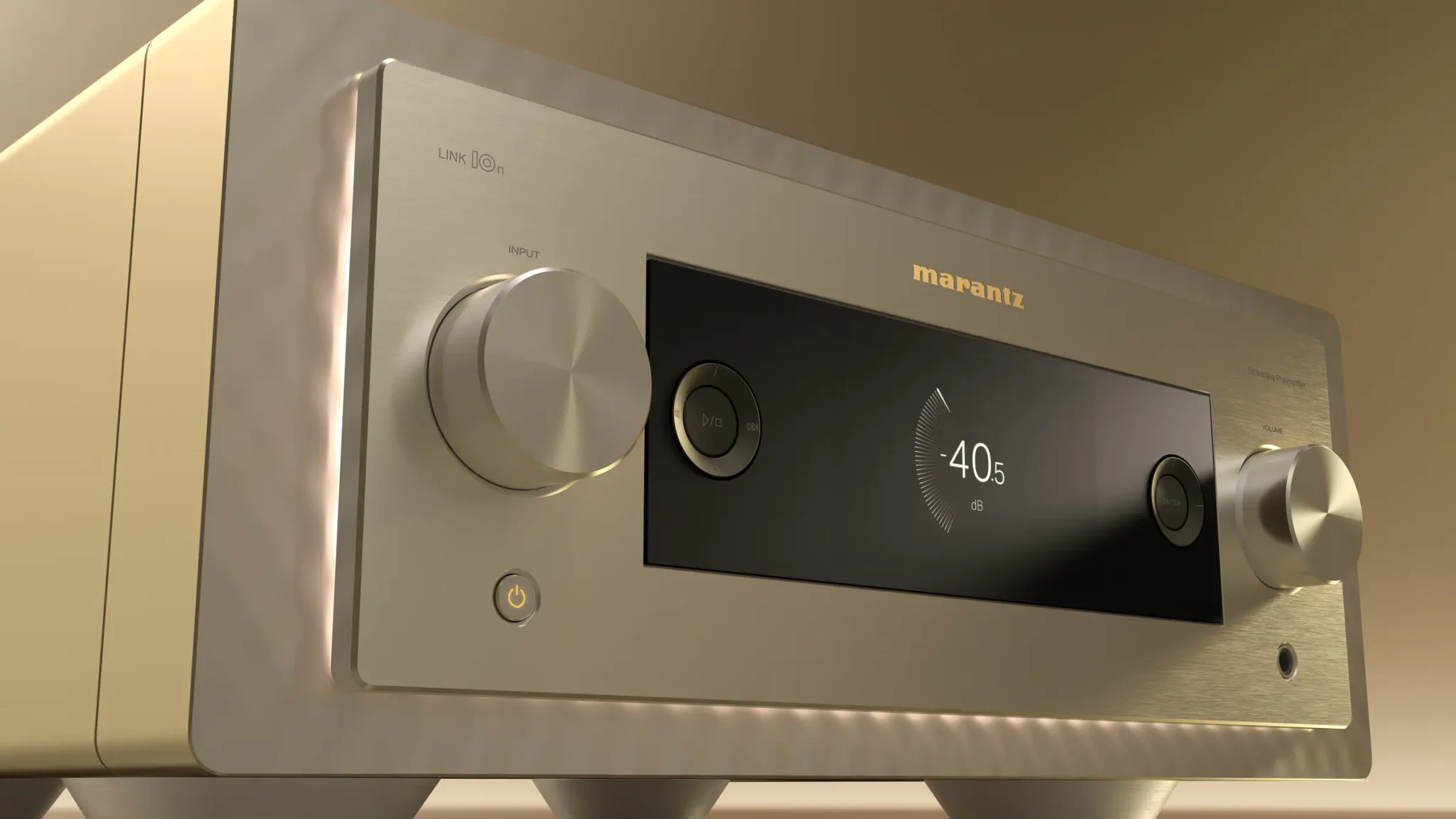
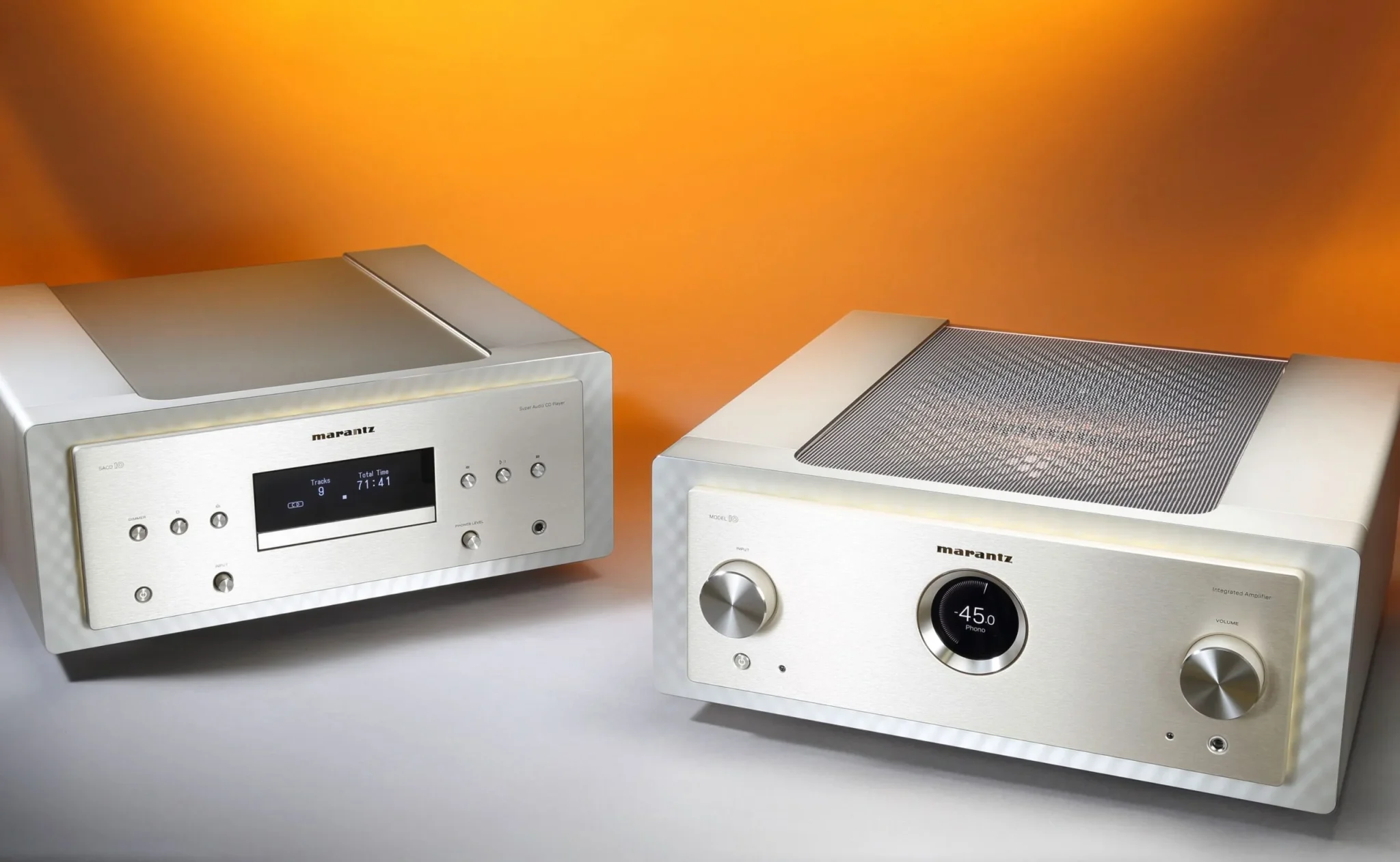
This model finds its natural place within the new 10 Series, the most ambitious project developed by Marantz in recent decades. In fact, the MODEL 10, SACD 10, and LINK 10n share much more than just an aesthetic identity: they were designed as components of a single technological platform, developed without compromise and intended to set the new gold standard for the brand’s products. Unpacking it requires almost as much care as handling a power amplifier. Its weight of over thirty-three kilograms is surprising for a component that, at least on paper, should be “just” a digital source. Its substantial dimensions, combined with an extremely solid build, immediately convey the sense that you’re looking at a reference-class piece of equipment. The milled aluminum front panel rests on a finely crafted back panel and represents one of the finest interpretations of Marantz’s new design language. It is enhanced by subtle lighting that discreetly highlights the contrast between the two panels. At the center is the large, high-definition display, set within the characteristic circular window that immediately evokes the brand’s heritage, while on either side are two large, solid-machined knobs mounted on bearings and featuring a level of mechanical precision rarely found even in products in higher price ranges.
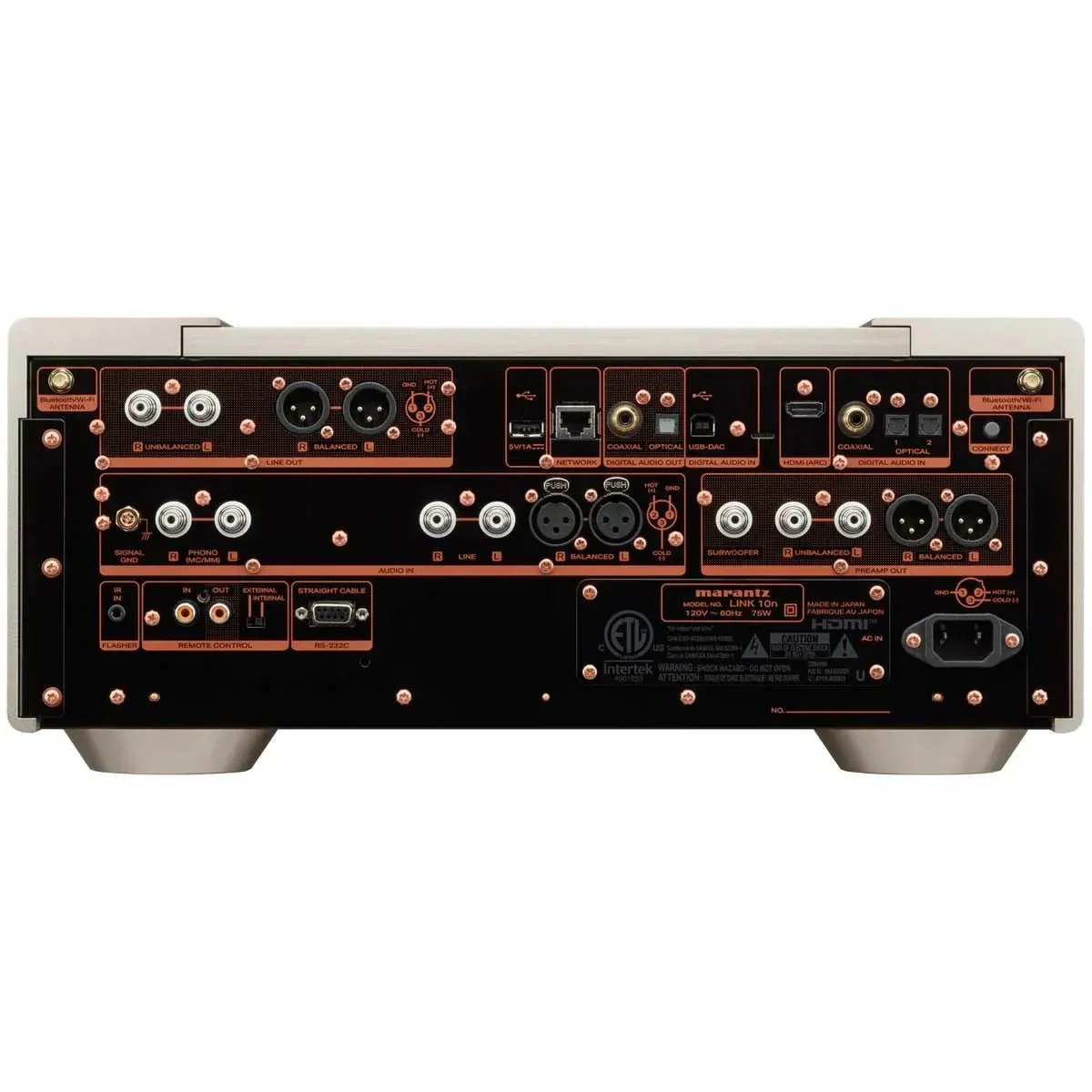
The rear panel also speaks volumes about the design philosophy. Balanced and unbalanced analog inputs, an MM/MC phono stage (the latter with 3 adjustable impedances: 32/100/390Ω), comprehensive digital connections, HDMI ARC, Ethernet, USB, fixed and variable outputs, XLR and RCA connections, and a dedicated subwoofer output with crossover frequencies of 40/60/80/100/120 Hz. Rather than the back of a streamer, it resembles that of a sophisticated control preamplifier. It is precisely by looking at these features that one understands the philosophy behind the LINK 10n. It was not designed to simply add a digital source to the system, but to become its operational hub. By tracing the signal path, everything immediately becomes clearer.




GIPHY App Key not set. Please check settings