

 Audio 2G
Eversolo EOS
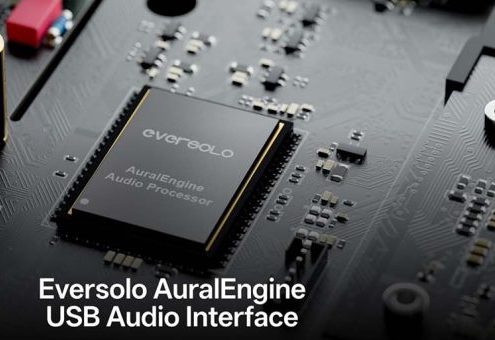
This device runs on an operating system based on Android. One interesting feature is the EOS technology (Eversolo Original Sampling-Rate Audio Engine), which the company developed to minimize the limitations of the audio subsystem in a standard Android device, where any audio stream is forcibly sampled at 48 kHz by the system mixer. The EOS architecture bypasses this restriction at the kernel level, allowing any third-party application (e.g., Apple Music, Tidal, or Qobuz) to send the audio data stream directly to the converter in native bit-perfect mode, preserving the file’s original sampling rate. TheAuralEngine Instead, it is a dedicated audio processor that uses a hardware architecture multi-core for processing high-resolution audio streams via USB, minimizing the load on the operating system. The maximum supported resolution is Native DSD 512 and PCM 768 kHz/32-bit over USB and i2S (In and Out). It is interesting to note that in most competing products, this task is delegated to XMOS chipsets or, to a lesser extent, Amanero chipsets.
Eversolo DMP-A8 Master Gen 2:Software Features
This topic, too, is likely to be quite extensive. Let’s start with the basics: support for streaming services, including Spotify Connect, TIDAL Connect, Qobuz Connect, Squeeze Connect, HQPlayer, DLNA, and more. The available services include, among others: TIDAL, Qobuz, HIGHRESAUDIO, Amazon Music, IDAGIO, Calm Radio, Internet Radio, TuneIn, Radio, Paradise, Deezer, SoundCloud, Presto Music, Apple Music…
However, it’s worth taking a look at some of the menus that we found particularly interesting, such as the “Inputs and Outputs” (Routing) menu, which provides a graphical representation of the signal flow. By tapping the icons on the display, you can enable or disable the desired inputs (Network Streaming, SFP, USB, Coaxial, Optical, AES, or physical analog RCA/XLR inputs) and route them to the corresponding outputs. You can enable simultaneous XLR+RCA output or select them individually.
The menu section dedicated to the DAC’s Audio Settings and Digital Filters provides access to the hardware-implemented functions of the AK4191EQ modulator. For PCM file playback, 6 digital reconstruction filters are available, while for DSD streams, you can set the cutoff frequency of the analog low-pass filter (47 kHz, 50 kHz, 65 kHz, or 150 kHz).
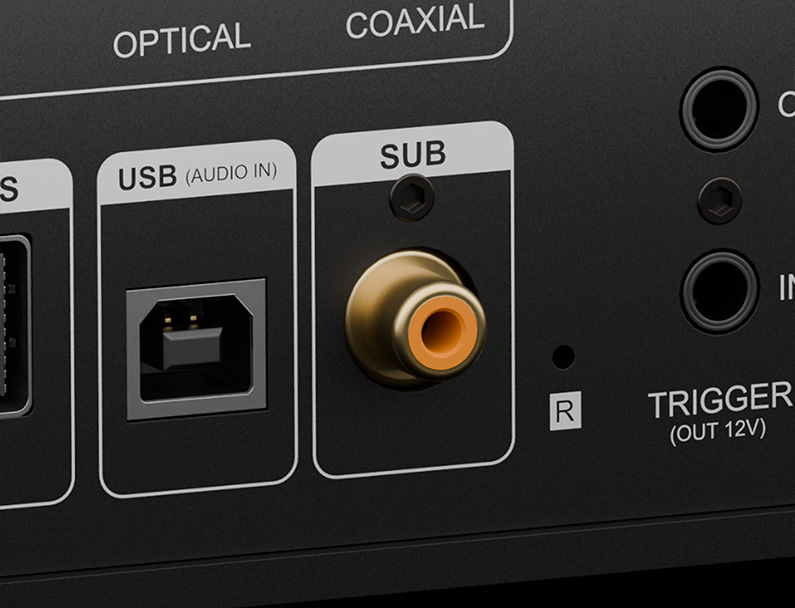
Of particular interest is the Evotune™ PRO Room Correction and DSP section of the menu, which provides access to a room correction system. Here, you’ll find a sophisticated 20-band parametric equalizer, with separate bands for the right and left channels. For each individual band, you can set the center frequency, gain (from -12 dB to +12 dB), and the Q factor. Even more exciting—at least for me—is the function Time Alignment (Time Alignment) which, based on the data acquired during the measurement of a sweep of frequencies, it generates a digital FIR filter capable of compensating for both time misalignments and any frequency response anomalies introduced by interaction with the listening environment. The measurement can be performed using the microphone built into the smartphone on which the app is running Eversolo Control, or using a microphone connected to the USB port, such as the Umik 1 we used. Alternatively, filters can also be developed externally using software like REW (Room EQ Wizard) with a calibrated microphone, then exported to a text file and loaded directly into the Eversolo. Finally, the subwoofer management menu allows you to enable the analog output dedicated to the subwoofer, setting the cutoff frequency from 40 Hz to 500 Hz for the digital crossover (low-pass and high-pass) with filter slopes selectable from either the Linkwitz-Riley or Butterworth types.




GIPHY App Key not set. Please check settings