

 Audio 2G
Franco Serblin, “Accordo Essence”: Listening
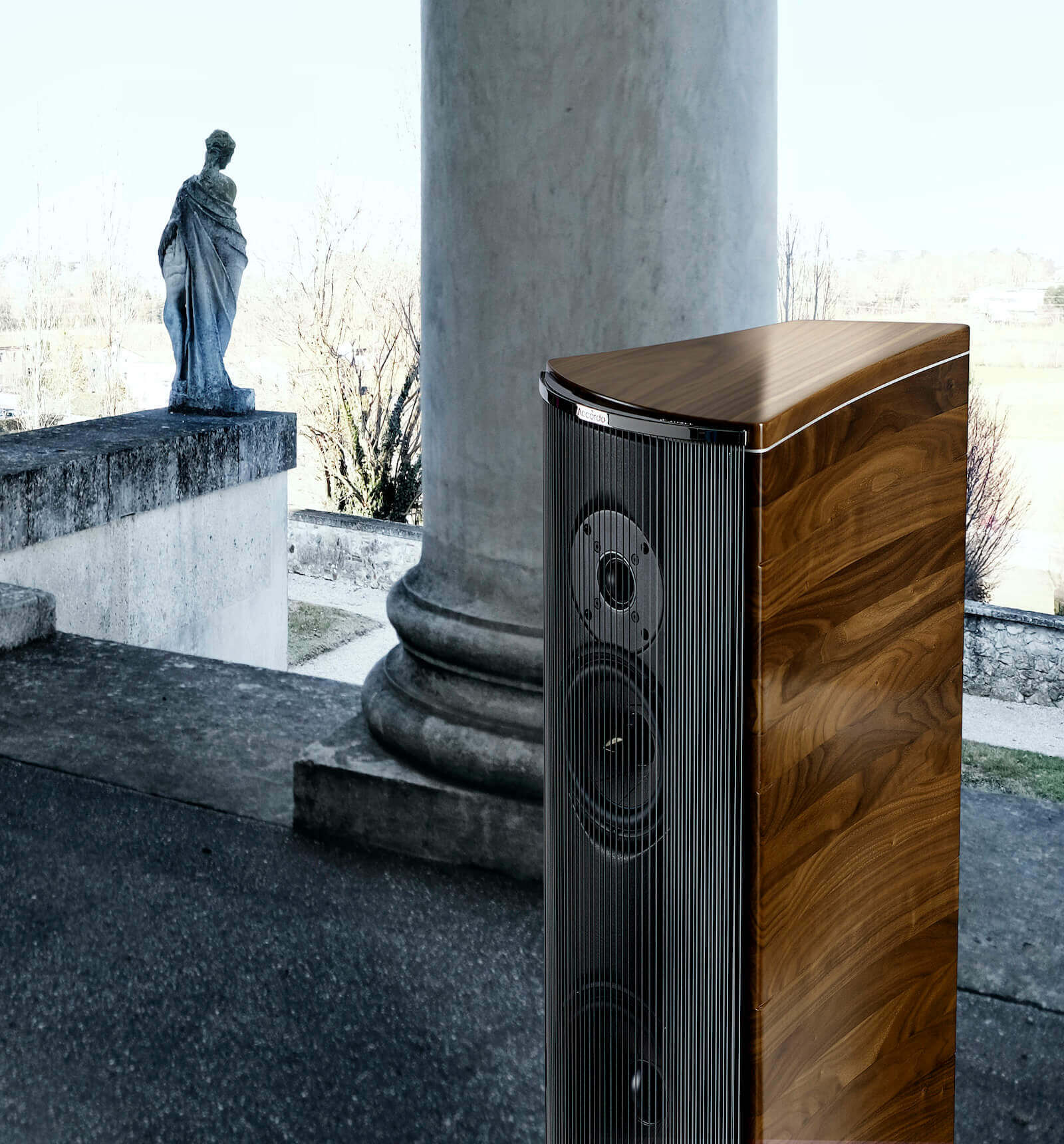
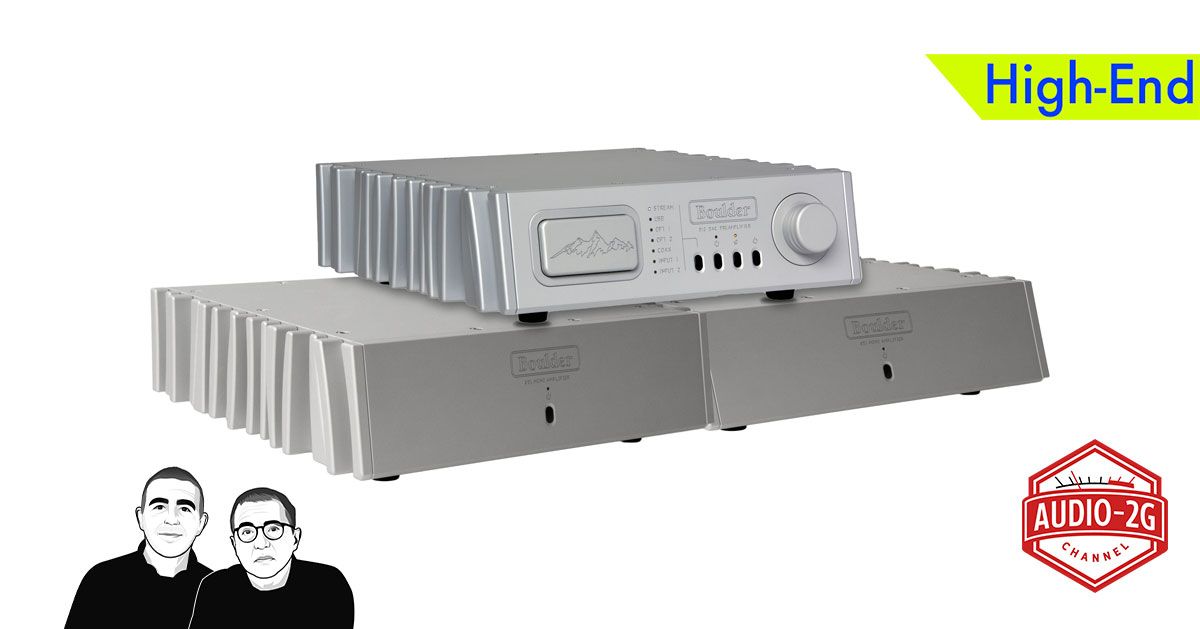
I mentioned this a few lines ago: the first thing that strikes you about these speakers is their ability to create true musical sculptures within the listening environment. I have to use this analogy because simply writing “a beautiful, expansive soundstage” would be an understatement. In fact, there are many speakers that can provide that sensation; what happens with the Accordo Essence is quite different—they literally transport you to a different place than where you’re listening to them. And it doesn’t matter if you’re listening to a studio recording, where there are no ambient cues—or they aren’t real. Even in that case, the sensation is that of being in a space we know to be artificial, yet one that is nonetheless utterly believable. The “trick,” I suspect, lies in the fact that every single detail is brought to the fore—not with unnatural emphasis, but with meticulous precision. In short, no frequency range is given greater or lesser prominence; the entire reproduced spectrum receives equal treatment. In this regard, in my opinion, the low-frequency range plays a decisive role and deserves a brief closer look. Some of my readers may recall my preference for mini speakers when the listening environment is untreated or when space is limited. My reasoning is that I find it preferable to introduce less low-frequency energy rather than engage in a battle—one that is, moreover, destined to be lost—stemming from the desire to use (or own) full-range speakers with powerful woofers that would require a room of adequate volume. In this specific context, the Accordo Essence speakers are, for me, the best of both worlds: they don’t have the low-frequency limitations that most mini speakers have, yet they never cause problems due to excessive low-frequency energy. Of course, some fans of techno, hard rock, metal, etc., might turn up their noses and would certainly find something more to their liking elsewhere. However, for everyone else, these speakers offer a truly effective solution for managing the low-frequency range in any room. Incidentally—and here I’m tying back to the discussion on amplification—when driven with sufficient power, the woofer and mid-woofer array exhibits prodigious speed, resulting in unparalleled articulation and tonal accuracy. The other aspect I’d like to highlight is a sort of sense of relaxation that these speakers are able to convey. Despite the fact that, as I’ve already mentioned, every detail is reproduced without any omission or uncertainty, there’s a sense of cohesion—an overall coherence—that gives the listening experience a pleasant feeling of naturalness. This is the aspect that most emotionally reconnected me with the speakers I mentioned at the beginning of this article. In summary, I think I can say that the overall tonal balance places the Accordo Essence squarely in the best tradition of Franco Serblin’s products. In this regard, I must recount an anecdote: an audiophile friend of mine, a great connoisseur of Sonus Faber speakers from the 1980s and 1990s, came to visit me out of curiosity about these new speakers. At the end of a very long listening session, he said to me: ““These Accordo Essence speakers sound just like Franco Serblin’s best Sonus Faber models.” I believe this statement serves as a positive acknowledgment of the tireless work of Massimiliano Favella, Franco Serblin’s son-in-law and student, who today proudly carries on his legacy by creating these beautiful recordings in the spirit of a tradition spanning several decades. But let’s get back to the listening session: Mahler’s Fifth Symphony and Sibelius’s Violin Concerto in D minor, two of my go-to symphonies when testing speakers, allowed me to appreciate the system’s ability to extract detail even at very low volume levels, along with its ability to convincingly handle dynamic variations, even those of great intensity. It was precisely with symphonic music that I realized just how revealing the Franco Serblin Accordo Essence speakers are of the qualities of the amplifier driving them. In our case, with the Boulders, we achieved a more ethereal and dreamlike atmosphere, despite a low-end response that was less immediate and crisp than what the pairing with the Audio Analogue Absolute 3.0 delivered. The Italian amplifier managed to push these speakers to their limits, revealing their remarkable dynamic capabilities, yet at times obscuring the lyricism of which the Vicenza-made speakers are capable. Is there a winner in this comparison? Certainly not—only systems that interpret a symphony in the way that suits them best.




GIPHY App Key not set. Please check settings