

 Audio 2G
If you have had a chance to read some of my reviews or watch some videos on the Audio 2G YouTube channel, you will know that I am not exactly a fan of wireless connections in audio. Nothing against their practicality in most areas of daily life, however, when it comes to audio my choice is always in favor of wired connections. It follows that my attitude toward wireless speakers has always been at least suspicious, not to say openly critical. However, when I came across the System Audio Legend 40.2 Silverback DS speakers that I will describe in this review, my attitude changed radically.
The meeting occurred quite fortuitously during the recent Roma High Fidelity event held in Rome in November 2025. On that occasion I was intrigued by the sound of these speakers that were the main attraction in the Italian distributor DML Audio‘s room. Only after listening for several minutes did I realize that these were active speakers and (horror) wireless to boot. At that point curiosity skyrocketed and I asked the owner Massimo La Vigna the courtesy of letting me have them for a few days to try them out. I must also admit that, before that time, I had never deepened my knowledge of the System Audio brand of which I knew only the name and nothing else.
System Audio
The Danish company System Audio has been in business since 1994 having started building traditional passive speakers for both the professional and home markets. After a few years in business, precisely in 2017, the design team led by founder and CEO Ole Witthøft realized that with the classic passive configuration, a 5 percent increase in speaker performance meant a 50 percent increase in cost. In short, the typical high-end paradox. It was at that point that they decided to turn their attention to active speakers, that is, those with on-board amplification, and not wired, hence wireless. Today System Audio produces two product lines, one passive and one active and wireless, to meet the needs of a wide audience of high quality sound reproduction enthusiasts. Central to the company’s approach is control over the components used, which has involved making the drivers in-house, as well as reducing the ecological footprint in the manufacturing processes.
System Audio Legend 40.2 Silverback DS: a bit of technique
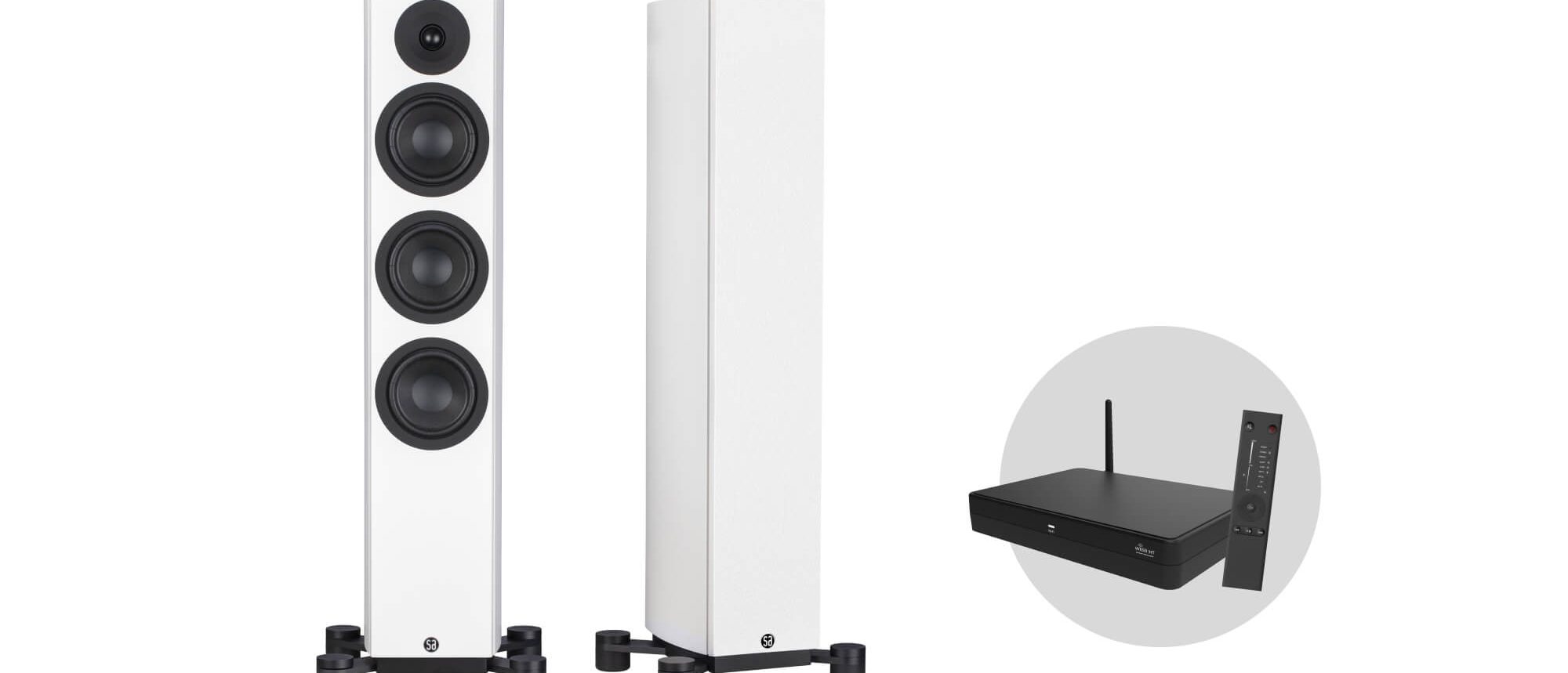
The speaker under test is part of the Legend Silverback series, which consists of five wireless models, starting with the small 5.2 two-way bookshelf and ending with the challenging 60.2 four-way with five cone drivers and a tweeter. The 40.2 is also a four-way but, as we shall see later, is so in a rather atypical way. Outwardly, it looks like a compact floorstanding speaker system that conveys a pleasingly solid feel. The cabinet is only apparently parallelepipedal in shape since it tends to taper slightly toward the rear panel, while the side faces are slightly convex. A thin light-colored wood insert separates the front panel from the main body of the cabinet (both white in the Satin White version that was sent to us), helping to slender its proportions. At the base we find four sturdy square-section support arms, painted black, bearing height-adjustable rubber feet at the ends (there are also metal spikes in the package), which provide excellent stability to the whole. Although tending toward the anonymous, the product is well made and the appearance is elegant and understated. There is no shortage of speaker protection cloth held in place by small magnets hidden beneath the baffle finish.
The three cone drivers with fiberglass cone membranes are apparently identical, however, the two placed lower are woofers named 15/6, where the first digit refers to the diameter of the driver (15 cm) while 6 is the nominal impedance expressed in ohms. These woofers have slightly heavier moving parts than those mounted on the midrange, as well as a long-stroke voice coil/motor system optimized for low-frequency performance. The midrange is the 15/4 (15 cm and 4 ohms) with components optimized to work in the midrange.
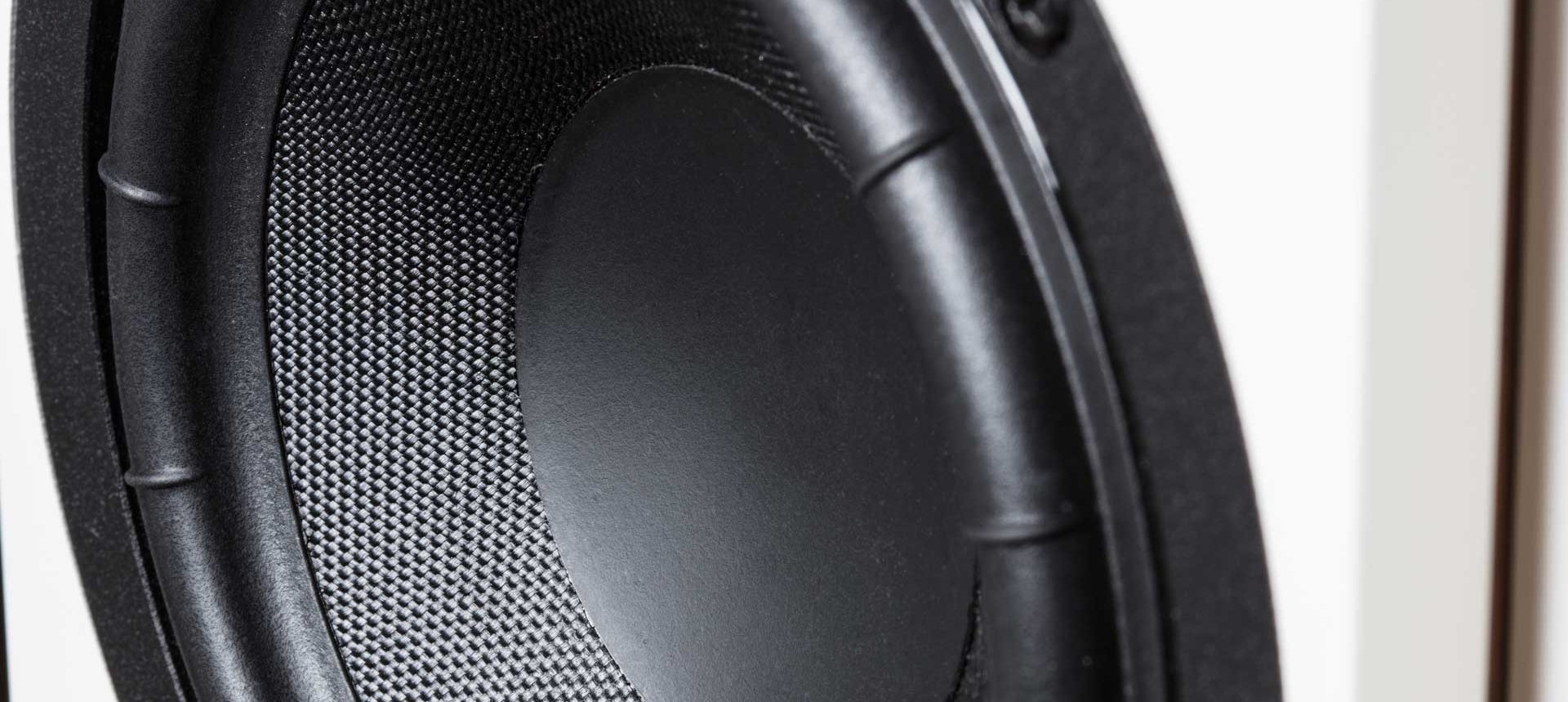
Each speaker is equipped with four independent Class D amplifier sections based on Texas Instruments technology totaling about 300 W total. Each driver is therefore individually driven. The two woofers operate over the same frequency range-both are cut off at 200 Hz by a fourth-order filter-but the one placed lower is driven with a slightly different delay line than the other woofer. The midrange is attenuated by about 8 dB at 200 Hz and below that frequency works in parallel with the woofers; in fact, all three cone drivers contribute to the reproduction of the low range. The midrange crosses the 25mm soft-dome tweeter at 2.8 kHz, also with a fourth-order filter.
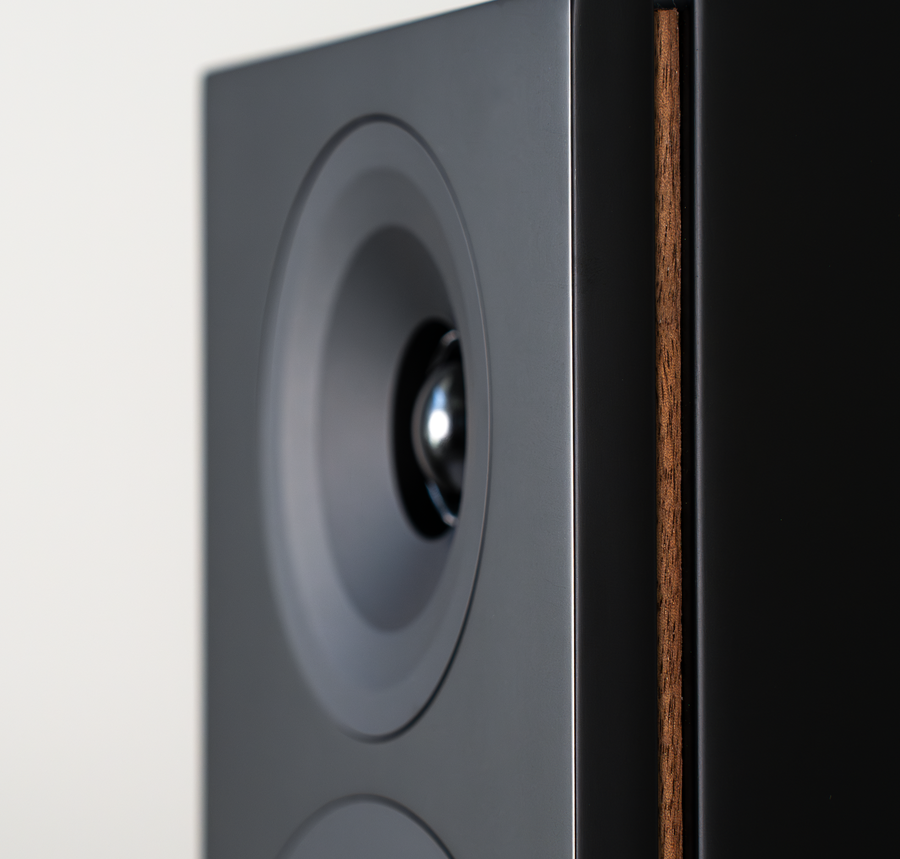
The tweeter output is shaped by an acoustic lens called DXT(Diffraction eXpansion Technology) to match the midrange dispersion near the crossover frequency. At the back we find an outlet port for the internally installed bass reflex port, which, however, is sealed by a permanent foam plug, making this a closed-box system. Probably this oddity finds explanation in reasons of economy of scale: the System Audio Legend 40.2 Silverback DS loudspeaker under test in fact shares the cabinet with the passive version, which is, in fact, a bass reflex loudspeaker that is part of the passive loudspeaker line produced by System Audio.
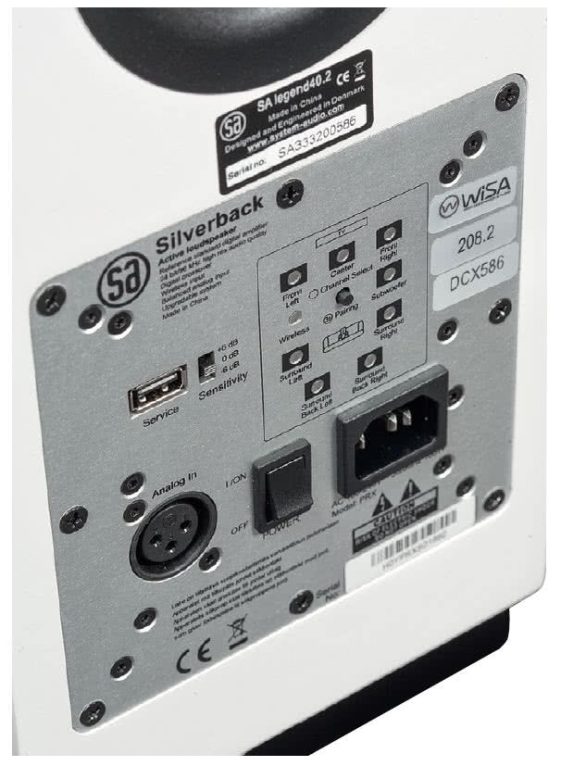
Below the port just mentioned is a large and articulated connection panel equipped with LED status indicators for up to eight channels (7.1) that provide immediate visual feedback on the role the speaker plays within the chosen listening system. Then there is the WISA pairing(Pairing) button-a wireless transmission standard specifically designed for the home theater industry-and its status LED, a USB port for service and possible software updates, a three-position sensitivity adjustment switch, an XLR analog input, a power switch, and the IEC power cord tray. The XLR connector, labeled “Analog In,” is the only physical input, and the sensitivity switch acts only on it. The use of this input makes it possible to integrate Silverbacks into wired audio systems. When a Silverback speaker receives an analog signal at line level a Burr-Brown A/D converter digitizes it at 24 bit/96 kHz. I would tend to consider this use scenario at least remote since a number of advantages and features that make these speakers very attractive are lost. Nonetheless, it is a possibility and System Audio makes available on its company website files, called RAM Tweaks that can be installed through the USB connector named Service, which allow the sound of the 40.2 to be optimized with different settings in order to best suit the acoustics of the listening room. In practice we could consider these RAM Tweaks as different versions of a crossover in a passive speaker.
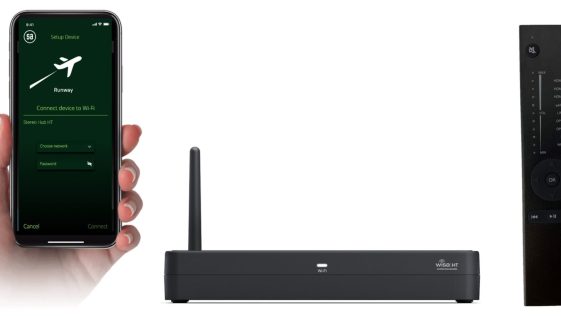
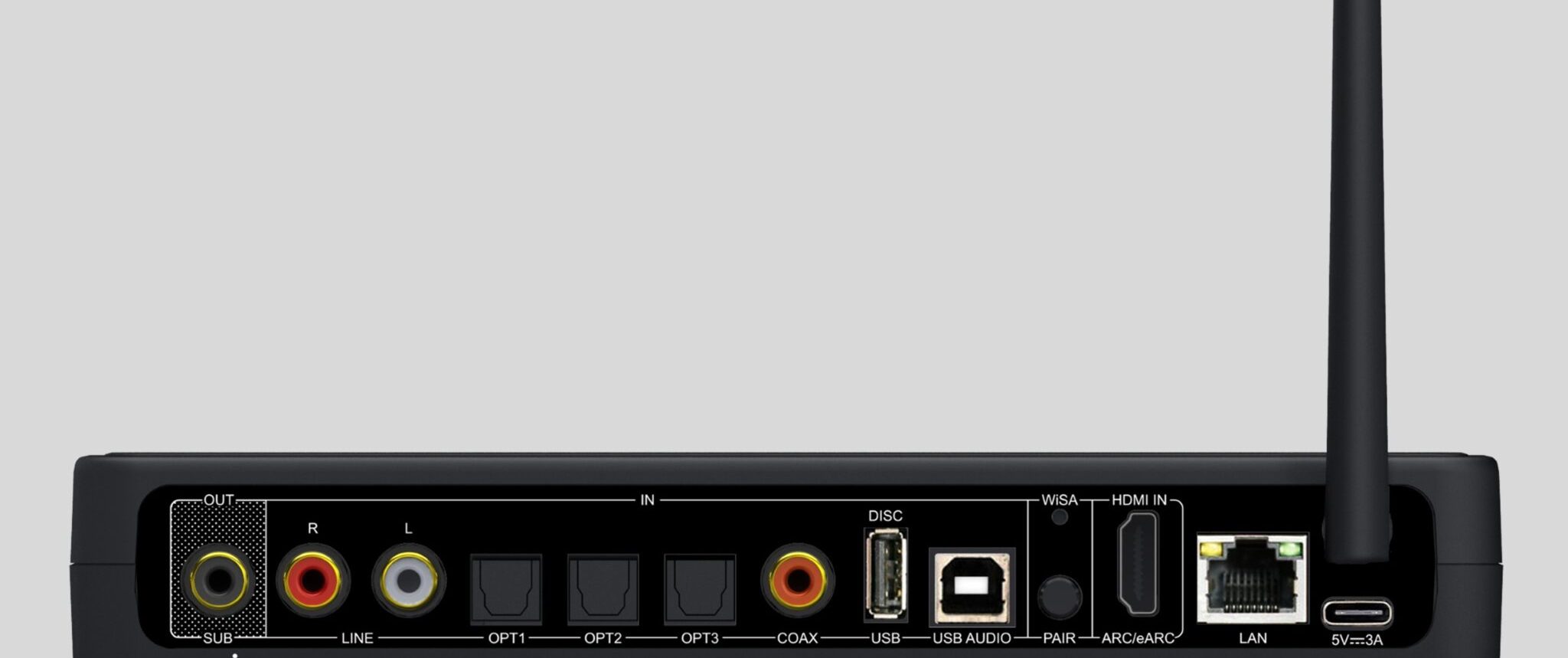
It is quite obvious how these speakers are designed to be used wirelessly with the Stereo Hub HT. This is a device that costs €449.00 when purchased bundled with the speakers and adds several digital inputs: one HDMI ARC/eARC, three TosLink, one coaxial S/PDIF, one USB-B, one RJ45 Ethernet, a pair of analog RCA inputs and another USB to connect storage media, as well as streaming – also via Wi-Fi – with Bluetooth, Chromecast, UPnP, Spotify Connect, Qobuz Connect and Apple AirPlay compatibility. In fact, however, the Hub’s main function is to send music wirelessly to speakers and coordinate their synchronization using the WiSA standard. This allows wireless operation of up to eight channels of 24-bit audio, with sample rates up to 96 kHz. But what is most important in audio is the very low latency value that enables synchronization of all speakers with an accuracy of 2 µs. Not only that, it is inside the Hub that the powerful DSP is located, which I think is one of the most interesting features of the System Audio system as we will see later in the review.
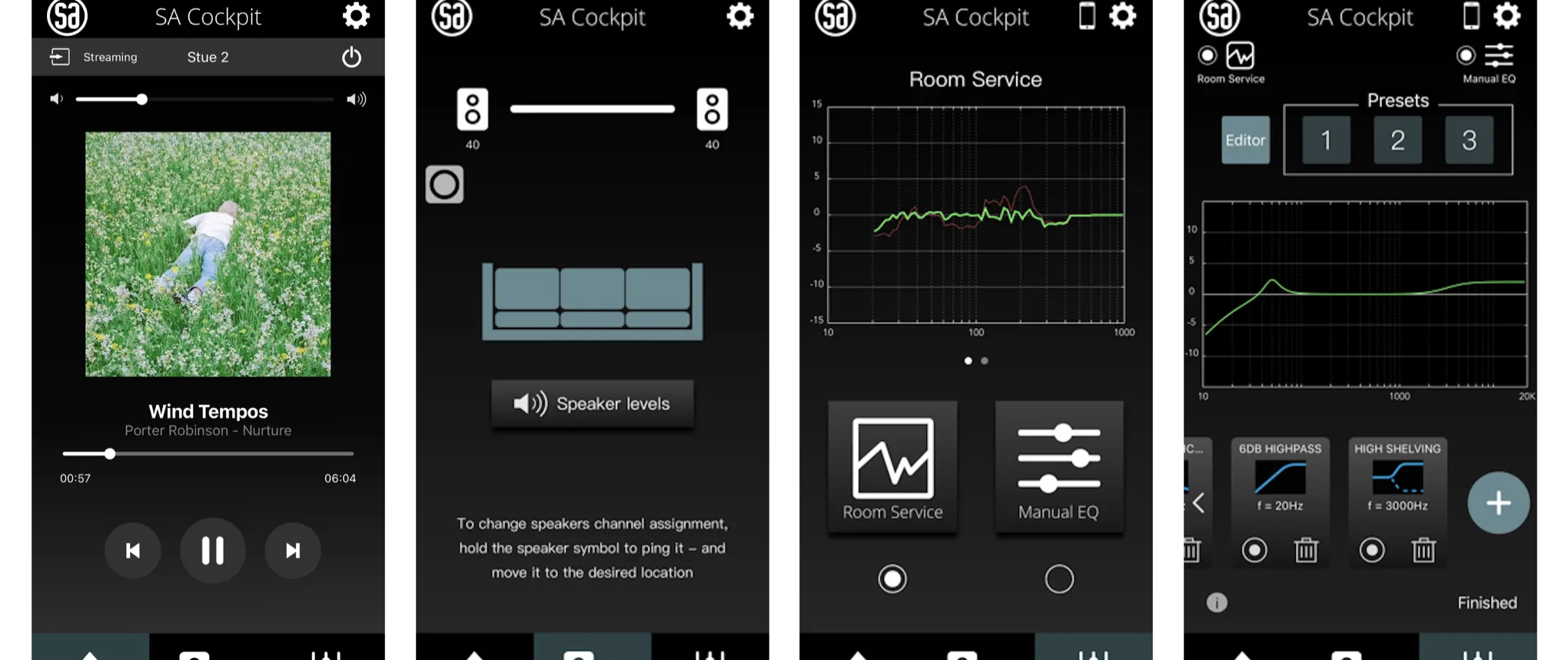
The Hub is made by Platin Audio, also a Danish company, which made the WiSA receiver-amplifiers integrated into the speaker electronics section and the Stereo Hub HT. For the user, the interface to the Stereo Hub HT consists of an app called SA Cockpit, available for iOS and Android, which gives access to speaker configuration tools, bass management, parametric equalizer, room acoustics correction thanks to a function called “RoomService,” and finally input selection and volume adjustment thus doing the work of the nice remote control provided.
System Audio Legend 40.2 Silverback DS: Using and Listening
For the sake of completeness, before using the System Audio Legend 40.2 Silverback DS with the Stereo Hub HT, I carried out a test by connecting them to the XLR line output of a preamplifier to which a CD player was connected. The whole thing worked without hesitation showing a good but not entirely convincing sound due to a certain predominance of the low and mid-bass range, as well as a “confined” and compressed acoustic scene in the space between the two speakers. I am convinced that the use of an appropriate RAM Tweaks file would have solved these problems. However, as I did not have any available, I proceeded with the installation of the hub, which, in this specific case, was facilitated by the fact that the system had already been configured during the trade show deployment to operate in two-channel stereo mode. Basically the only thing I had to do was to connect the Hub via Ethernet cable to my LAN. After that, I installed the Cockpit app on my iPhone, created an account, and let the app locate the Hub on the network and connect to it. The speakers were already connected to the hub wirelessly WiSA and mutually recognized. On the Cockpit SA app I therefore found each speaker in the correct position (by default, all speakers are placed on the left) consistent moreover with what the LED on the rear panel of the speaker indicated. The only parameter on which I had to intervene were the levels and mutual distances to adapt them to my listening environment.
At this point I must report my mistake: I thought that the app also played the role of Player, that is, through it it was possible to choose the track to be played. It doesn’t. There is actually a screen in which the track playing is shown and the two underlying “forward” and “backward” buttons, but that’s where it ends. So you have to rely on a specific application for choosing the music program you want to listen to. I used ROON-the Platin hub is recognized as ROON Ready-and, much longer, the excellent JPlay stating the compatibility of the Stereo Hub HT with the UPnP standard. In such a configuration the sound immediately sounded better to me than when I had heard it from the line inputs. In the comparison it seemed to me that the feeling of an excessively “shot” sound in the face and, in some circumstances, even a bit of grain had gone away. Still, concerns remained with respect to the overabundant bass range and the poorly articulated and wide image. At this point the Room Service feature of the Cockpit SA app came into play, which I will describe in the following section.
Room Service Functionality
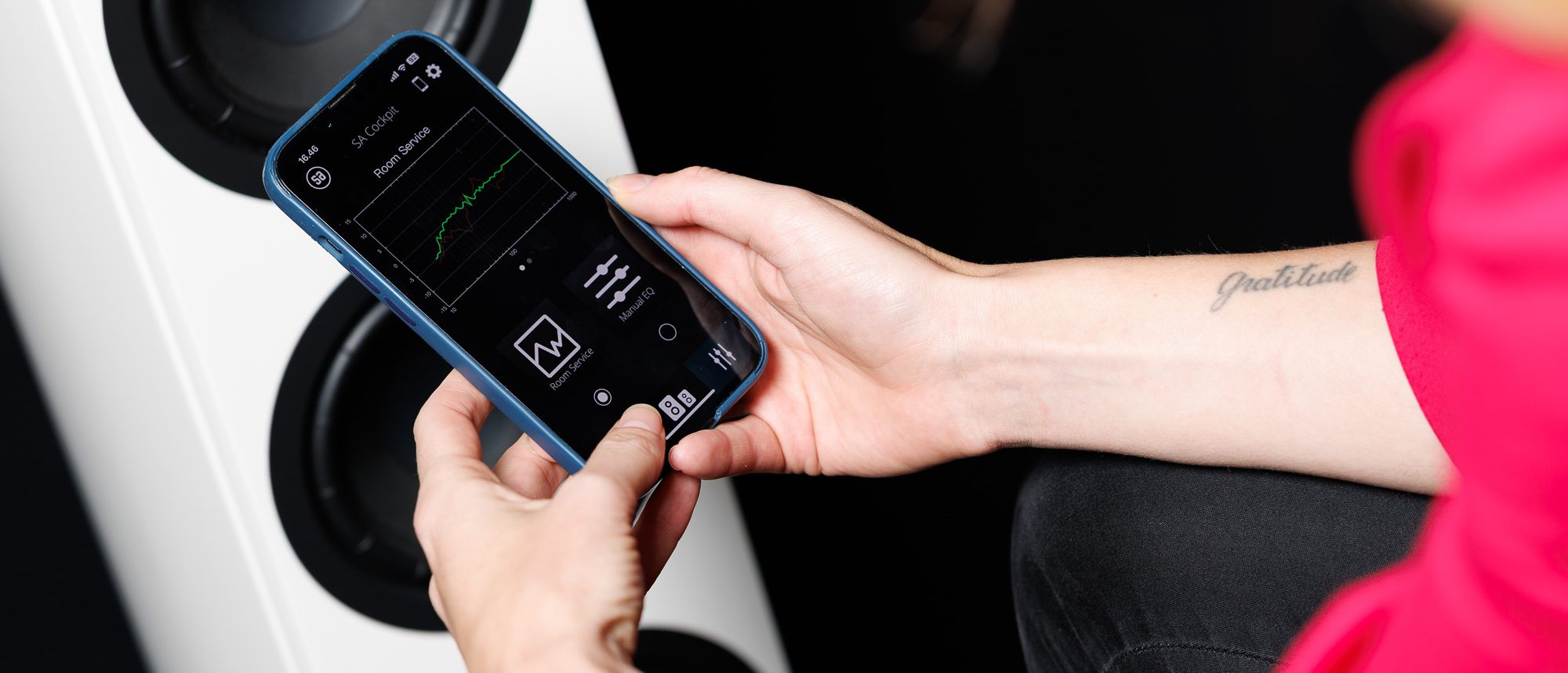
Within the Cockpit app, there is a section called RoomService, which measures and calibrates the speakers to compensate for the influence of the listening room’s own room acoustics on the sound. Actually, this is not new: we recently tested an integrated amplifier from Cambridge Audio that, using the famous DIRAC software, does the same job. In the field of active loudspeakers we have also seen something similar, not to mention the lengthy experiments carried out by yours truly with Audiolense software on Windows PCs. The difference in this specific case is that where those mentioned are rather complex procedures, with RoomService the calibration took less than two minutes: a tap on the RoomService option in the Cockpit SA app on my iPhone started the measurement phase. As the speakers played a pink noise, I moved around the listening area, as required by the online documentation , lingering longer near the listening point so that the program would prioritize that area. When the acquisition phase was over, RoomService analyzed the data and generated a calibration curve, based on a standard target curve. It should be mentioned that the program allows you to specify whether you want a more or less energetic low-end response before generating the compensation curve. The app is able to show the frequency response of the room before and after the correction intervention and to enable/disable the compensation curve so that immediate comparisons can be made. Knowing very well the behavior of our listening room by reason of multiple measurement sessions over the years, I can testify that the work done by RoomService is absolutely correct and almost superimposable to that done by similar software much more difficult to use.
Listening with RoomService active
So let us come to the sound of this fine active speaker system. I do so by linking back to what I had written at the beginning: the greatest compliment I can pay these speakers is that in the course of listening sessions I forgot that they were wireless. The System Audio Legend 40.2 Silverback DS are not the first system of this type that I happened to listen to, they are, however, the first that did not force me to activate a sort of “critical filter” that prevented me from using the same evaluation grid that I would have applied in the case of a conventional passive speaker. Put another way, the reasoning, so far, had been this, “Whatever, come on, what do you want from an active, wireless speaker?” So far, in this area, the system that had convinced me the most had been the Kef LS 60 wireless speakers tried more than a year ago his our YouTube channel. Certainly their appearance is superior to that of the speaker under test, however, the DSP of those speakers is really too limited in comparison with that of System Audio. This results in less integration into the listening room, which, at least in my opinion, is the real key to the Danish system. Thanks to an easy and timely optimization, the Legend 40.2 Silverback DS sported a cohesive, powerful, organic sound and – above all – endowed with that warm naturalness that is characteristic of high-class systems tuned properly. A sonic accomplishment that with the Kef LS 60 wireless I don’t recall achieving, in spite of a truly first-rate mid-high range. To achieve this from a speaker of this type, frankly, seems to me to be something of a miracle. Yes, because I think about the fact that this system could be the solution for those who cannot put the audio system in the optimal position in their listening room since it would conflict with the normal domestic activities that take place there. I think of the many systems I have listened to, even prestigious ones if anything, mortified by poor or neglected tuning. I also think of the effort, know-how and time it takes to make an audio system sound its best. With the System Audio Legend 40.2 Silverback DS all that is a thing of the past.
By this am I saying that it is the best sound system available on the market? For goodness sake, certainly not. I am saying, however, that their price/performance ratio is astounding and that it does not require a scientist to squeeze every last drop of their enormous potential.
I come back to the sound by saying that that redundancy in the low range that I had perceived in use without Room Correction (or rather, Room Service to put it in System Audio jargon), completely disappeared once the optimization procedure was performed. I therefore believe that I was listening to a “surplus” of energy that needed to be harnessed and still remains available in the most critical musical passages. Also at the level of spatial imaging the scene expanded going to fill the listening space in all directions with a pleasant effect of scanning the sound planes in depth.
The bass range is well controlled, fast and articulate although not very deep. In this regard, we also tried to include a T/7x subwoofer from REL Acoustics in the setup , connecting it to the appropriate sub output of the Stereo Hub HT. Thanks to the usual app, I indicated its placement relative to the main speakers and gave Room Service another “waltz” spin. As expected the EQ curve was adjusted having the microphone detected the presence of the sub providing additional energy in the low end. The result was a better overall tonal balance that I believe was due to the fact that the two main speakers were now working in a comfort zone that limited their electromechanical stress. A necessary addition the sub? No, not really. Rather an additional building block toward a sonic balance of great refinement.
Conclusions
I think it is sufficiently clear at this point my strong appreciation for these System Audio Legend 40.2 Silverback DS which I strongly urge you to go and listen to should you get the chance. The price of about € 5,500 (including the indispensable hub), although quite high in absolute terms, must be evaluated taking into account that this is a complete system. So with the aforementioned figure you buy the speakers, 4+4 amplifiers and a DAC/Streamer/ADC. If you go and do the math right you will see that this is a more than acceptable amount of money.
Giulio Salvioni
Technical specifications.
- Total amplifier power: 300 watts (active 4-way)
- Frequency response +/- 1.5 dB: 20-25,000 Hz
- Analog input (wired): balanced XLR
- Tweeter: Legend DXT 25mm, softdome
- Midrange: Legend 15/4 5½ inches, fiberglass membrane
- Woofer: (2 x) Legend 15/6 5½-inch, fiberglass membrane
- Type: 4-way active closed box
- Upgradeable DSP: Yes
- Integrated WiSA HT wireless receiver: Yes
- Upgradeable (to) wireless 7.1 home cinema: Yes
- Input voltage: 100-240 volts AC
- Standby consumption: 2 Watts
- Weight of the single speaker (kg): 19.4 kg
- Dimensions (WxHxD) cm: 19 x 95.5 x 26.5
- Width incl. ground support feet: 31 cm
- Recommended placement: floor, 15-35 cm from the wall
Price: $4,999.00 excluding hub + $499.00 (for Stereo Hub HT if purchased together with speakers).
Manufacturer: System Audio A/S Langebjerg 35A, 4000 Roskilde, Denmark
website: https://system-audio.com/contact/
Distributor for Italy: DML Audio – Email: info@dmlaudio.it
Tel 0541 623905 – Via del Salice 28 – Santarcangelo di Romagna
47822 Rimini




GIPHY App Key not set. Please check settings