



 Audio 2G

When looking at a new speaker, one inevitably tends to focus on the most obvious features. The diameter of the woofers, the material of the tweeter dome, the number of drivers, or the frequency response are details that even the least experienced audiophile can grasp immediately. Far less obvious, however, is the work being done today on seemingly secondary aspects such as the cabinet, the internal bracing system, the decoupling of the drivers, or the crossover design. Yet it is precisely here that much of the research by leading manufacturers is focused.
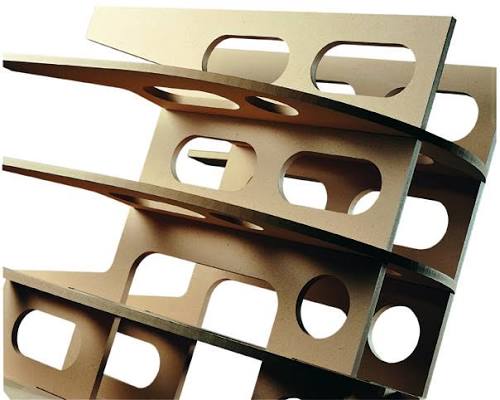
To understand why, we need to start with a fundamental principle. A loudspeaker does not produce only sound waves, but also mechanical energy. In fact, every transducer functions as a linear motor: part of the electrical energy is converted into sound pressure, while another part is inevitably returned to the structure supporting the loudspeaker. When the woofer moves back and forth thousands of times per second, it generates considerable forces that are not transmitted exclusively to the air, but also to the cabinet. If the cabinet were not sufficiently rigid, it would begin to behave like a second diaphragm, vibrating on its own. And this is precisely where one of the main enemies of high fidelity arises.
The reason is simple. While the woofer cone moves in perfect sync with the musical signal, the enclosure vibrates in entirely different ways, determined by its mass, stiffness, and resonance frequencies. The result is the generation of unwanted sound that adds to—or sometimes subtracts from—the sound produced by the speaker. This is what we commonly refer to as coloration. In other words, the listener hears not only the transducer but also the cabinet.
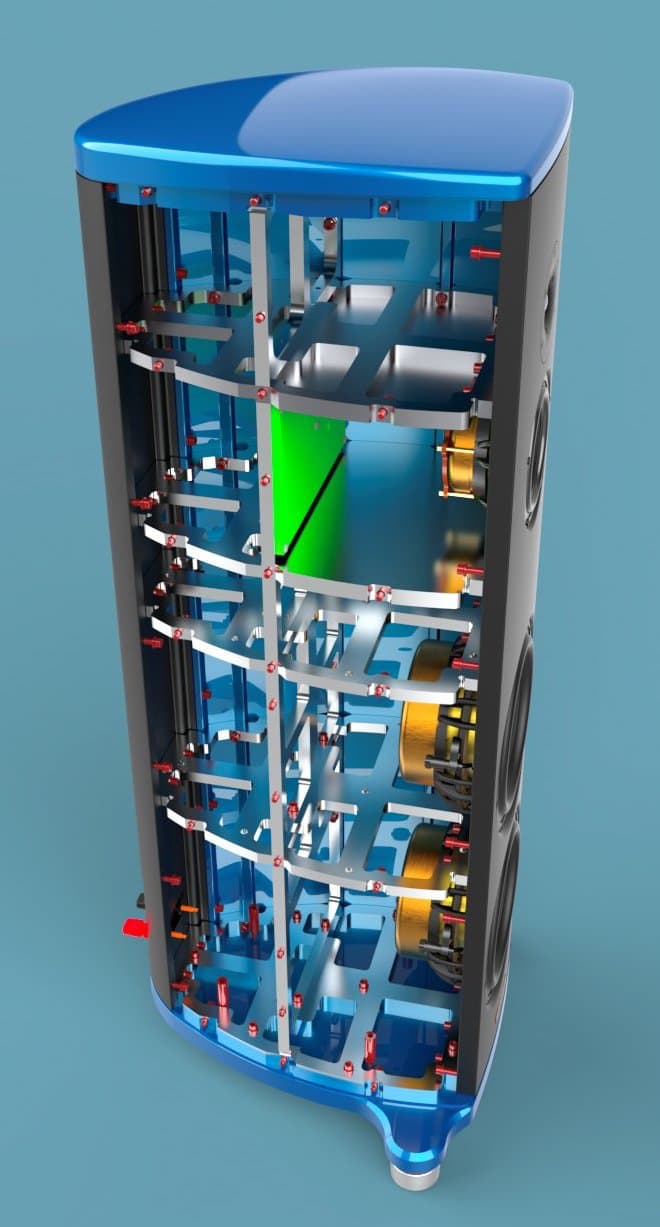
For many decades, the solution seemed relatively simple: build increasingly heavier furniture. Some manufacturers even went so far as to use granite, marble, or mineral composites, believing that mass alone would be enough to eliminate the problem. Over time, it became clear that the reality was much more complex. In fact, a very heavy panel continues to vibrate; it simply does so at different frequencies and in different ways. The problem, therefore, had not been eliminated, but merely shifted.
The modern approach is completely different. The goal is no longer simply to build a heavy piece of furniture, but to create a structure capable of distributing and dissipating mechanical energy before it can accumulate and turn into audible vibrations. This has given rise to design philosophies that differ greatly from one another.
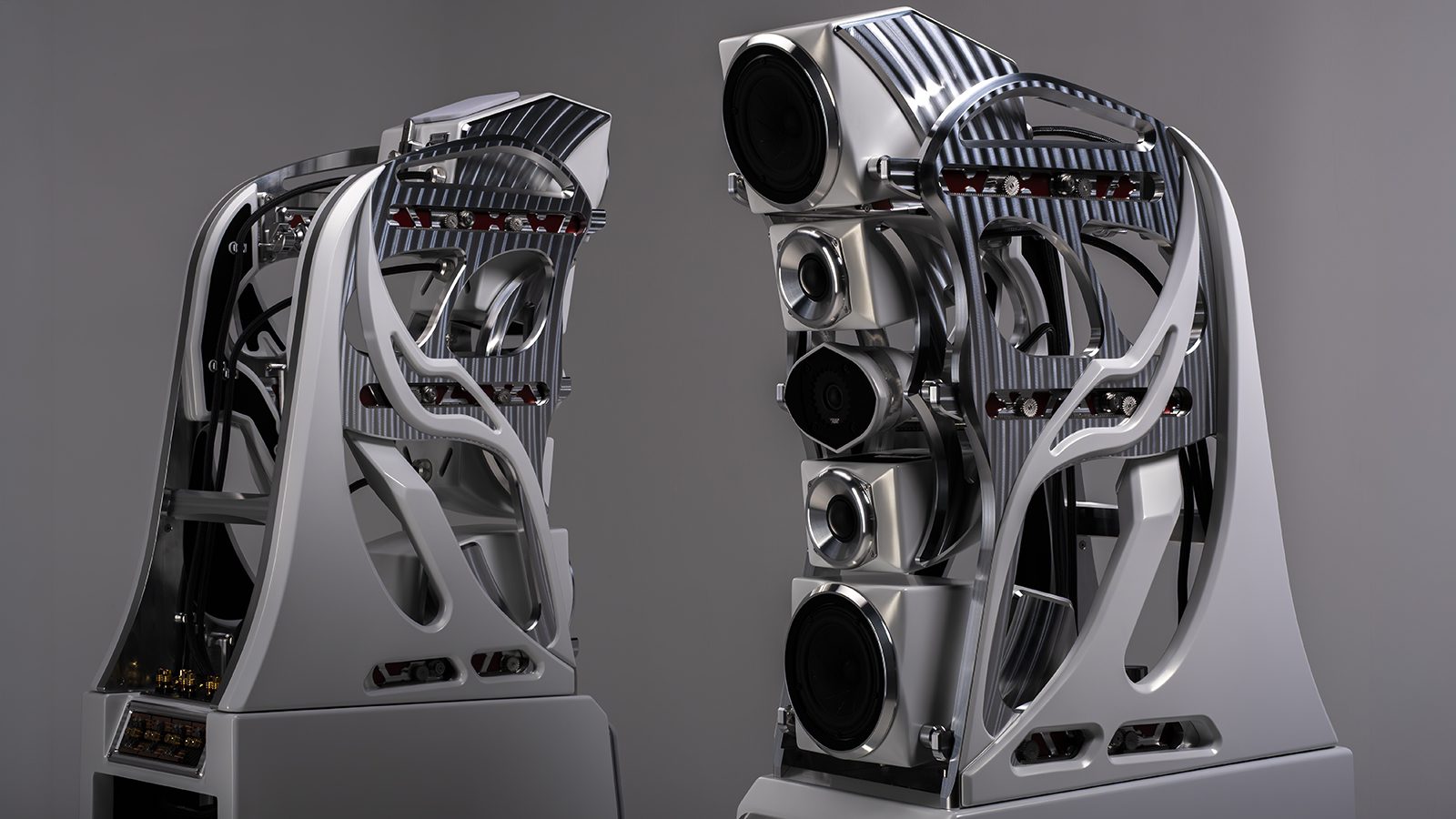
Bowers & Wilkins, for example, uses the Matrix system and the Reverse Wrap cabinet to increase structural rigidity and distribute mechanical stress throughout the entire cabinet. Wilson Audio takes a different approach, using proprietary composite materials with distinct mechanical properties, each employed in the position where it can offer the best vibrational performance. Magico builds cabinets almost entirely from aluminum, reinforced through a complex three-dimensional structure machined from solid blocks using CNC machines. KEF, with its Blade project, has instead chosen yet another solution, arranging the woofers in a facing configuration so that the mechanical forces generated by one speaker are offset by those produced by the other, thereby reducing the energy transmitted to the cabinet.
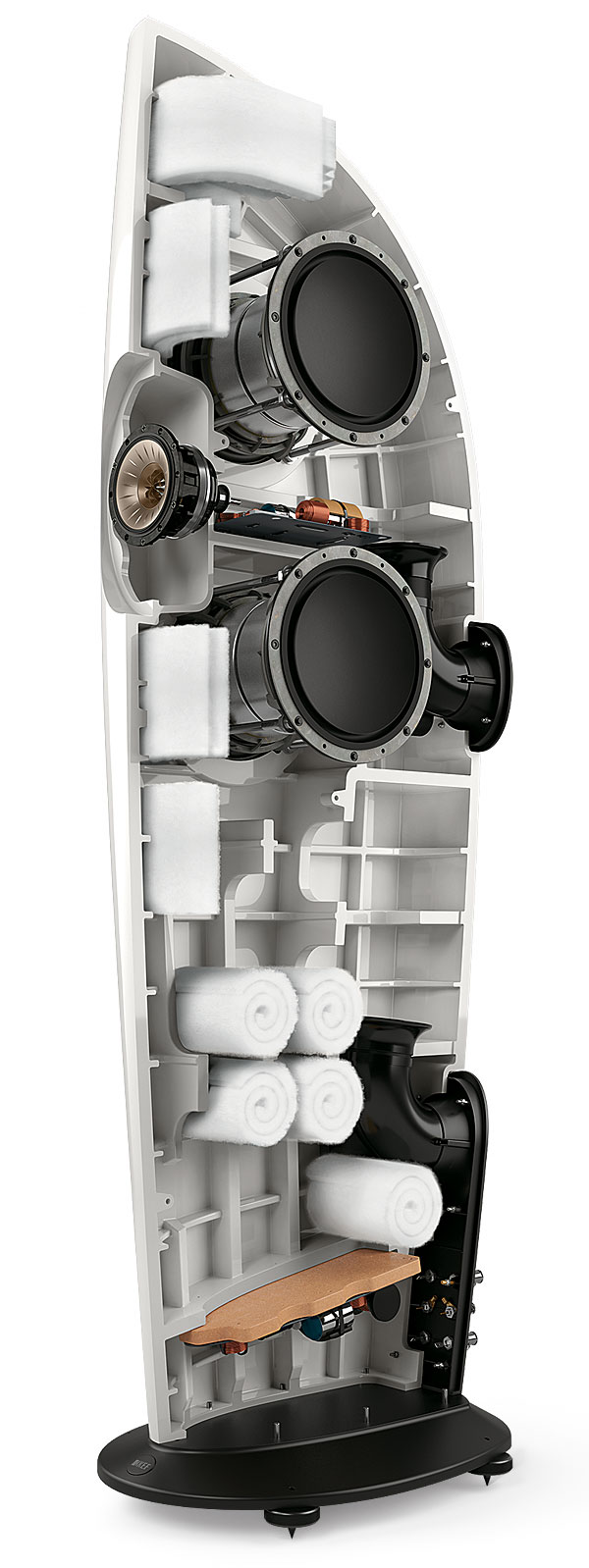
Although they take different approaches, all these projects share the same goal: to prevent energy from encountering large surfaces that can easily resonate. This is a well-known principle in aeronautical and automotive engineering as well, where the stiffness of a structure depends not solely on its mass, but above all on its ability to distribute mechanical stresses. The same philosophy is now also applied to the mounting of transducers.
The midrange driver is probably the most delicate speaker in the entire system. In fact, it operates in the frequency range to which our ears are most sensitive—the range where the human voice and most musical instruments are concentrated. Any vibration coming from the cabinet or the woofers can alter its performance, reducing its transparency and natural sound.
For this reason, many manufacturers today seek to completely isolate the midrange driver from the rest of the speaker. In the case of the Bowers & Wilkins Turbine Head, for example, the transducer is housed in a structure that is completely separate from the enclosure for the woofers. Other manufacturers use dedicated chambers, elastic suspension systems, or mechanically decoupled mounts. The principle, however, remains the same: to prevent the midrange driver from “sensing” the operation of the other drivers.
Even the crossover today follows a completely different philosophy than in the past. For many years, it was considered little more than a collection of capacitors, inductors, and resistors. Today, however, it is treated as an integral part of the speaker’s mechanical design. Components are selected not only for their electrical characteristics but also for their vibration behavior. Traces are shortened, masses are separated, the entire circuit board is reinforced or suspended, and even the crossover’s position inside the cabinet is carefully designed to minimize any possible mechanical interference.
All of this inevitably leads to one question: Why do major manufacturers seem to be investing less and less in driver development and more and more in speaker cabinet design?
The answer is surprisingly simple. Modern transducers have now reached extraordinary levels of performance. Materials such as diamond, beryllium, magnesium, carbon, and modern sandwich membranes have significantly reduced the distortion inherent in loudspeakers. The greatest potential for improvement no longer lies so much in the diaphragm or the magnetic circuit, but rather in the management of the energy that these components inevitably generate during operation. Today, the real limiting factors are much more often the enclosure, vibrations, resonances, the interaction between different transducers, and the accumulation of mechanical energy.
This is why the latest generations of high-end reference speakers, regardless of brand, seem to be evolving more in terms of their structure than their drivers. At first glance, it might seem that little has changed: the speakers have the same diameter, the number of channels remains the same, and even the overall design looks familiar. In reality, the real progress lies beneath the cabinet’s finish, where vibrations are controlled, mechanical stresses are distributed, and the energy produced by the drivers is dissipated. It’s a less conspicuous evolution than in the past, but it’s probably the very factor that contributes most to improving a loudspeaker’s performance today.




GIPHY App Key not set. Please check settings