



 Audio 2G
I’m approaching this review of the beautiful T 2000 30th integrated amplifier from the Korean company Allnic with some justified trepidation. Over the years, I’ve been entrusted with many devices from this company—though it would be more accurate to call it an atelier—for review, and very (too) often they’ve ended up staying in my home permanently after I decided to purchase them for personal use. This happened with the smallest phono preamp—I bought the first version and all the subsequent ones, which were quite a few, given the brand’s prolific output. That “small,” delightful phono preamp was part of the entry-level series, so the price tag was, fortunately, quite modest. Today, however, we’re testing a nice, big integrated amp—tube-based, as is Allnic tradition—and not exactly cheap. In short, as you can tell, this is a test with a high risk of falling in love, and I’d hate to fall prey, for the umpteenth time, to the charm of the equipment crafted by Kang Su Park.

Allnic
Before proceeding with the technical review of the product and the related listening notes, I think it’s appropriate to provide some background on Allnic and its owner, the aforementioned Mr. Kang Su Park, in order to clear up any misunderstandings right away. I say this because I have occasionally detected a veiled tone of condescension among some audiophiles when they learn that a piece of equipment is made in South Korea. Who knows, perhaps they associate that country with the idea of large-scale production for the consumer electronics market —such as , to name a few, the giants like Samsung or LG. Or perhaps because they mistakenly believe that products from that country share the same quality characteristics as early Chinese-made products. Well, nothing could be further from the truth; in South Korea, there are connoisseurs of the art of sound reproduction who possess great sensitivity and talent. The care and dedication with which Korean high-end manufacturers approach the design and production of their products can certainly be compared to that of their most renowned Japanese counterparts, such as Kondo, Lyra, Koetsu, or Ikeda.

Returning to Allnic, it’s worth noting that owner Kang Su Park has been designing and building tube amplifiers for nearly 40 years, having launched his business venture under the Silvaweld brand in 1990, where he received excellent feedback. Kang Su was involved with Silvaweld and Hanil—the company that manufactured its products—until 1997, when he decided to sell his stake in the company and launch Allnic in 2005. For nearly thirty years now, Kang Su Park has dedicated his efforts to growing and establishing the Allnic brand as one of the most respected in the exclusive realm of the international high-end audio market. Nevertheless, the company’s structure has remained the same—strictly family-run. From what I’ve been able to gather, there are only seven people involved in production, so it is more of a workshop than a factory as we typically imagine it, and perhaps this aspect is one of the key factors in offering a product that goes beyond standard assembly and quality control procedures, involving a careful selection of components, their subsequent testing within the various circuits, as well as Wiring and assembly are strictly done by hand.

Allnic T-2000 30th: Technical Specifications
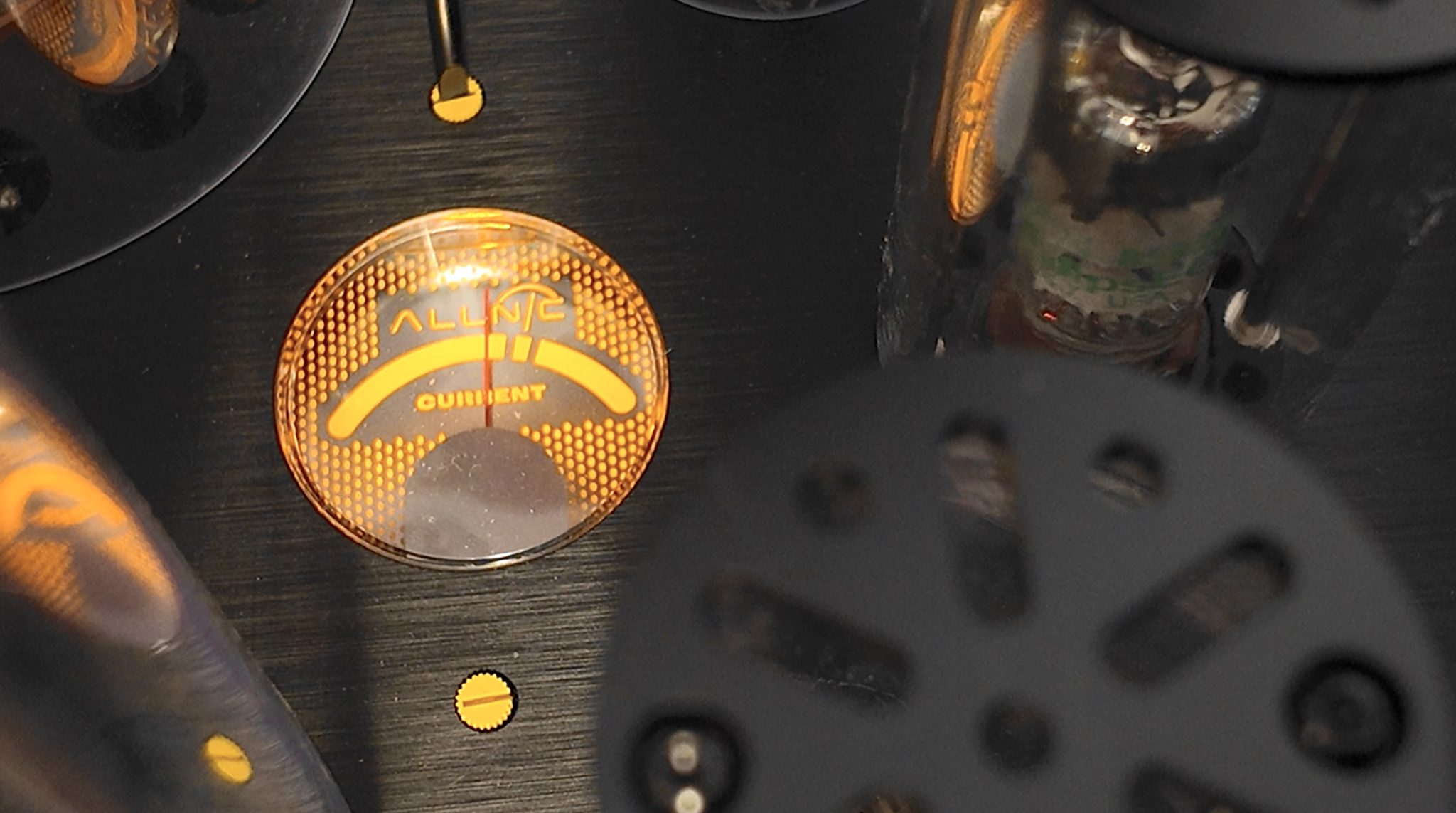
Let’s turn to the Allnic T-2000 30th integrated amplifier, the star of our review. We’ll start by saying that the first thing you notice is the extraordinary attention to build quality and the refined aesthetics characterized by a sense of understated elegance that’s easy to appreciate : no wild flights of fancy in terms of design, let alone futuristic or high-tech connotations; on the contrary, a well-balanced sense of proportion, accompanied by details that enhance the unit’s appeal. I’m referring, for example, to the delightful valve covers made of transparent plastic and metal that create a sort of “chimney” effect, or to the small circular instruments for measuring valve bias, backlit in yellow, and also to the front panel with its lettering so minimalist it borders on understated, and that small, charming indentation positioned just above the large rotary volume control. Such grace and understated elegance are counterbalanced by a weight of no less than 36 kg; the difficulty of moving such a heavy unit is only partially mitigated by the convenient side handles, wisely placed near the transformers to avoid the risk of tipping over.

From a technical standpoint, the integrated amplifier is the latest evolution of the original T-2000, a stereo system that used two KT120 tubes per channel in a push-pull configuration, capable of delivering approximately 70 watts. That version was followed by a subsequent model, introduced to mark the brand’s 25th anniversary, which used the more powerful KT150 tubes. In the version under review, commemorating the company’s 30th anniversary, the power tubes are a pair of KT170s. This has increased the maximum output power from 100 to 120 watts in pentode mode and from 50 to 60 watts in triode mode. As a result, we have an integrated amplifier capable of driving most speakers—including so-called “complex loads”—with the necessary authority. This aspect—which is by no means trivial—helps expand the pool of potential buyers, as it significantly increases the range of speaker systems from which they can choose. It is worth noting that this integrated tube amplifier is more powerful than the Triode Musashi, which, until now, had topped this particular ranking among the models tested by Audio-2G.
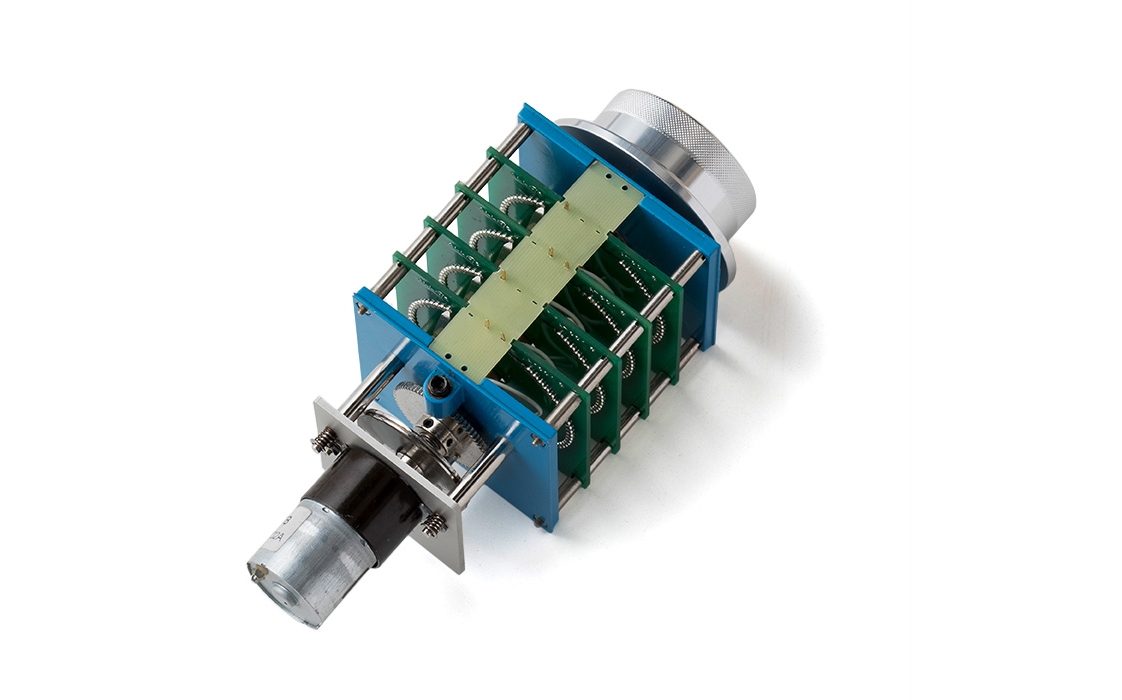
Like all Allnic products, this model also uses Permalloy (iron and nickel alloys) for the cores of its transformers; in this regard, I find it interesting to note that this material is so important to the overall design philosophy of Mr. Kang Su Park that he included a sort of acknowledgment in the user manual to Mr. Gustaf W. Elmen of Western Electric for inventing it. The T-2000 30th’s operating mode can be switched from triode to pentode using a small switch on the front panel; the switch can be operated even while listening, allowing for a quick comparison between the two configurations. Another distinctive feature is the61-step volume controlwith silver contacts, which can be operated via remote control. This component is entirely manufactured in-house by Allnic, which was “forced” to adopt this radical solution due to the unsatisfactory performance of commercially available alternatives. According to the manufacturer, the potentiometer guarantees superior performance in terms of channel balance, constant impedance, and minimal distortion.
The Allnic T-2000 30th has a two-stage input section: the first stage uses two 6J4 triodes, and the next stage uses four D3a pentodes (operating in triode mode) as drivers. Together, they generate approximately +40 dB of voltage gain. The D3a tubes are driven with a 9 kΩ load (most amplifiers using the more popular 12AU7 or 12BH7 tubes operate with a 47 kΩ load) and a current of 12 mA. The circuit layout was designed to minimize sound coloration. As for the transformers, Allnic has developed a manufacturing technology called“Full Engagement,”which features four independent secondary windings that are always connected to the speakers, regardless of which output switch position is used (4 ohms, 8 ohms). There are essentially two advantages: first, the output transformers operate at their maximum efficiency, preventing their output from being reduced below their potential. Second, since the windings that are theoretically “unused” are in fact not unused at all—as they are subject to parasitic oscillations—this prevents the unwanted “signal” they generate from altering the useful signal. The output transformers used in this integrated amplifier, as in all Allnic products, are large in size, feature a nickel/FeS core, and are capable of providing—with fewer turns than conventional types—a higher inductance value and an extremely wide frequency response. Upon power-up, the T-2000 30th activates a soft-start circuit which, after a warm-up period of about thirty seconds, supplies high-voltage power to the anode of each tube; this measure serves to extend the tubes’ service life and ensure they operate under optimal conditions. Adjusting the valve bias is facilitated by the aforementioned analog meters—one per channel—which allow you to check the operating point of the four KT170s; a tiny switch lets you select one or the other valve on the channel you are working on. The range of inputs is quite comprehensive and consists of three unbalanced RCA inputs and two balanced XLR inputs; in the center of the rear panel is the IEC socket for the power cord, and finally, on the left, the connectors for the power cables, with the 4/8-ohm selector switch located in the center to optimize the connection with the speakers.

Listening to the Allnic T2000 30th Anniversary Amplifier
The Allnic T-2000 integrated amplifier was paired with Marten Parker Duo and Vivid Audio Kaya S12 speakers, using the Aqua La Scala MKII DAC as the digital source, driven by our homemade music server built with JCat components. Alternatively, we used the excellent Rockna Wavedream Reference Signature DAC/streamer; the signal and power cables were Neutral Cable Reference, while we used Audioquest’s Vodka cable for the Ethernet connection. The unit provided to us had already been playing for several hours, so there was no need to wait for the break-in period, which is quite long in the case of tube electronics.
I have to say that, at least at first, what I found particularly interesting was how it works. I expected that switching from triode to pentode mode would significantly increase the available power, allowing not only for better handling of different types of speakers but also for adjusting the volume level while maintaining the same sound pressure level. To my surprise, this did happen, but only to a fairly limited extent; far more pronounced, however, was the difference in timbre, with the triode sounding slightly more refined to me than the pentode, though at the cost of a low and lower-midrange that tended to be somewhat evanescent and less controlled.
According to the manual, the two modes can be switched “on the fly”—that is, while the amplifier is running and playing. This makes the Allnic T2000 30th a unique and even more interesting product. Usually, changing the operating mode requires turning the device off. At first, I was quite reluctant to switch modes this way, which led me to pause playback while doing so. Later, I worked up the courage and used the mode switch whenever I needed or wanted to. After all, if the manufacturer states in the manual that it’s possible, I have to assume they’re confident that doing so won’t cause any problems for the amplifier’s circuits and/or tubes, or for the speakers connected to it.

Unlike what I observed years ago with the original T 2000—which I found more convincing in pentode mode—with this newer model, I can’t say I’ve made a choice one way or the other. At least not a definitive choice. This means that as the tracks on my evaluation playlists played, I chose the most suitable configuration. Given that those playlists contain a bit of everything—from classical to jazz, from pop/rock to opera, from ambient to world music—I think I’m safe in saying that my listening time was split evenly between triode and pentode modes. This leads me to argue that in this latest version with the KT170s, the Allnic T 2000 has become a sort of versatile “chameleon” that adapts to anything with the simple touch of a button. What remains unchanged, despite the significant tonal variations, is the particularly intense “light” with which the Allnic illuminates the soundstage. This translates into a sort of “aura” that distinctly envelops every sound. There is air around the instruments and the singers’ voices, but it is of a very different nature than what you might perceive with other systems: normally, that air helps you “isolate” one sound from another, establishing a boundary that makes it possible to discern the textures and articulations of a complex sonic structure. Here, in addition to that sensation, there is more. That air is alive, it’s pulsating; it isn’t “around” the sound but becomes part of it. I realize that describing these sensations in words is difficult, whereas listening directly makes everything simpler and more immediate. Of course, this extraordinary quality of the Allnic T 2000 30th is more or less evident depending on the type of music you’re listening to; thus, with a large orchestra, it’s less noticeable than with a string quartet or a jazz trio. To cite two specific examples: in Beethoven’s String Quartet No. 10 in E-flat major (Engegård Quartet, 2L Records 2010), the ability to accurately reproduce the timbre of the four instruments allows you to discern their placement in space while distinguishing their individual contributions; especially the cello, in its lowest registers, sounds very authentic and full-bodied, as does the pizzicato of the violins, which is fast yet at the same time textured. In the intro to“Behind the Yashmak”(Esbjörn Svensson Trio—Live in Hamburg—ACT Music 2007), you can almost feel the vibrations created in the air by Magnus Öström’s percussion, placed behind (yet playing in unison) with Dan Berglund’s powerful double bass—which is deep and fast, yet also crisp and free of any hesitation, just as you’d expect from a transistor amplifier rather than a tube one. Moreover, this sensation is supported by a midrange that is never forward—as is often the case with tube amplifiers—but is, on the contrary, perfectly balanced and integrated with the high and low ends of the frequency range. Still on the subject of sound clarity, this integrated amplifier deserves praise for its extraordinary quietness. The expressiveness of the piano—in this case, that of the late Svensson—is the kind that touches the soul: the amount of detail and harmonics that the T-2000 30th is capable of bringing out is considerable, but once again, beyond these technical specifications, there is a radiance that imbues the sound with a sense of transcendence. The spatial layout of the soundstage benefits from the Allnic’s unique ability to shed light on the sound event, ensuring that—thanks to the interplay of light and shadow—the soundstage, though not enormous in absolute terms, takes on a very special charm.
Conclusions
The Allnic T2000 30th amplifier is a rather unique product; although aesthetically pleasing, its presence certainly does not go unnoticed. Furthermore, the heat generated by the tubes and its considerable weight mean that this audio component requires special attention when it comes to placement in a room. On the other hand, its driving power allows for an extremely wide range of speaker choices, covering a diverse array of technical and tonal characteristics. We primarily listened to it with digital sources, but even when paired with a good analog source—perhaps by selecting one of the excellent Allnic phono preamps—it is capable of delivering a truly immersive and intense listening experience. In this regard, the ability to operate it in triode or pentode mode is its true “ace up its sleeve”—not so much in terms of power output as in tonal differentiation. It’s a bit like having two amplifiers of different types in a single chassis. The key thing to keep in mind when making a decision is that its sonic character is quite different from current standards, making comparisons difficult. That said, I believe that given its price—high but not prohibitive—it’s an excellent value.
Giulio Salvioni
Declared technical specifications
| Output Power | 120W (8Ω load, at 1kHz) |
| Distortion | 0.17% at 1 kHz at 10 W |
| Frequency Response | 20 Hz–20 kHz Flat |
| Signal-to-Noise Ratio | -80 dB (CCIR, 1 kHz) |
| Damping Factor | 8 at an 8Ω load at 1kHz |
| Voltage gain | +26 dB |
| Input Impedance | 100 kΩ (single-ended, unbalanced) |
| Input Sensitivity | 1.3V at rated power |
| Fuses | 0.5A, 250V, 20mm slow-blow (KT150s); 5A, 250V, 20mm slow-blow (IEC Mains) |
| Tubes | KT170 x 4 (power triode); D3a x 4 (second-stage drivers); 6J4 x 2 (first-stage driver) |
| Dimensions (W x D x H) | 440 mm x 480 mm x 300 mm |
| Weight | 36 kg net |
Price: €16,200
Manufacturer: Allnic
Distributor for Italy: AUDIOPLUS HI END VIA CRISPI 77 63074 SAN BENEDETTO DEL TRONTO (AP) TEL: 0735.593969 FAX: 0735.575014




GIPHY App Key not set. Please check settings