

 Audio 2G
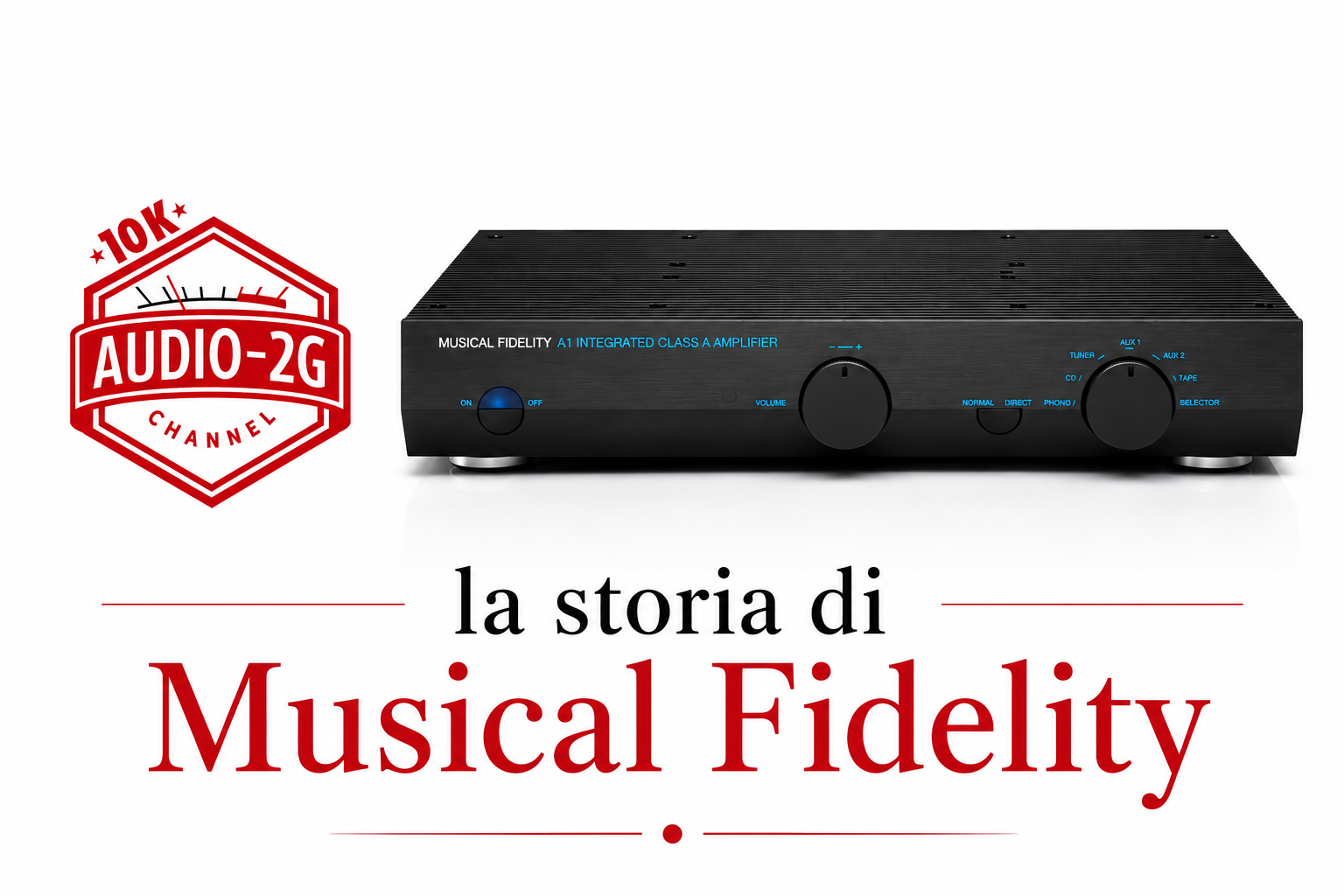
The history of Musical Fidelity began in 1982 and, at least for its first thirty-six years, was closely tied to the personality of Antony Michaelson. A musician even before he became an entrepreneur, Michaelson had studied the clarinet and had prior experience in the world of tube amplification. Before founding Musical Fidelity, he had in fact been involved with Michaelson & Austin, a British company best known for its high-power tube amplifiers. That venture ended without commercial success, but it gave Michaelson firsthand knowledge of both audio design and the challenges associated with the production and marketing of Hi-Fi equipment.

Musical Fidelity was born almost out of personal necessity. Michaelson wasn’t satisfied with the preamplifier he was using in his own system, so he built one for himself (just as Soul Marantz did—read the story here). After hearing it, a dealer asked him to build a few units; they sold quickly, and from that episode, a new business took shape. The first product marketed under the Musical Fidelity brand was The Preamp, introduced in 1982 and followed by the Dr. Thomas power amplifier, a compact unit built in the typical British “shoebox” format. This was not yet the Musical Fidelity known for its large amplifiers and monumental electronics, but certain elements that would define the company’s entire history were already evident: relatively simple circuitry, attention to power supply design, a commitment to offering high performance at affordable prices, and a certain disregard for market conventions. The product that transformed Musical Fidelity from a young British manufacturer into an internationally recognized brand was the A1. There is a slight discrepancy regarding the exact date even in the company’s current documentation: Musical Fidelity’s official timeline places its launch in 1984, while the page dedicated to the modern reissue lists 1985 as the year the original was released. It is therefore correct to place its debut between 1984 and 1985, at the height of the British Hi-Fi renaissance.
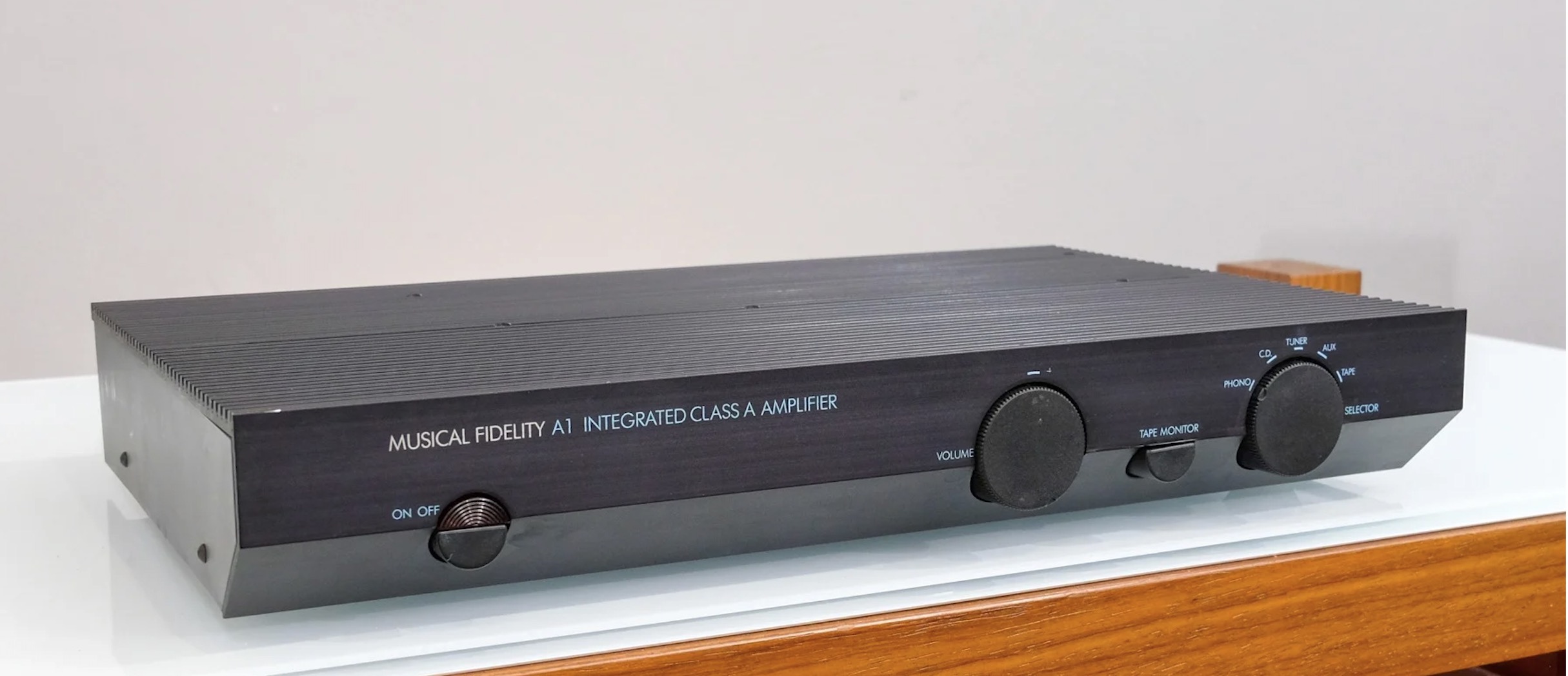
The A1 was an integrated amplifier rated at approximately 20–25 watts per channel, heavily biased in Class A. Its design was immediately recognizable: the cabinet itself, with its finned top surface, served as a large heat sink. During operation, it reached very high temperatures, a direct consequence of the output stage’s bias and the compact dimensions within which the circuit had been housed. It was an amplifier designed to offer, at a relatively affordable price, a smooth, full-bodied sound free of the harshness often associated with the inexpensive transistor amplifiers of the time—almost all of which were Japanese.
Michaelson would later state that, with the A1, Musical Fidelity had helped create a new category: “budget audiophile” amplification—an affordable product capable of introducing the buyer to a listening experience previously associated with much more expensive equipment. The project is also linked to the work of Tim de Paravicini, but it would be reductive to attribute the entire creation of the device to a single person without distinguishing between product conception, circuit development, and industrialization. The A1 was the result of the collaboration between Michaelson and de Paravicini within Musical Fidelity’s original organization and became the company’s most enduring symbol. The success of the A1 paved the way for a much broader product line. In the second half of the 1980s, the A100 was introduced—more powerful yet still rooted in the Class A philosophy—along with a series of preamplifiers and power amplifiers that propelled Musical Fidelity into higher market segments. Among these, the A370—introduced in 1986—was particularly significant: a large transistor power amplifier delivering approximately 185 watts per channel, capable of driving speakers far more demanding than those typically associated with British integrated amplifiers of the era. With the A370, Musical Fidelity clearly demonstrated for the first time its focus on large current reserves and very high power output—a trend that would recur repeatedly in its subsequent products. Musical Fidelity was among the first to tackle the issue of digital conversion. The Digilog, released in the late 1980s, was the first budget standalone D/A converter aimed at an audiophile audience and sold at a lower price than many of the high-end alternatives available at the time. It was 1988.




GIPHY App Key not set. Please check settings