



 Audio 2G
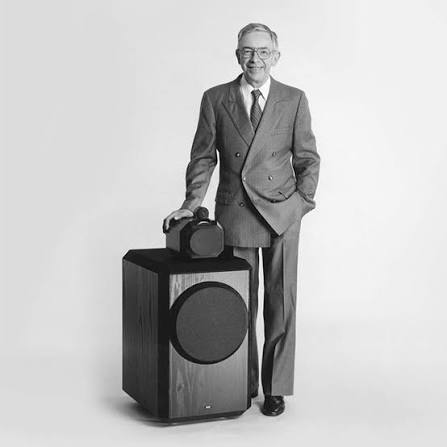
There are companies that build loudspeakers, and there are companies that, over the years, end up influencing the very way they are conceived. The history of Bowers & Wilkins undoubtedly belongs to the latter category. It is not merely the story of a British brand born in a small provincial shop, but the tale of an idea that has remained surprisingly consistent for over sixty years: to design a speaker capable of disappearing when you listen, allowing only the recording to speak for itself. Today, the name Bowers & Wilkins is synonymous with technological innovation and products that have become true icons, from the 800 Series to the Nautilus. But to understand why a British company has managed to win over the world’s most prestigious recording studios and millions of enthusiasts, we must go back to postwar Britain.
The English School of Hi-Fi
The 1950s and 1960s were probably the most fruitful period in the history of British high-fidelity audio. In a country still engaged in economic reconstruction, companies that were destined to become legendary began to emerge. Tannoy was already a leading name in the professional sector, Wharfedale was helping to popularize home hi-fi, while KEF, Celestion, Rogers, and, shortly thereafter, Spendor would give rise to what we now know as the “British School.” Those were extraordinary years, dominated by enthusiasm and experimentation. Many designers developed their speakers relying primarily on listening experience, seeking a pleasant and natural tonal balance. The result was a refined, often warm, and extremely musical sound—though inevitably tied to the personal sensibilities of the designer. But John Bowers had a different vision. He was convinced that a loudspeaker should not possess its own personality. It should not be “warm,” “soft,” or “engaging.” It should simply reproduce the recorded signal with the greatest possible fidelity. To achieve this, he believed it was essential to replace intuition with measurement, and subjective impressions with scientific research. A concept that seems almost obvious today, but which was profoundly innovative in the mid-1960s.
The Store in Worthing and Lady Luck
Before becoming a manufacturer, John Bowers was a retailer. After serving in the Royal Corps of Signals during World War II, he opened a hi-fi store with his friend Roy Wilkins in Worthing, a town on the south coast of England. That store didn’t sell Bowers & Wilkins products—simply because Bowers & Wilkins didn’t exist yet—but it was a gathering place for audiophiles, a place where people could listen to the best audio equipment available on the British market and where John Bowers spent entire days comparing devices, discussing them with customers, and developing an increasingly clear idea of what was missing from the speakers of that era.

As fate would have it, a particularly loyal customer, Dorothy Robinson, left John Bowers a substantial inheritance. While anyone else would likely have invested that money to expand the business, Bowers, however, made a completely different choice. He decided to build the speakers he had always envisioned. And that donation changed the company’s fortunes. Without Dorothy Robinson, you most likely wouldn’t be reading the story of Bowers & Wilkins.
The First Steps Toward Neutrality
The company’s first loudspeakers, simply designated P1, P2, and P3, still had limited distribution, but they already contained the DNA that would characterize all subsequent models. John Bowers was convinced that a loudspeaker should be designed exactly like a scientific instrument. Every resonance had to be measured, every reflection analyzed, every component verified experimentally. Listening remained important, but it came only at the end of the design process. It was an almost engineering-like approach, decidedly unusual in an industry still dominated by empiricism. This approach quickly led to the creation of the DM1, introduced in 1970. The acronym stood for “Domestic Monitor” and said it all. Not a speaker designed to impress, but an instrument intended to bring the same standards of neutrality required in recording studios into people’s homes. Its performance impressed industry professionals and demonstrated that the method followed by John Bowers was not only theoretically sound but also produced concrete results.

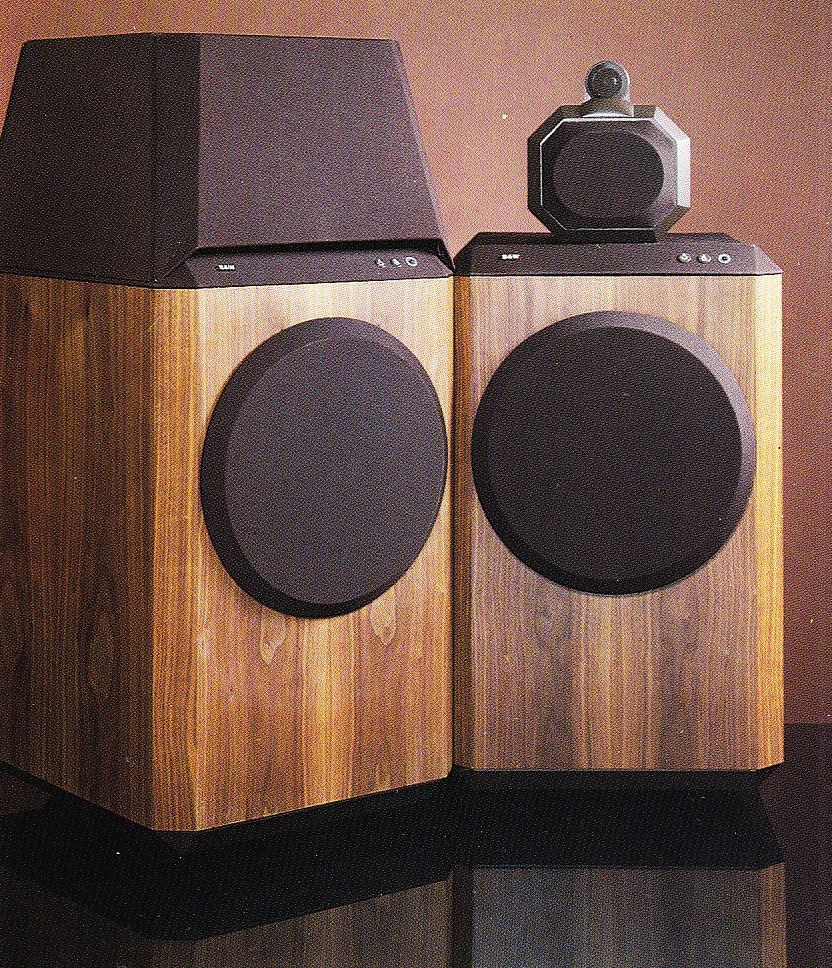
Over the next decade, Bowers & Wilkins began to grow steadily. The DM2, DM4, DM6, and—most notably—the DM7 were introduced, transforming the brand into an international player. Looking at it today, it’s impossible not to notice that tweeter positioned above the main cabinet. This was not an aesthetic choice, but the solution to a specific acoustic problem. Physically separating the high-frequency driver reduced diffraction caused by the cabinet and improved sound dispersion. Once again, form followed function. And many of the solutions we now consider characteristic of Bowers & Wilkins were born during those very years. But the research didn’t stop at speaker design. One of the main areas of study concerned the materials used to build the speakers. Across Europe, companies such as KEF, Celestion, and other manufacturers were experimenting with new diaphragms in an effort to reduce distortion and control resonance. Bowers & Wilkins’ answer came in the form of Kevlar. That distinctive yellow cone, destined to become one of the company’s symbols, was not chosen for aesthetic reasons nor simply for its rigidity. John Bowers and his designers were primarily interested in how Kevlar dissipated the energy of bending waves, preventing the abrupt break-up phenomena that characterized many traditional materials. It was a choice that would set a precedent.
The 800 Series
If there is a moment when Bowers & Wilkins definitively entered the history of high-fidelity audio, that moment came in 1979 with the launch of the 800 Series—and more specifically, the 801, a speaker that changed the market. To understand the significance of this project, one must consider the context in which it was introduced. Professional monitors were still dominated by the BBC tradition—excellent in many respects but rooted in a different design philosophy. The 801 completely broke the mold. The large woofer operated in a dedicated chamber, while the midrange driver and tweeter were completely separated from the main cabinet to reduce mechanical interference. The crossover was developed through an enormous amount of measurements and experimental testing, while every construction detail was designed to minimize any form of coloration. The 801 did not seek to impress the listener but rather to disappear. It is therefore no surprise that, within a few years, recording studios began adopting it as a reference monitor. This was probably the most significant recognition for John Bowers. It meant that his concept of neutrality had convinced not only audiophiles but also those who recorded and produced music.
The Steyning Research Establishment
The success of the 800 Series enabled the company to take a step that no other Hi-Fi manufacturer of its size had ever dared to take. In 1981, the Steyning Research Establishment was founded; it was not simply an in-house laboratory, but a true research center dedicated to acoustics and speaker design. Laser interferometry, finite element simulations, anechoic chambers, studies on composite materials, and vibrational analysis became integral parts of the development process. For John Bowers, research was not a cost—it was the product—and even today, many of the technologies found in the British company’s modern loudspeakers have their roots in the research initiated right here in Steyning over forty years ago.
The Legacy of John Bowers
When John Bowers died suddenly in 1987, many thought the company would inevitably lose its identity, but the exact opposite happened. The engineers who had worked alongside him continued to develop ideas and projects, including figures such as John Dibb, who retired by celebrating the company’s 40th anniversary with the Signature Diamond—among the finest commemorative speakers ever built— and the young Laurence Dickie, who was destined to become one of the most brilliant engineers in the entire audio industry.
The Nautilus, a timeless icon
That season gave rise in 1993 to the Nautilus, which remains to this day one of the most beautiful loudspeakers ever built, but to reduce it to a mere design object is to fail to understand its true significance. The Nautilus was (and in some ways still is) a laboratory built around four loudspeakers. It was a project in which every industrial compromise was eliminated to test the limits of what research could achieve. The long rear horns, the separate chambers, the shapes devoid of parallel surfaces, and the control of internal reflections served as a practical demonstration of the theories developed in previous years. Almost everything we find today in the modern 800 Series derives, directly or indirectly, from that experiment.

A philosophy that continues
In the years that followed, the 800 Series continued to evolve through the Matrix, Nautilus, and Diamond models, and the current D5 series. Materials have changed—we’ve seen the introduction of the synthetic diamond tweeter, the Continuum Cone, increasingly sophisticated internal structures, and cabinets designed with tools that John Bowers probably couldn’t even have imagined—but the principle has remained the same. Each new generation is born with a single goal: to further reduce what the speaker adds to the music. This is, perhaps, John Bowers’ true legacy. Many companies build excellent speakers. Few can claim to have maintained the same design philosophy for over sixty years, weathering changes in ownership, technological advancements, and market shifts without losing their identity.
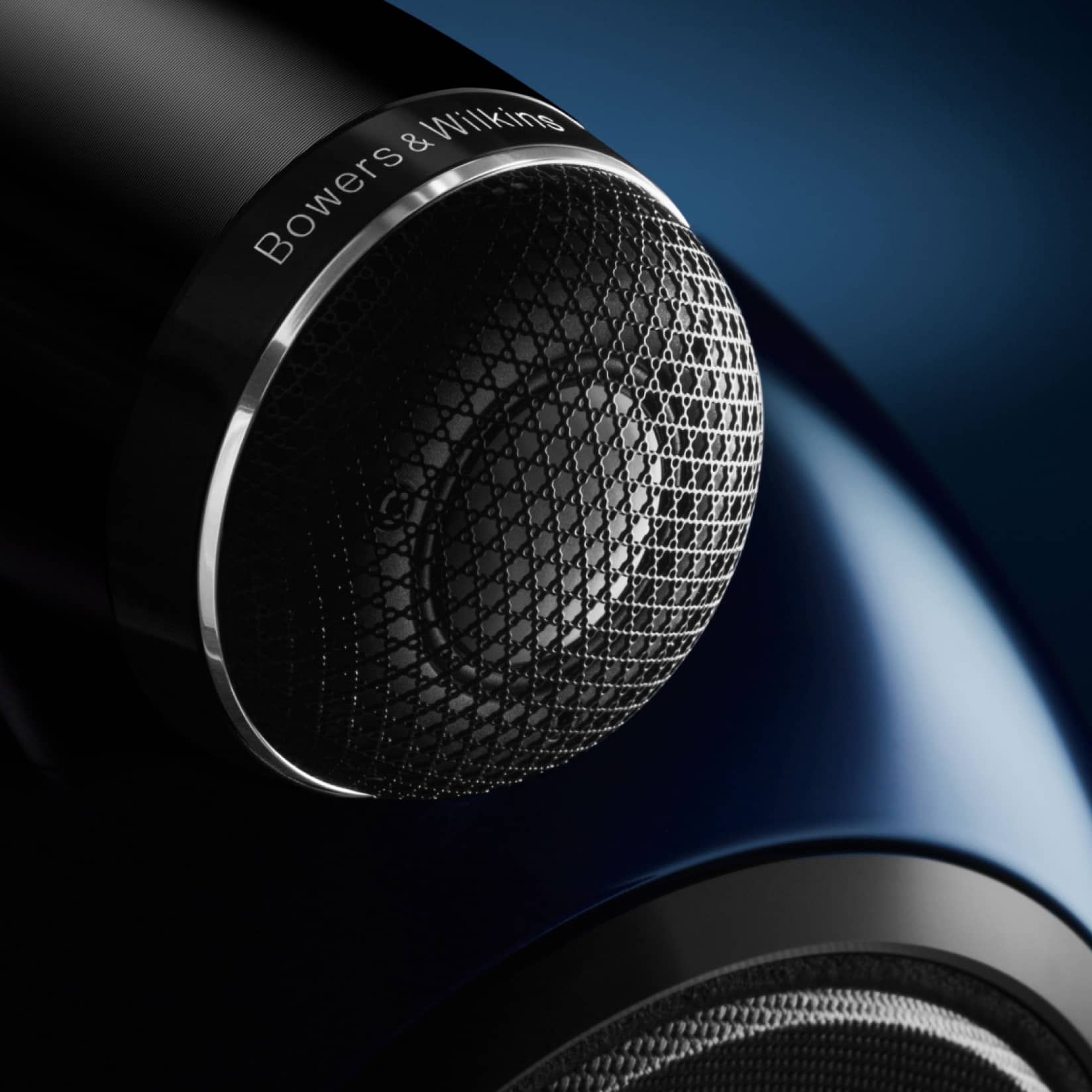
Perhaps this is why, even today, walking into a recording studio and seeing a pair of Bowers & Wilkins 800 Series speakers behind the mixing console still conveys the same sense of authority that one felt in the late 1970s. It’s not just a great speaker. It’s proof that, in high-fidelity audio, scientific research and passion can truly go hand in hand.
Changes in Ownership
Finally, there is the more recent—and inevitably less romantic—chapter of ownership changes. After John Bowers’ death in 1987, control of the company gradually passed into the hands of Swiss entrepreneur Robert Trunz, who had acquired a stake in the company several years earlier by purchasing B&W’s North American distributor and subsequently shares in the parent company. It was Trunz himself who took the helm of the company after the founder’s passing, ensuring continuity for the major research projects already underway, including the one that would lead to the Nautilus. The second major phase began in 1996, when Joe Atkins took control of the company by purchasing Robert Trunz’s shares. Atkins was neither an engineer nor did he come from the audio industry; he was a Canadian entrepreneur with solid experience in the automotive sector. However, he had the foresight to recognize the brand’s value and invest in its international growth without compromising its technical philosophy. Under his leadership, Bowers & Wilkins consolidated its prestige, expanded its presence in international markets, developed its headphone and lifestyle audio divisions, and strengthened its partnerships with the automotive industry. It is difficult to imagine modern B&W without the “Atkins era,” which lasted about twenty years. After a long period during which Joe Atkins, a former U.S. distributor for B&W, purchased the company from John Bowers and kept it thriving, Bowers & Wilkins came under the control of EVA Automation, an American company led by Gideon Yu, in 2016.

The idea was to expand the brand into a broader sphere, linked to connected audio and the digital home, but that venture lacked the industrial strength that many had expected. In 2020, the brand thus joined the Sound United group, which already owned Denon, Marantz, Polk Audio, Definitive Technology, Classé, and Boston Acoustics. Two years later, Sound United was acquired by Masimo, an American company specializing in medical technologies. A move that, viewed from the outside, immediately seemed curious: a biomedical giant finding itself the owner of some of the world’s most prominent audio brands. The next step came in 2025, when Masimo sold Sound United to HARMAN International, a Samsung Group company. The deal brought Bowers & Wilkins into the same corporate family as brands such as JBL, AKG, Mark Levinson, Revel, and Arcam. HARMAN announced the completion of the acquisition in September 2025, with the deal encompassing Bowers & Wilkins, Denon, Marantz, Polk Audio, Definitive Technology, HEOS, Classé, and Boston Acoustics. For those familiar with the brand’s history, these corporate changes may raise some legitimate questions. Bowers & Wilkins was born from the character of one man—his obsession with precision and his conviction that research should guide every design decision. Today it belongs to a large global conglomerate. But the company’s history also teaches us something else: B&W’s value has never lain solely in its name, nor in whoever happens to own it at any given moment. It has always resided in the technical culture the company has built around its products. And this is likely where its future will be decided. If the new corporate structure can respect that culture, Bowers & Wilkins will be able to continue being what it has been for more than half a century: not simply a prestigious brand, but one of the few manufacturers capable of combining scientific rigor, industrial production, and a genuine passion for music.





GIPHY App Key not set. Please check settings