



 Audio 2G
When Engineering Meets Musical Art.
In the rarefied world of high-end audio, few names carry the weight of Linn. The latest iteration of their flagship monophonic power amplifier, the Linn Klimax Solo 800, represents not only an evolution in amplifier design philosophy on the part of the Scottish company, but a complete rethinking of how modern power amplifiers can deliver music. We had talked about this product a few months ago during an initial, fleeting contact. Today we return to it in greater depth.
Conquered at first sight
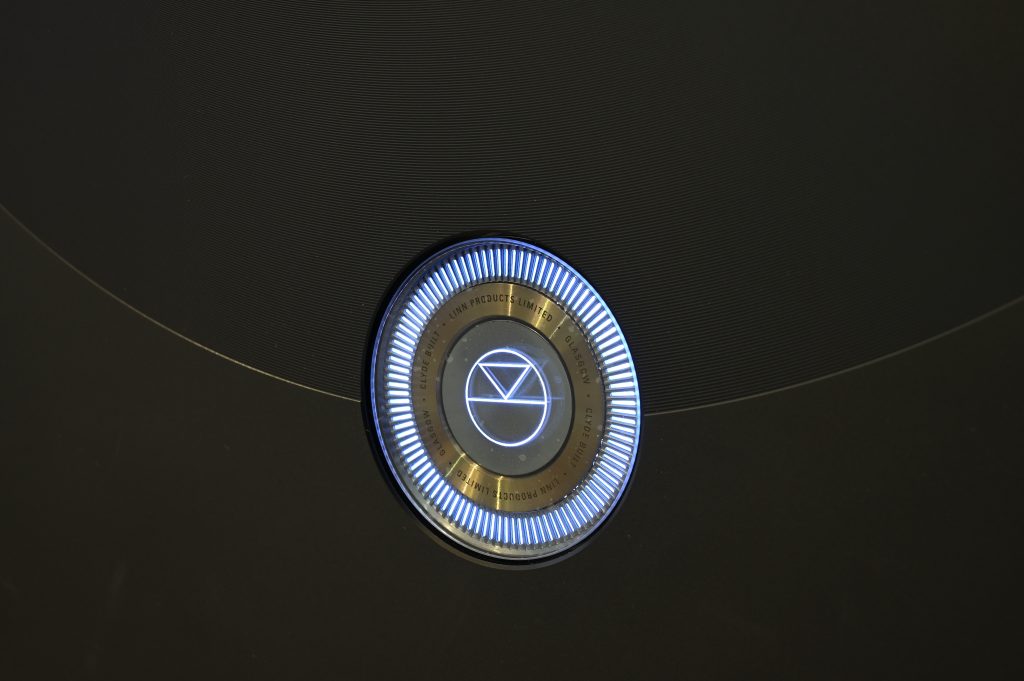
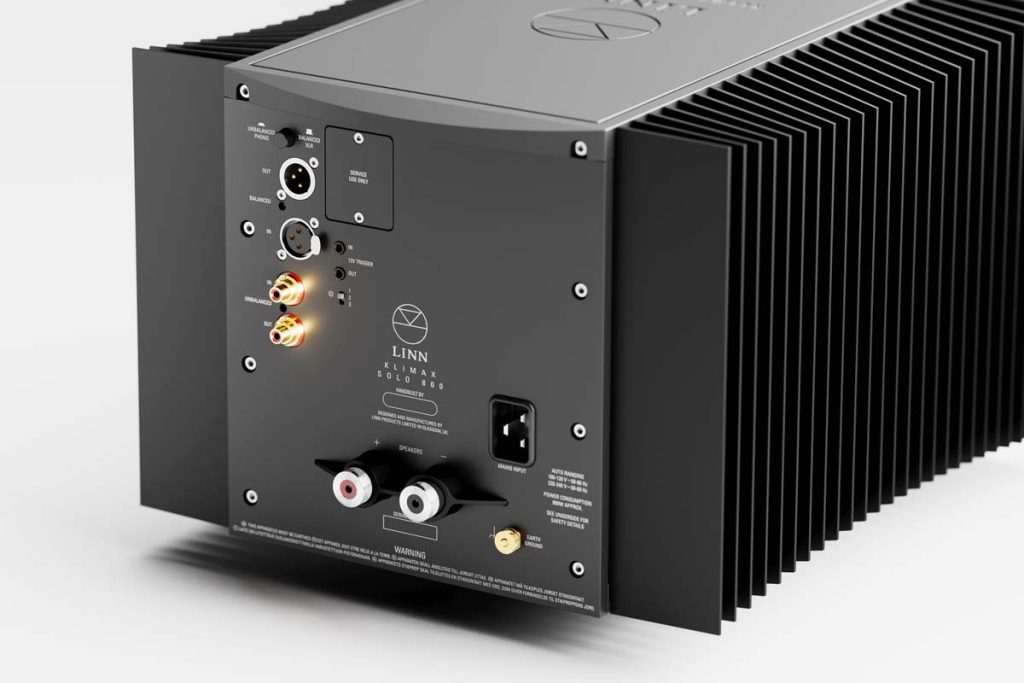
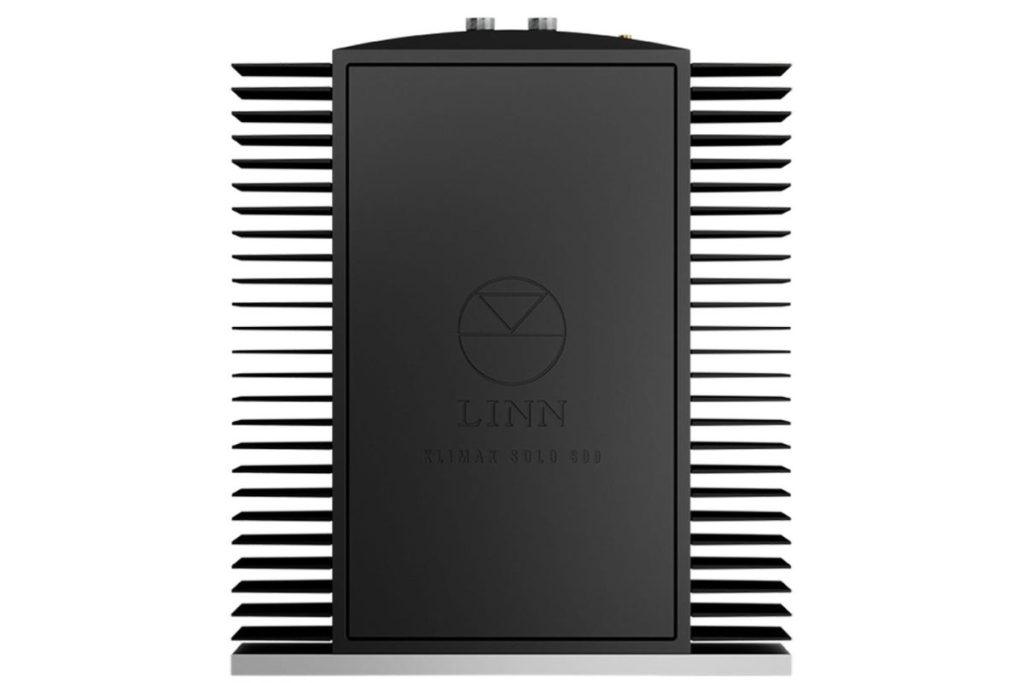
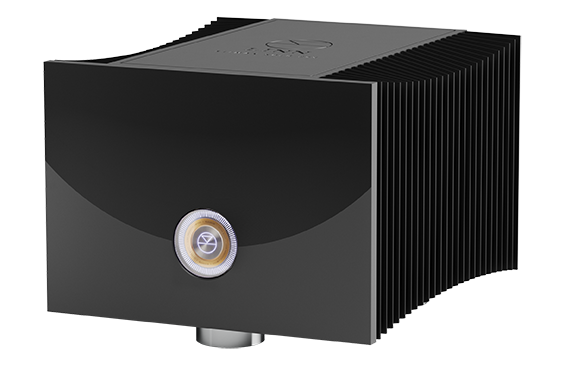
The Linn Klimax Solo 800 immediately makes its mark with its minimalist aesthetic. The precision-machined aluminum chassis, available in silver or black finish, testifies to Linn’s commitment to the “nothing but the signal” philosophy. Each amplifier stands as a testament to Scottish engineering excellence, with clean lines and form following function. The chassis/heat sink serves as the prevailing artistic/visual element, with meticulous attention to every detail, from the company logo elegantly engraved on the top panel, to the unusually shaped and high quality speaker connectors, to the stunning front display with its theory of 100 LEDs.
Beyond the Surface: Technical Innovation
Beyond the impression made by aesthetics, it is what lies inside that makes the Linn Klimax Solo 800 truly special. At its heart are revolutionary technologies that deserve special attention. We will focus on adaptive polarization control and the Utopik switching power supply.
To oversimplify the concept we could make an analogy between adaptive bias control and a smart thermostat. Traditional amplifiers maintain a constant bias current, regardless of the trend of the incoming music signal. It is a bit like keeping the house heating on full blast even on a mild day. The Linn Klimax Solo 800’s adaptive control, on the other hand, continuously monitors the audio signal and adjusts the bias current accordingly in real time. This means that the amplifier always operates at its optimum point, delivering maximum performance while minimizing heat loss and power consumption. The implementation of such a design idea is not new, and over the years several manufacturers have attempted it; however, Linn has succeeded thanks to its experience in using sophisticated DSP.
The Utopik switching power supply represents an equally impressive advance. We can imagine traditional linear feeders as traditional water tanks in old buildings: they store energy and release it when needed, yet they are heavy, bulky, and inefficient. The Utopik system, in contrast, works more like a modern system connected to an aqueduct with an on-demand pressurization system. It processes power at ultra-high frequencies, delivering clean and stable power exactly when and where it is needed. This translates into several advantages:
- Dramatic reduction of power supply noise that does not release spurious in-band audio;
- Improved energy efficiency;
- More consistent performance regardless of power grid quality;
- Significantly reduced weight compared with traditional designs.
Listening
Technical innovations translate into real-world performance that is nothing short of extraordinary. The Linn Klimax Solo 800 delivers 800 watts into 4 ohms, but raw power tells only part of the story. The amplifier exhibits exceptional control over the speakers, maintaining grip and authority during even the most demanding musical passages.
For our critical listening sessions, we paired the Linn Klimax Solo 800 with Vivid Audio Kaya 90 loudspeakers, powered by the outstanding Playback Designs MPD 8 DAC/preamplifier, with an Antipodes Audio K30 as music server and streamer. This system allowed us to fully explore the capabilities of the amplifier across a wide range of music genres and recording qualities.
Janine Jansen’s performance of Sibelius’ Violin Concerto in D minor, conducted by Klaus Mäkelä, proved particularly revealing. In the opening passage of the first movement, the Linn Klimax Solo 800 painted a large soundstage where Jansen’s violin emerged from absolute silence with extraordinary delicacy. The amplifier’s control over micro-dynamics became evident in the way it preserved subtle variations in bow pressure and vibrato intensity. When the full orchestra enters, the Klimax Solo 800 demonstrated its ability to maintain complete separation and spatial positioning of instruments while still offering the full weight and scale of the powerful orchestral forces. The famous third movement showed the amplifier’s speed and precision: the aggressive, dancing rhythms remained consistent and engaging, with each orchestral section clearly delineated in space.
Turning to Daniil Trifonov’s “My American Story: North,” the Linn Klimax Solo 800 showed its mastery in reproducing solo piano, one of the most challenging tests for any amplifier. The capabilities of the power supply became evident in the way the amplifier handled the complex harmonic structure and dynamic variations of the instrument. The attack of each note was precise while never being clinical, while decay and subtle harmonics floated through space with remarkable naturalness. The amplifier’s almost absent noise floor allowed the most delicate pianissimo passages to emerge with complete detail, while the fortissimo sections showed both power and control, free of any hint of compression.
“The Looking Glass” by Robin McKelle highlighted another aspect of the Klimax Solo 800’s performance: its ability to reproduce the human voice with exceptional realism. McKelle’s rich, emotional voice was presented with all its natural texture and body intact. The precise control of the amplifier on the Vivid Audio Kaya 90s resulted in a seamless integration between her voice and the accompanying instruments. Even more impressive was how the Linn Klimax Solo 800 maintained the organic warmth of her lower register while preserving the air and space around her voice, creating an almost holographic presence in the listening room.
Bass response is particularly noteworthy, combining depth and impact with nuance and texture. The midrange, where most of the musical information resides, presents voices and instruments with outstanding clarity and natural timbre. High frequencies shine without ever becoming aggressive or artificial.
But perhaps most impressive of all is the amplifier’s ability to disappear completely, leaving only the music. The noise floor is incredibly low, creating a silent background against which even the finest musical details emerge clearly.
Use in everyday life
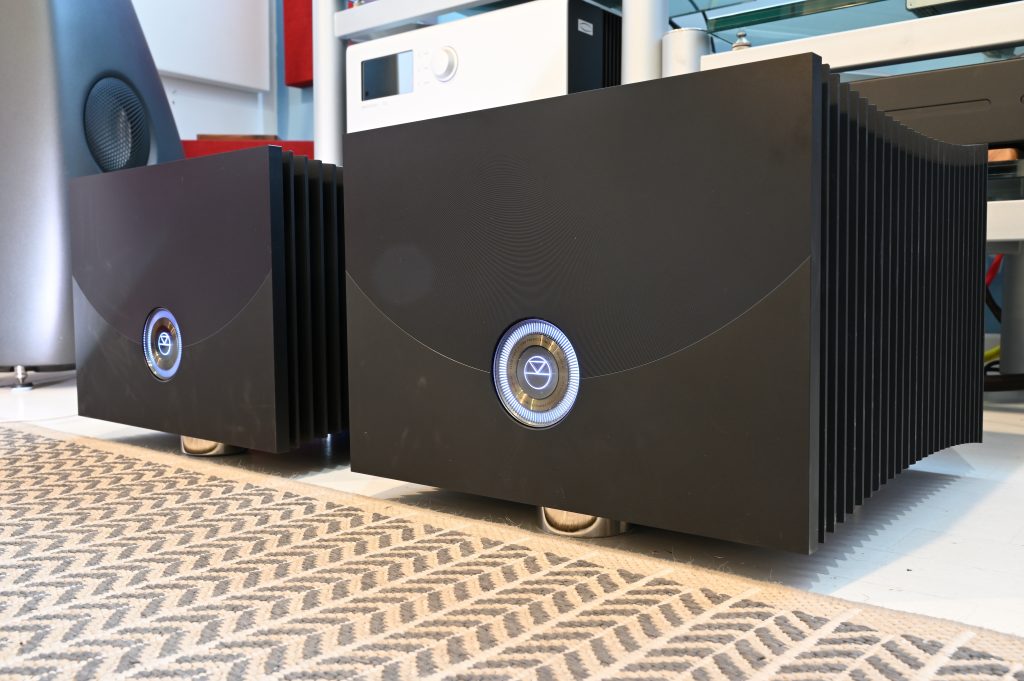
In practical use, the Linn Klimax Solo 800 proves to be surprisingly undemanding despite its high-end status. the efficient power supply design implies operation at lower temperatures than many competitors. The only real consideration concerns placement: although the amplifier operates at low temperatures, it still benefits from reasonable airflow. however, the relatively compact size (compared to conventional designs of similar power) makes placement easier than might be expected for a component of this capacity. Start-up time is short, and the amplifier reaches optimum performance after a few minutes.
Economic considerations
The approximately €90,000 required to come into possession of a pair of Linn Klimax Solo 800 represents a significant investment that places these power amps beyond the reach of most audiophiles. We might therefore consider the economic evaluations concerning them purely academic. However, when considered against their peers in the ultra-high-end amplifier market, the Klimax Solo 800 make a compelling case for themselves. The combination of innovative technology, exceptional build quality, and musical performance place them firmly-at least in our opinion-among the world’s best power amplifiers.
Conclusions
The Linn Klimax Solo 800 sits at a fascinating intersection of engineering innovation and refined musical reproduction. Its adaptive polarization control and Utopik power supply are not mere technical exercises: they contribute to the fundamental goal of the most faithful music reproduction possible. While its price places it firmly in the ultra-high-end category, its performance, build quality, and technical innovation justify its position as a reference component.
For those who seek the ultimate in music reproduction, who value both engineering excellence and musical truth, the Linn Klimax Solo 800 deserves serious consideration. It represents not only the current state of the art in amplifier design, but potentially a glimpse into the future of high-end audio reproduction.
Technical specifications.
| Number of Channels | One |
| Max Output | 800W into 4Ω |
| 400W into 8Ω | |
| 1.2kW into 2Ω | |
| Amp Technology | Adaptive Bias Control |
| Power Supply | Utopik (2 kW Max) |
| Inputs | RCA Phono x1 |
| Balanced XLR x1 | |
| Passthrough | RCA Phono x1 |
| Balanced XLR x1 | |
| Speaker Outputs | Banana/Binding Posts x2 |
| Output Impedance | 0.01Ω at 1kHz |
| THD+N, 4 Ω | 0.0005% | 1kHz | 800 W |
| THD+N, 8 Ω | 0.0004% | 1kHz | 400 W |
| THD+N, 2 Ω | 0.0006% | 1kHz | 1.2 kW |
| Finishes | Silver or Black anodized |
| Width | 350 mm |
| Height | 268 mm |
| Depth | 412 mm |
| Weight | 27 kg |





GIPHY App Key not set. Please check settings