



 Audio 2G
Unison Research Audio 2G has tested—and, incidentally, with great satisfaction—several tube integrated amplifiers, notably the following models Simply 845, Simply Italy and S6 Black Edition. However, the company based in Dosson di Cassier, in the province of Treviso, has for years included in its product line a series of hybrid amplifiers—that is, amplifiers that combine solid-state and tube technology—called Unico. In the specific case of this review, we are examining the new version—V2, to be precise—of the Unico Pre and the Unico Dm, which date back to 2008. This should give us pause to consider just how long the models offered by this Italian manufacturer remain in the catalog and how thoroughly technological innovations are refined and developed before being incorporated into a new model.
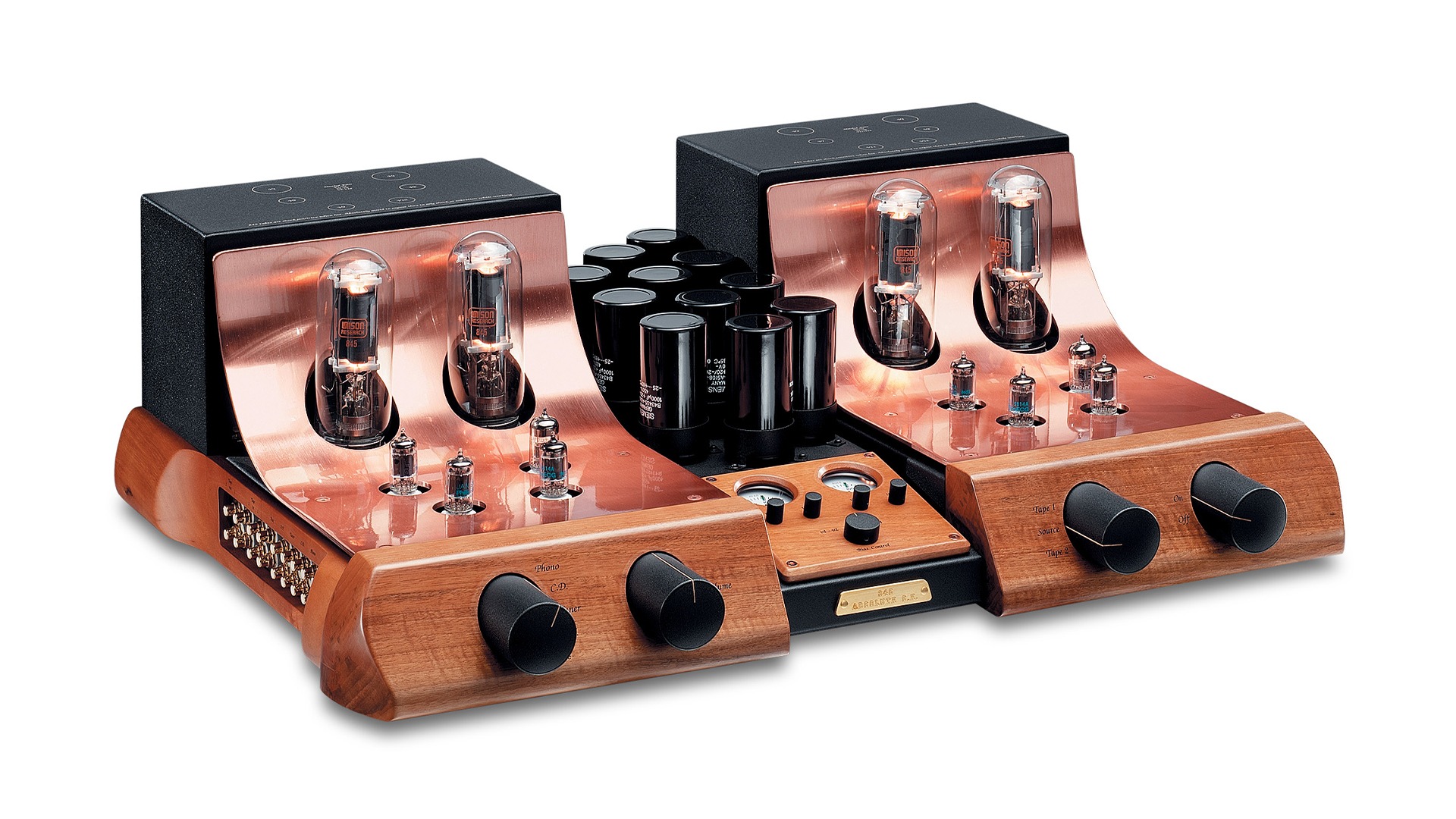
A little history.
Unison Research was founded in 1987 by a group of passionate audiophiles, led by Giovanni Maria Sacchetti (1945), who later drew on the entrepreneurial expertise of Giovanni Nasta. Sacchetti devoted himself to the study and design of hi-fi systems from a young age, combining his interest in electronics with a passion for music inherited from his father, a talented pianist. After completing his studies in electronics, he devoted himself to teaching, as well as to the design and development of Unison Research amplifiers. Another pillar of the Treviso-based company is Prof. Leopoldo Rossetto, a full professor of advanced analog electronics at the Faculty of Engineering at the University of Padua, whose design insights form the basis of the A.S.H.A. technology, which I will discuss later in this article. I’d like to acknowledge the contributions of two other engineers to the development of Unison’s latest products: Alessio Fusaro, whom we’ve already interviewed regarding previously reviewed products, and Agostino Zamai, a student of Prof. Rossetto who served as his thesis advisor.
Aesthetic design.
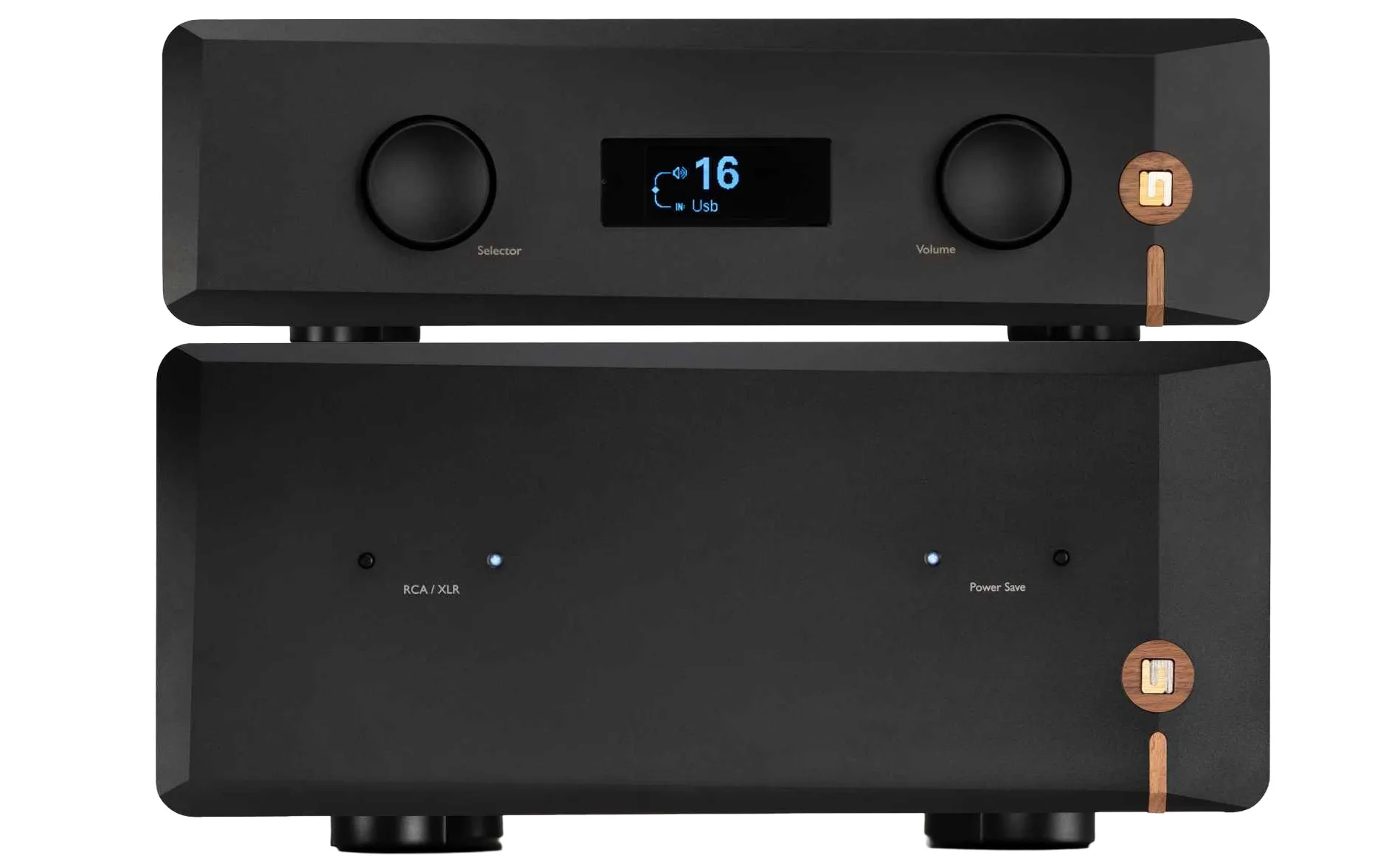
An aesthetic analysis of Unison’s new preamp and power amp—if conducted with a casual eye—might lead to the mistaken conclusion that the design is understated and elegant but lacking in points of interest. Nothing could be further from the truth. If you focus on the edges of the front panels, you can appreciate the subtle variation in their thickness, as well as the unique shape of their edges, which taper from one side to the other. The other surfaces are also finely crafted: the metal covers are perforated to form the Unison logo, while the side panels—also perforated—feature a pattern reminiscent of a musical signal envelope, as one might see it on a computer display. Aesthetics aside, it is worth noting that the front panels are made of 15 mm-thick solid-machined aluminum, while the other surfaces are 2 mm thick, contributing—thanks in part to some clever design features—to a highly rigid structure that prevents the occurrence of unwanted mechanical resonances. Personally, I found the beautifully crafted wooden power switch delightful: a sort of nod to the defining characteristics of the tube amplifier series, whose cabinets make extensive use of this noble material.
Unico Pre
The abbreviation “DM,” which identifies the ending, unequivocally indicates the nature Dual Mono of that product. It’s true that the same model number could also be used for the preamplifier, and the first clue to this is the “almost symmetrical” layout of the rear panel, with all the connections for the two channels arranged mirror-image to the vertical axis. I wrote “almost” because, in fact, the perfect symmetry is “spoiled” by the pair of RCA connectors for the MM/MC phono input located on the right. Nevertheless, the circuitry of this section is also dual-mono, right down to the PCBs, which are separate for the two channels, L and R. Also on the rear panel, we find two sets of DIP switch for selecting the type of pickup, adjusting the electrical parameters, and, if necessary, increasing the gain by 10 dB. There are four line inputs available, three of which are dual inputs in both balanced (XLR) and unbalanced (RCA), and a single RCA input that can be used—after appropriate configuration via a menu accessible from the front panel and navigable using the alphanumeric display—to connect an external processor, creating a sort of “tape monitor.”
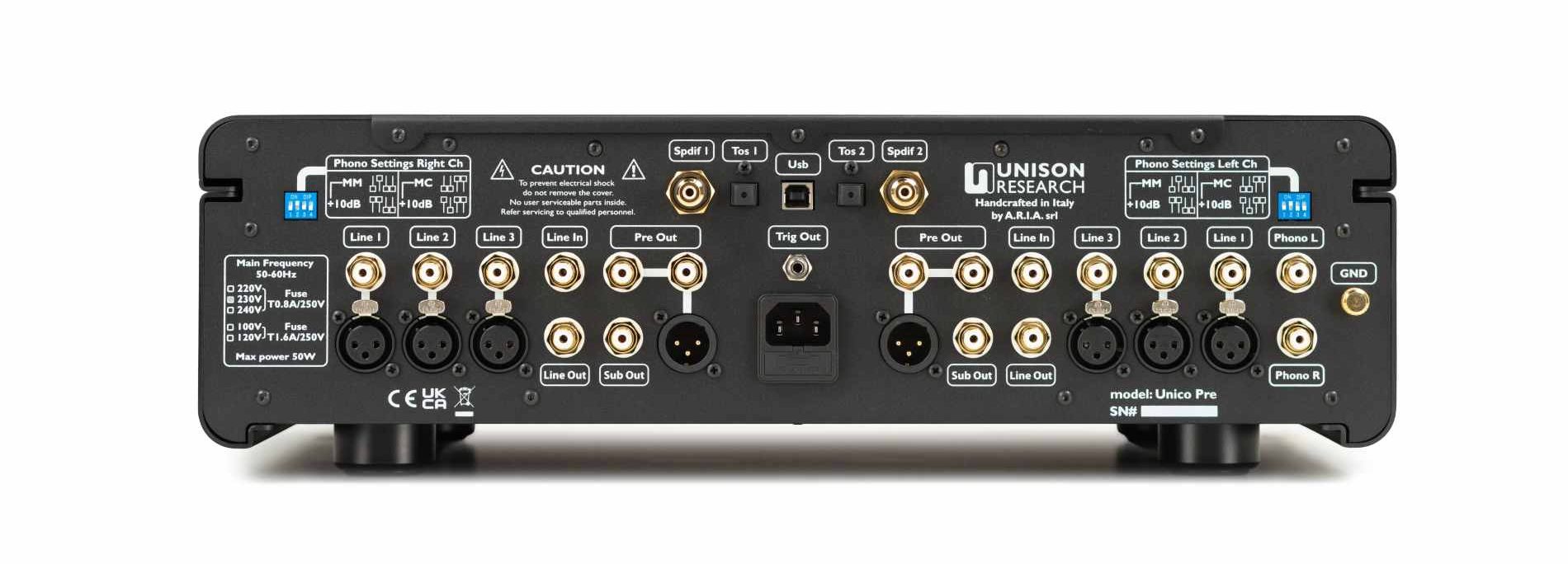
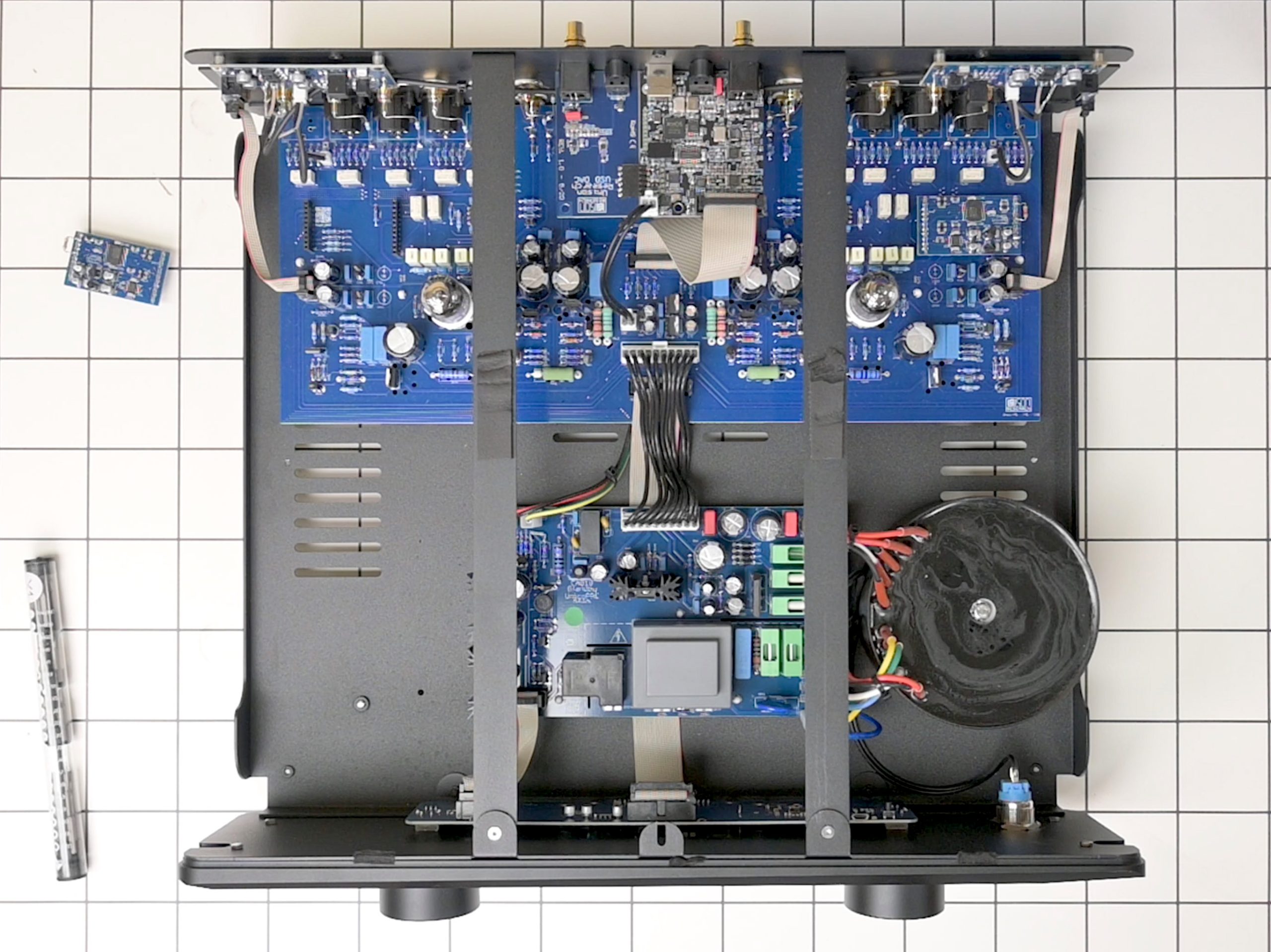
The digital input section is located on a dedicated board and includes four S/PDIF inputs (2 optical and 2 coaxial) and an asynchronous USB port (XMOS chip) capable of handling PCM data streams up to 384 kHz and DSD up to 256x. The chipset used is the Sabre ES9018K2M, whose balanced-output architecture integrates seamlessly with the Unico Pre’s tube circuitry, ensuring high-quality conversion and tonal consistency. Our tests were conducted in a Linux environment (Audiolinux) and confirmed full compatibility. The Unico Pre is inherently balanced and, consequently, uses a Burr Brown PGA2311 stereo chip for each of the two channels to control volume. Although these chips are capable of handling a 120 dB dynamic range in 1/2 dB steps, in this case we chose to limit the range to 59 dB using 74 levels with varying steps: 1/2 dB for levels between “99” and “29,” 1 dB between “29” and “10,” and finally 2 dB for levels below that. Once the cover is opened, the dual-mono architecture is immediately evident due to the mirrored layout of the main PCB, at the center of which is a large connector that carries the various power supply branches from the dedicated separate section, which, as expected, uses a toroidal transformer of considerable size. From a circuit design perspective, the Unico Pre, like the Unico DM v2 power amplifier, uses vacuum tubes for the analog input stage—specifically, an excellent Genalex Gold Lion ECC83—along with discrete transistors and integrated circuits. The main PCB is built using through-hole technology, while the digital board, the two volume boards, and the phono section boards are manufactured using SMD technology.
Unico DM v2
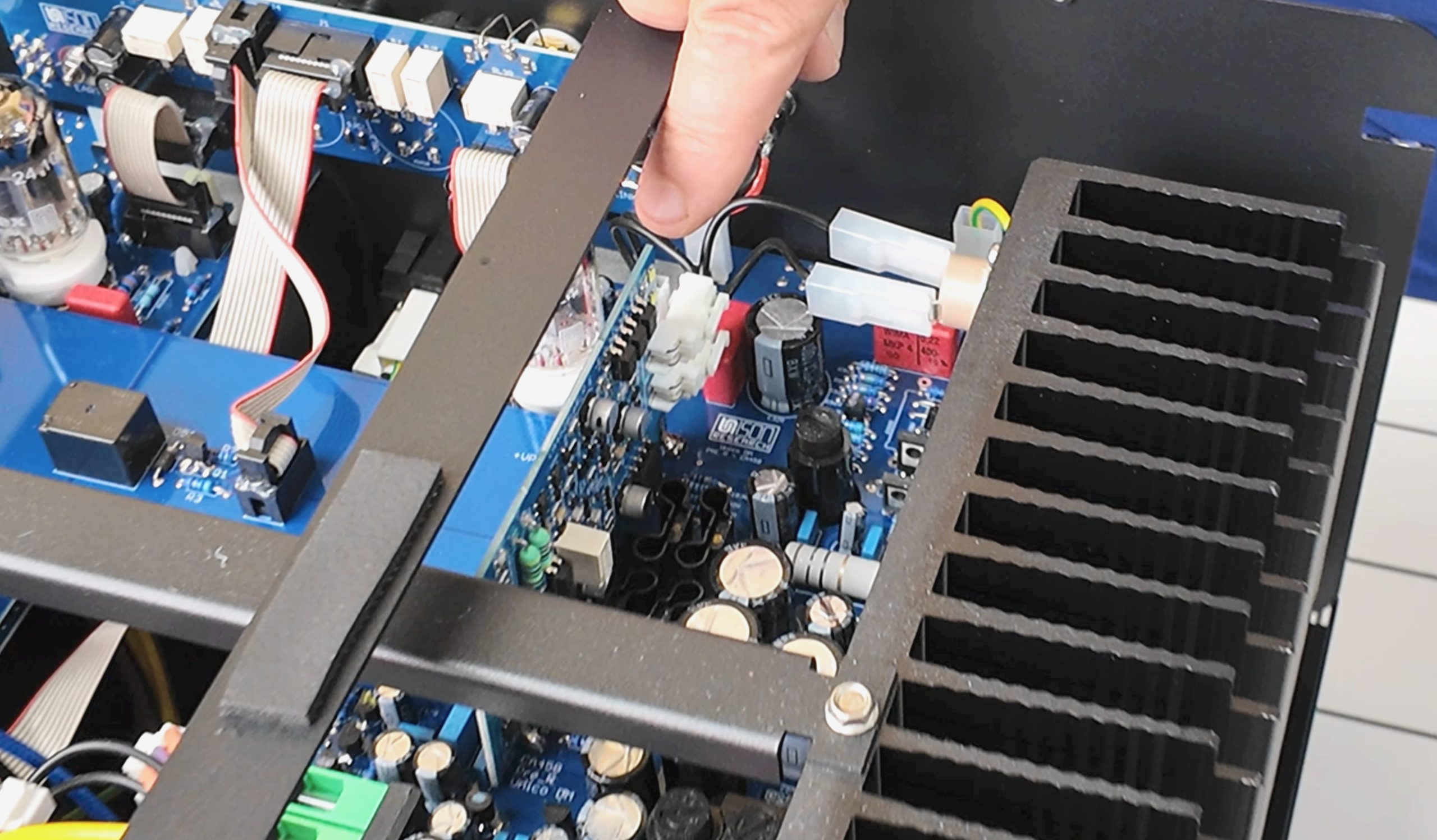
The first thing that stands out about the rear panel is the size of the two large 750 VA toroidal transformers, which take up a significant portion of the interior space. Looking at them from above, you can see that they have been secured together using a shaped metal plate. The heat sinks, which are large and thus have a substantial radiating surface area, are also connected to each other by a metal bracket that runs across the unit from side to side. Perpendicular to this bracket are two additional metal brackets that connect the front and rear panels, helping to improve the overall mechanical rigidity of the unit. Significant attention has been paid to minimizing vibrations through strategically placed neoprene pads in certain areas. The power amplifier also features a clear dual-mono layout. The Unico DM v2 power amplifier is a hybrid design, featuring a Class A tube first stage with two ECC82 / 12AU7 Gold Lion tubes, while the second stage employs an innovative complementary push-pull configuration with three pairs of MOSFETs (IRFP240/9240) in parallel.
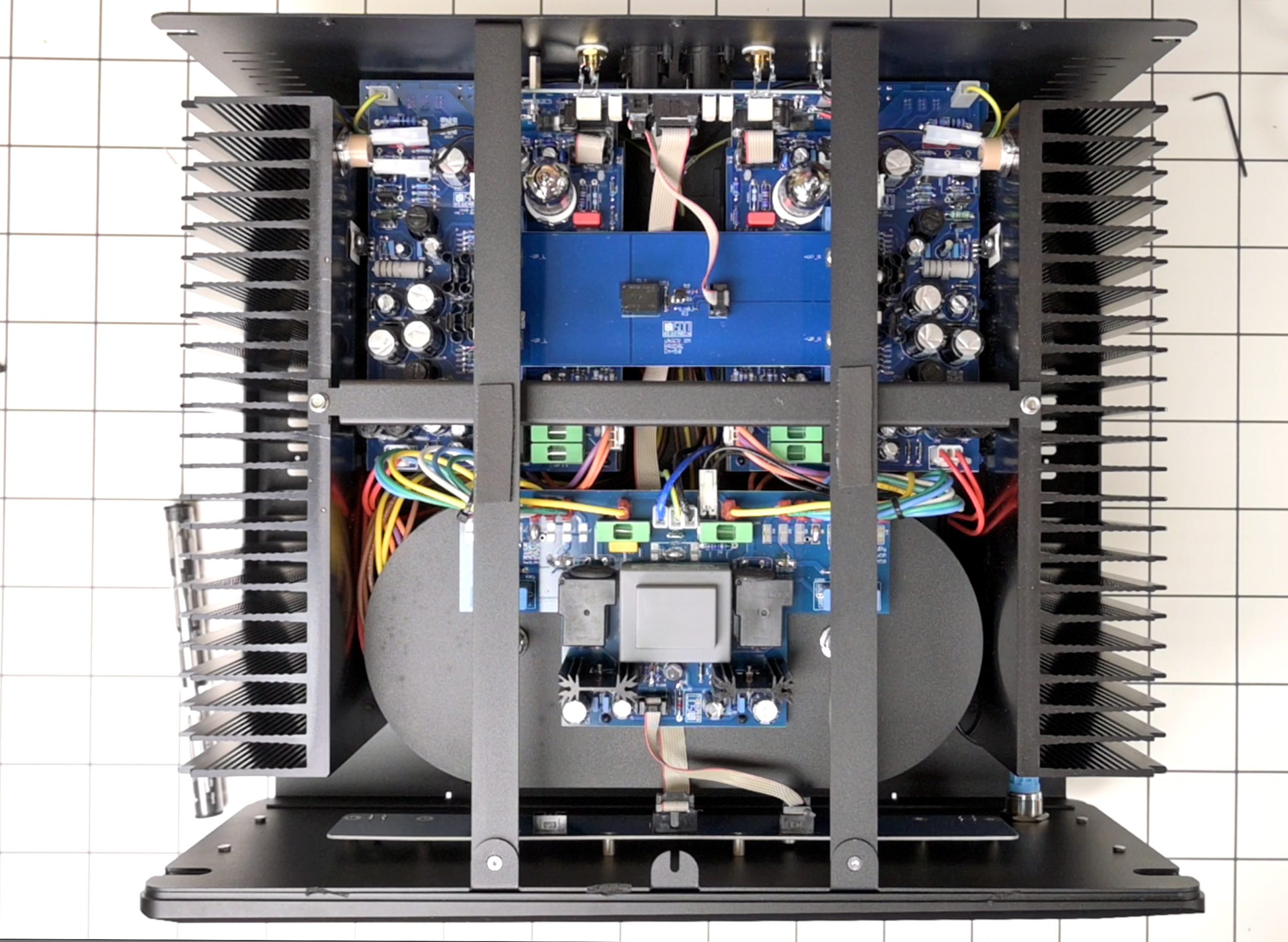
With this model, Unison Research introduces A.S.H.A. technology for the first time; the acronym stands for Analog Synchronized Hybrid Amplification. This technology gives rise to a unique power amplifier configuration known as Class A-AB, which combines the musical qualities of Class A with the efficiency and reliability typical of Class AB. Care must be taken not to confuse this configuration with the one widely used for decades known as Class AB, where the active devices initially operate in Class A and then switch to Class B when power demands require it. Here, the amplifier operates constantly in Class A and activates the complementary stage in the negative half-wave only when necessary. For a detailed description of A.S.H.A. technology, please refer to the video uploaded to our YouTube channel, where engineers Fusaro and Zamai explain it in precise terms that are still understandable even to those without specialized knowledge of the subject.
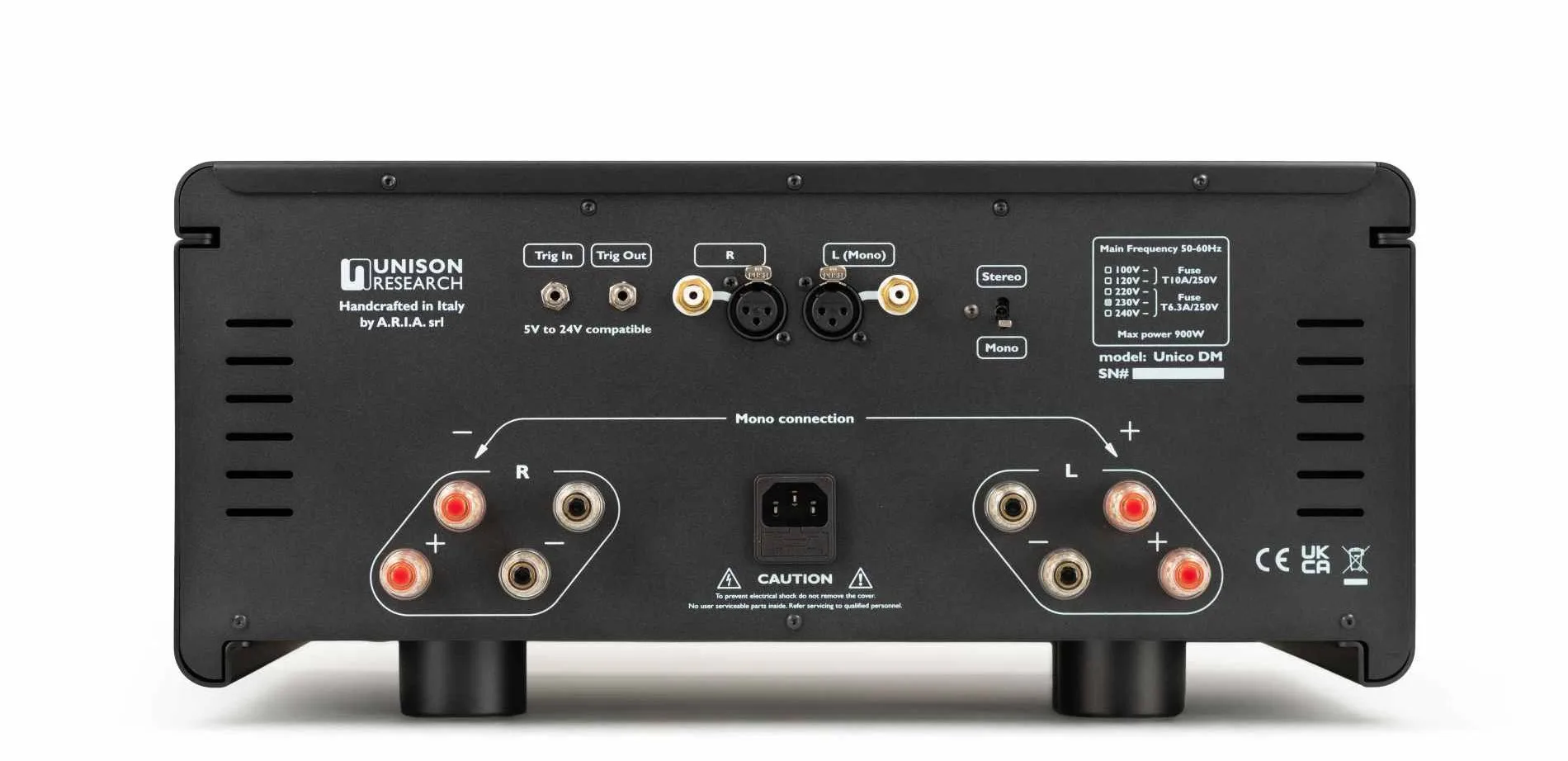
From a user interface perspective, the Unico DM v2 power amplifier is extremely intuitive: on the front panel, you’ll find the main power switch embedded in the wooden Unison logo, along with two small buttons, each paired with an LED. One button activates the RCA/XLR switch, while the other activates standby mode ( energy-saving mode). On the rear panel, there are two pairs of speaker terminals—useful for bi-wiring—and a switch to toggle between Stereo and Mono modes.




GIPHY App Key not set. Please check settings