



 Audio 2G
Unison Research Unico Dm v2 and Unico Pre:Listening Impressions
The listening test of the Unison Research setup was conducted by connecting an excellent pair of floor-standing speakers downstream—the B&W 804D5s—whose review you can read here. Equally excellent was the source component—in this case, the Rockna Wavedream Reference DAC/streamer, which we’d also reviewed for our YouTube channel and website. In short, a top-notch system designed to allow this preamp and power amp—from which we had very high expectations—to perform at their very best. And our expectations were not disappointed; in fact, we were truly impressed by something I wouldn’t hesitate to call innovative. What? Simple: the sound. That’s right, because the Unico Pre and the Unico DM v2 combine power—more than enough to bring out the best in the demanding 804 D5s—and the refinement I’ll discuss later, with a particular quality of sound that, at least at first, left me taken aback. I’m referring to the fact that these components perform the same way at low, medium, and high volumes. Let me explain: you’ve probably noticed that every system has a well-defined range the volume range within which it sounds best. If the volume is set too low, the sound lacks energy and definition, falling short in terms of focus and clarity. If it’s set too high, tonal coherence begins to diminish, the soundstage flattens out, and the subtle, detrimental effects of distortion start to become noticeable. Well, none of that happens with these new Unison speakers, which, from the very first notes, give you the feeling that you’re hearing the very best the system has to offer, regardless of where the volume knob is set. At low volumes—perhaps during an “intimate” listening session late at night—this characteristic ensures you don’t miss a single nuance of the musical message in the track you’re listening to. Conversely, at high volumes, you can reach stadium-level sound pressure without even realizing it. In our test, the sign that something out of the ordinary was happening was the unusual excursion of the B&W woofers, which were driven hard by the Italian duo without any apparent strain. That said, it’s clear that there’s always a “natural” volume level at which listening should take place, and that this level varies depending on the track’s content. In short, listening to Dream Theater is one thing, a Mahler symphony is another, and a string quartet is yet another. Certainly, the Unison Research pair is capable of accompanying us through all these very different listening experiences, always guaranteeing a sound devoid of even the slightest hint of distortion.
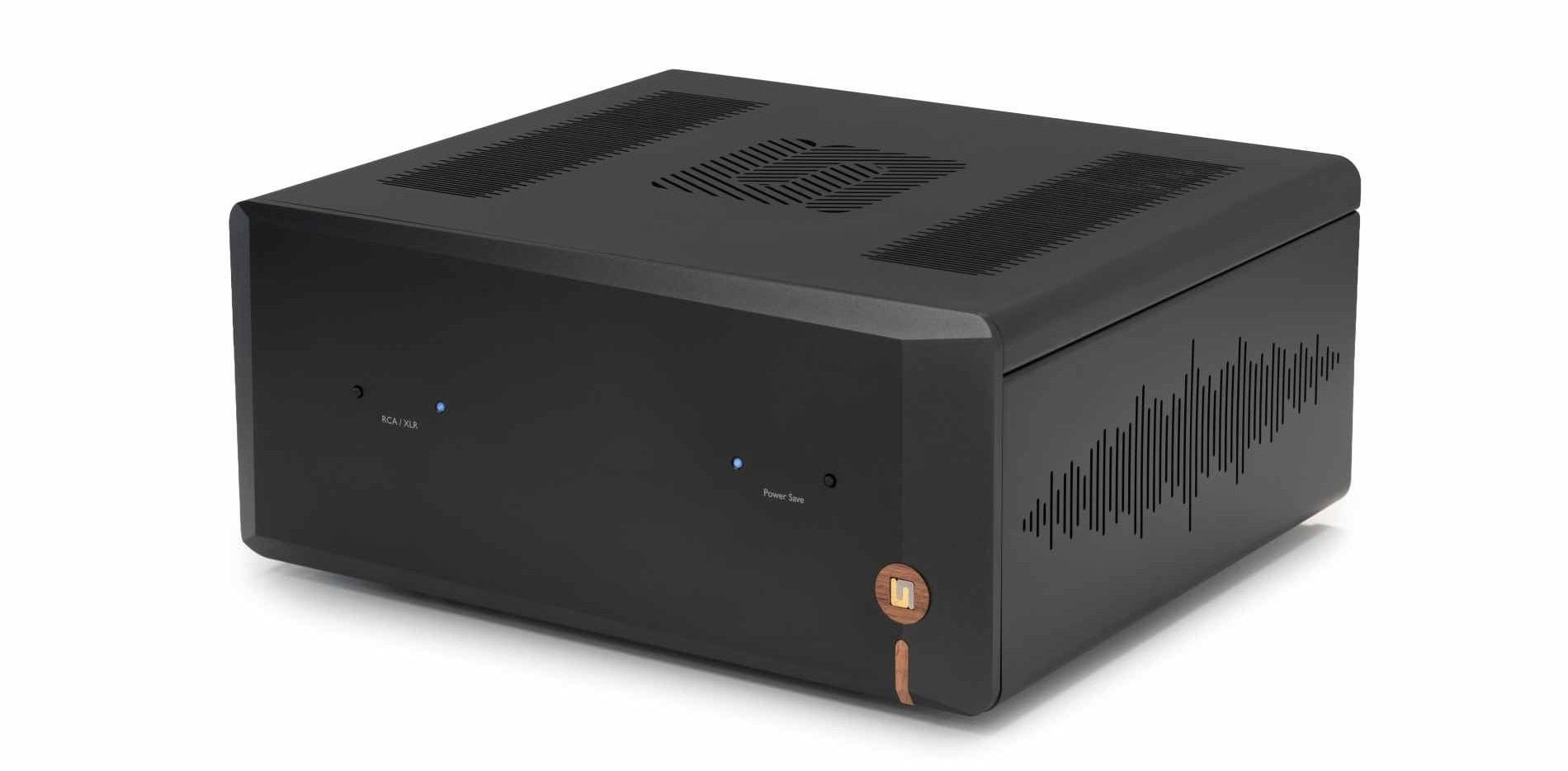
There’s a track that I love very much and that has been on one of my listening test playlists for years: “Behind the Yashmak,” taken from the Esbjörn Svensson Trio’s *Live in Hamburg* (ACT 2007), which has allowed me to appreciate the unique character of the Unico pair. The track opens with an acoustic double bass solo by Magnus Öström, which gradually increases in complexity, accompanied by some subtle electronic sounds. Here, the Italian amplification system performs with great authority and control, successfully reproducing the full richness of the acoustic instrument’s sound with admirable precision. This is followed by the main theme developed by the late Scandinavian pianist, which unfolds into a dizzying crescendo into which Dan Berglund’s drums are woven. The timbres and harmonic nuances, of both the piano and the double bass, have been reproduced with the utmost fidelity—both in the initial pianissimo passages and in the final climax —where the exceptional power of the Unico DM v2 amplifier, combined with the absolute absence of distortion, gave me a tremendous thrill. Thanks to the excellent recording, the live feel is truly intense, and—believe me—for me to write something like this, it’s not just the usual cliché.
The test case of symphonic music only serves to confirm my impressions. In particular, the clarity of the musical message during pianissimo passages ensures that the listener doesn’t miss a beat, allowing them to attune themselves to the compositional structure of the score. The first movement (Allegro moderato) of the Concerto for Violin and Orchestra in D minor, Op. 47 by Sibelius, performed here under the direction of Klaus Mäkelä with the Oslo Philharmonic Orchestra and featuring Janine Jansen as soloist (Decca), opens with an introduction by the strings in tremolo This is followed by the soloist’s entrance, presenting the main theme, which is expansive and expressive. With other amplifiers, I’ve found myself having to turn up the volume a bit to fully appreciate the ethereal—typically Nordic—atmospheres during the opening moments of playback, only to have to suddenly turn it down when the entire orchestra enters in the finale. With the Unison Research pair, I didn’t need to do that at all, thanks to their exceptional resolution and microdynamics at low volume levels.
As mentioned at the beginning of this paragraph, these listening impressions are based on use with the Rockna DAC/Streamer, but how does it differ when using the built-in DAC? Well, with the same source—namely, the Roon server running on my Antipodes K30—the difference proved to be quite marked across all parameters, but what stood out most was a slight loss of tonal accuracy. Worthy of note, however, is the phono stage, which is quiet, dynamic, and tonally accurate.
Conclusions
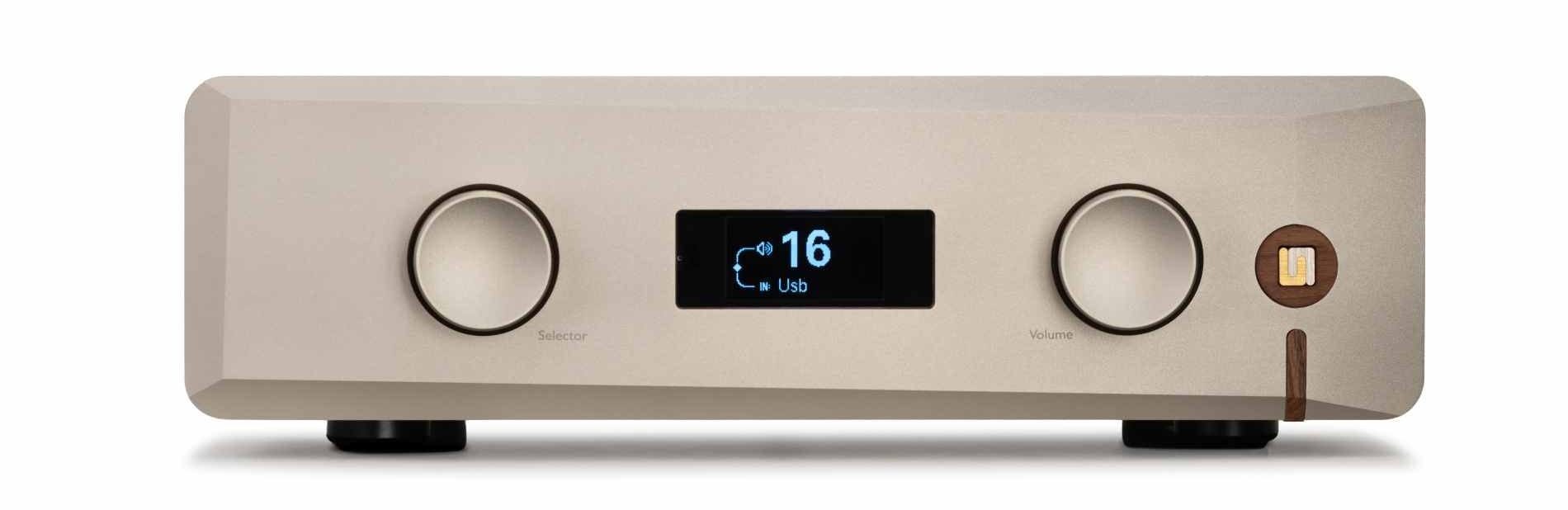
As you know, I don’t have a background in electronics, so what I’m about to write may not be of any value. However, I believe that in an industry where countless technical solutions have already been tried and tested—and where what’s presented as technological innovation is often little more than a “tweak” to technical solutions dating back several decades—Unison Research’s offering struck me as a genuine innovation. What I’m reasonably certain of is that this Unico Dm v2 and Unico Pre combination delivers a distinct sound of decidedly high quality. If we add to this a versatility that leaves no room for criticism, a high standard of build quality, and—a detail not to be overlooked—an overall cost that is, all things considered, comparable to that of a high-end integrated amplifier, I’d say that once again, Unison has hit the mark. If you have the chance, I recommend going to listen to them.
Giulio Salvioni




GIPHY App Key not set. Please check settings