



 Giancarlo Valletta
DALI continues its strategy of transferring technologies developed for its flagship models to its entry-level lines. The new Sonik 3 speakers are one of the most interesting examples of this philosophy: a compact bookshelf speaker that incorporates technical solutions directly from the prestigious KORE, EPIKORE, and RUBIKORE series, while maintaining an extremely competitive price. The Sonik series replaces the Oberon series, keeping the cabinet volume, sensitivity, impedance, and specified frequency response virtually unchanged, but focusing improvements primarily on the 7-inch driver and the adoption of the latest advancements in SMC technology. The goal was therefore to increase overall performance and refine the clarity, naturalness, and control of the midrange.

The Danish brand, whose name stands for Danish Audiophile Loudspeaker Industries (but which also likes to jokingly interpret it as “Don’t Angle Loudspeakers Inwards” —we’ll see why later—), was founded in 1983 in Nørager and has built its reputation on a few key principles: cellulose and wood fiber cones, wide sound dispersion, low distortion, ease of driving, and a natural, non-fatiguing sound—and the Sonik 3 perfectly embodies this philosophy.
A bookshelf that looks up
Within the Sonik lineup, the Sonik 3 stands out as the flagship floor-standing model. The series also includes the compact Sonik 1, the Sonik 5, 7, and 9 floor-standing speakers, the Sonik On Wall in-wall model, and the Sonik Cinema center channel speaker designed for home theater systems. From a technical standpoint, it features a two-way bass-reflex design with a 7-inch woofer and a 29-mm soft-dome tweeter—larger than what is typically offered by competitors in the same price range. Rounding out the specifications are a nominal impedance of 6 ohms, a sensitivity of 87 dB, and a stated frequency response ranging from 47 Hz to 26 kHz.
Clarity Cone: The DNA of the Flagship Models
The most significant upgrade compared to previous generations of mid-range DALI speakers is likely the introduction of the Clarity Cone. This technology, derived directly from the KORE and EPIKORE models, utilizes a unique cone structure that retains the Danish manufacturer’s traditional blend of cellulose and wood fiber, optimizing the cone’s mechanical performance. The goal is to reduce unwanted resonances and improve the transition between the woofer and tweeter.

In recent years, DALI has invested heavily in the development of SMC (Soft Magnetic Compound) technology, which was initially reserved for high-end models. The Sonik 3 models feature a simplified and optimized version of this technology, called SMC Essential, derived directly from the solutions used in the higher-end models. The main advantage is a drastic reduction in magnetic hysteresis, eddy currents, and harmonic distortion.
Older
While most competitors use 6.5-inch drivers, DALI has opted for a 7-inch woofer—half an inch larger. This may seem like a minor difference, but it results in approximately 15% more radiating surface area. This translates into tangible benefits: greater dynamic range; less cone excursion at the same sound pressure level; better control at low frequencies; and less compression during the most demanding passages. It’s a technical choice that brings the Sonik 3 even closer to the design philosophy of the higher-end series. The tweeter is also 29 mm, making it 4 mm larger than most speakers on the market. It features an ultra-lightweight, 29-mm soft dome designed in-house, offering better integration with the woofer and wider dispersion. The listener is therefore not required to sit in an extremely precise position to enjoy accurate sound reproduction, but we’ll explore this further during the listening session.

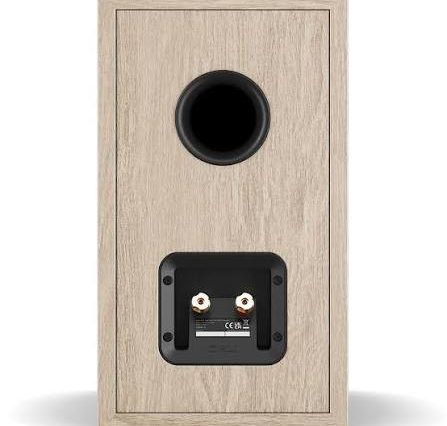
The Wide Dispersion philosophy is, in fact, one of the Danish brand’s defining features, which is why the name DALI is also an anagram of “Don’t Angle Loudspeakers Inwards.” Unlike many manufacturers who design speakers optimized exclusively for on-axis listening, DALI develops its models to maintain tonal balance and consistency even off-axis. It’s no coincidence that the company generally recommends against pointing the speakers sharply toward the listening position. This approach makes the Sonik 3 particularly easy to integrate into real-world home environments, where ideal placement isn’t always possible. Aesthetically, the Sonik 3 features a classic rectangular cabinet with a rear-firing bass reflex port and is available in four colors: natural oak, walnut, black ash, and white, each with a beautiful, color-matched grille reminiscent of vintage designs.
Listening Test
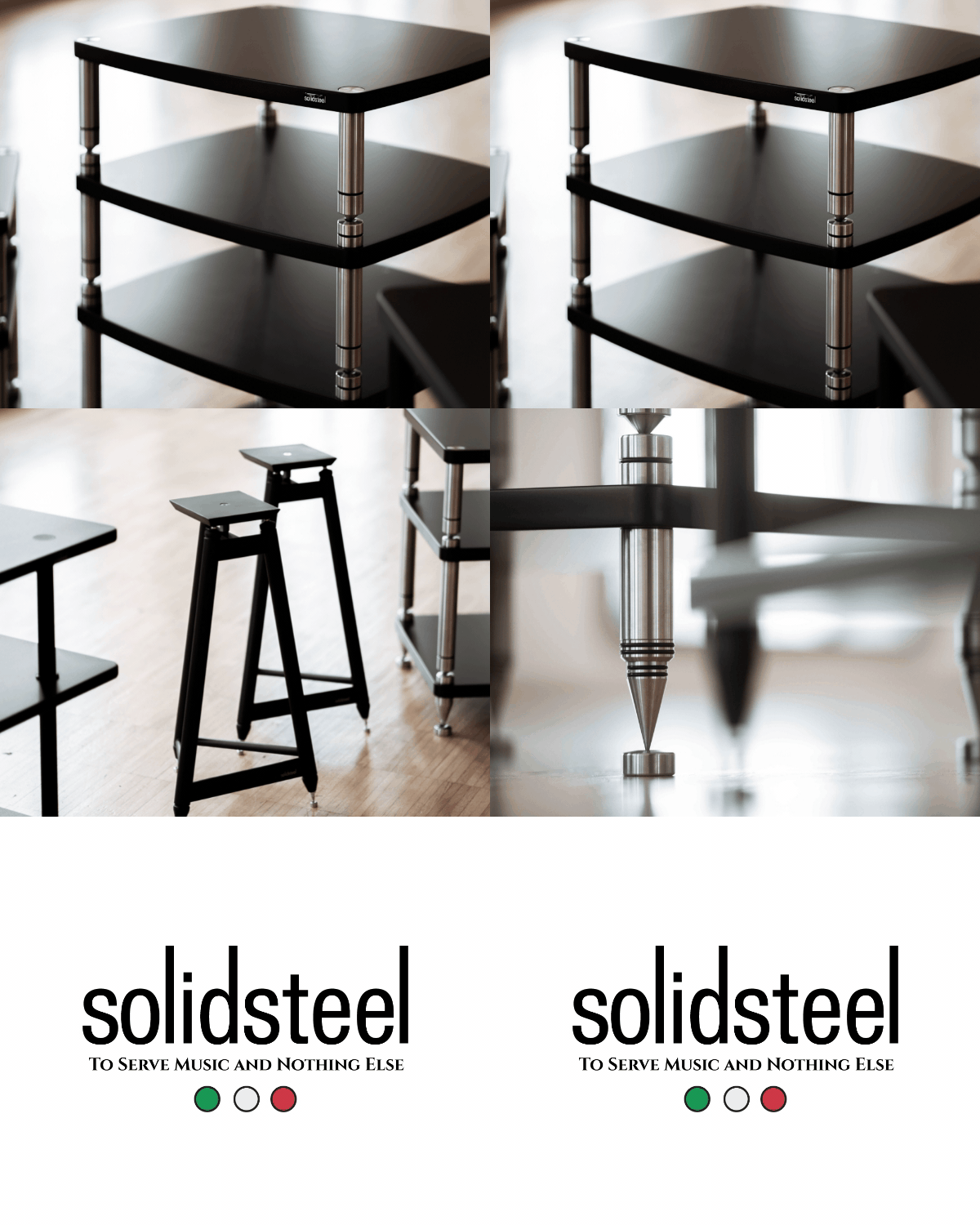
We tested them with the Denon PMA3000NE, the IOTAVX SA3-PA3 pair, and the Arcam A15+—three products that differ in price and sound signature—to get as accurate a picture as possible. We placed them on rigid stands—the Solidsteel SS series—set back quite a distance from the back walls, even though the manufacturer recommends a distance of between 5 and 50 cm. Our first impression was the naturalness of the midrange. Vocals come through with great authenticity, without any artificial emphasis and with a remarkable sense of fluidity. Acoustic tracks, jazz, and singer-songwriter music likely highlight the work of the SMC system and the new Clarity Cone, which are capable of delivering a detailed yet never aggressive sound. The soundstage is wide and airy. Thanks to the 29-mm tweeter and the Wide Dispersion philosophy, the stereo image effectively remains stable even when moving away from the ideal listening position. This feature makes these speakers particularly enjoyable for everyday use. Ultimately, Dali’s goal of making every speaker they produce more “versatile” is spot on. There is a time to enjoy music, without a doubt, but it’s interspersed with everyday life that calls for high-quality listening without necessarily having to be seated at the sweet spot.

The low frequencies are surprisingly expansive and well-controlled given the size of the cabinet. The 7-inch woofer delivers a lower-frequency presence that surpasses that of some competing bookshelf speakers in the same category, with impressive dynamics and good transient response. Even with rock or orchestral recordings, the speaker maintains composure and control, showing no obvious signs of fatigue or compression. The most successful aspect, however, is likely the overall balance: the Sonik 3 doesn’t aim for a spectacular effect at all costs, but focuses on a credible, musical, and engaging sound over the long term. Sensitivity is not particularly high—87 dB, which is roughly on par with many other speakers in the same category with similar internal volume (12–13 liters net)—but it is in line with most competitors; an amplifier rated at around 50W should be more than enough to bring out their best performance. The DALI Sonik 3 speakers are a concrete example of how technologies developed for flagship models can be successfully adapted for more affordable price ranges. The introduction of the Clarity Cone, derived from KORE and EPIKORE, the adoption of the SMC Essential magnetic system, the generous 7-inch woofer, and the 29-mm tweeter represent substantial improvements over previous generations and compared to many direct competitors, including the KEF Q Concerto Meta, Monitor Audio Bronze 100, Wharfedale EVO 4.2, and finally Q Acoustic With a list price of about 740 euros per pair—and street prices already ranging from 649 to 659 euros— the Sonik 3 stands out as an attractive option in the mid-range bookshelf speaker market, especially for those seeking a natural, refined, and technologically advanced sound without having to make the investment required by more high-end products.
Technical characteristics:
- Woofer: 178mm Clarity Cone
- Tweeter: 29mm soft-dome
- Frequency response: 47 Hz – 26,000 Hz (±3 dB)
- Sensitivity: 87 dB
- Nominal impedance: 6Ω
- Maximum SPL: 108 dB
- Crossover frequency: 2300 Hz
- Recommended power: 25–150 W
- Dimensions: 350 × 200 × 306 mm
- Weight: 6.5 kg
- Recommended distance from the back wall: 5–50 cm
Price: 740€ per pair
Manufacturer: Dali
Distributor: Pixel Engineering




GIPHY App Key not set. Please check settings