



 Audio 2G
A different volume control
In the traditional, i.e., potentiometer or attenuator approach, the signal enters at full amplitude and is attenuated by the potentiometer resistor and then goes into the first stage of amplification. The problem with this system is that lowering the volume worsens the S/N ratio, because the first-stage noise remains constant while the useful signal is reduced. In the “Variable Gain” of the PMA-3000NE, the signal goes directly to a stage whose gain is dynamically changed according to the volume position. Thus, the signal is not attenuated first, but the amplification of the stage itself is varied. In this way the noise of the stage is directly proportional to the signal, maintaining a more constant S/N ratio at any listening level. Interesting, then, is the unified tone and balance control system, handled by the same variable-gain stage, not by separate passive RC networks. This means that tone controls also operate without introducing additional elements into the signal path beyond those strictly necessary.
A very fine construction
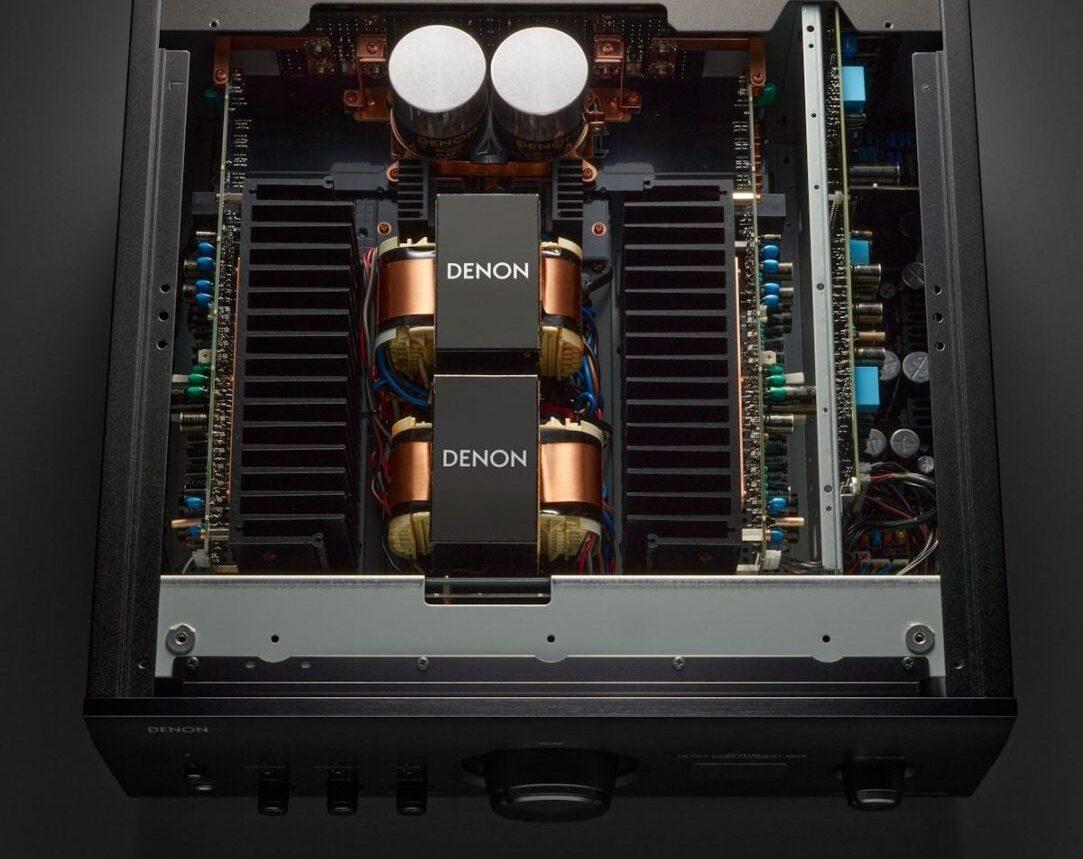
PMA-3000NE is entirely designed and assembled by hand at Denon’s Shirakawa plant, a facility Denon reserves exclusively for its flagship products. This is not just a marketing detail; Shirakawa stands for manual quality control on every single unit, with tolerances and care that automated mass production lines cannot guarantee. The main chassis is made of generously thick steel, and compared to its predecessor PMA-2500NE, the PMA-3000NE incorporates numerous refinements, including a thicker main PCB; the internal structure then has six shielded blocks: the interior of the PMA-3000NE is not one large open space, but rather a carefully divided structure. The physical and shielded separation of the functional blocks is a high-level construction choice: each section-power supply, preamplifier, power stage-lives in its own isolated compartment, minimizing both conducted and radiated noise coupling paths. Power transformers are mounted in such a way as to cancel mutual magnetic flux, and power is distributed through improved signal paths.
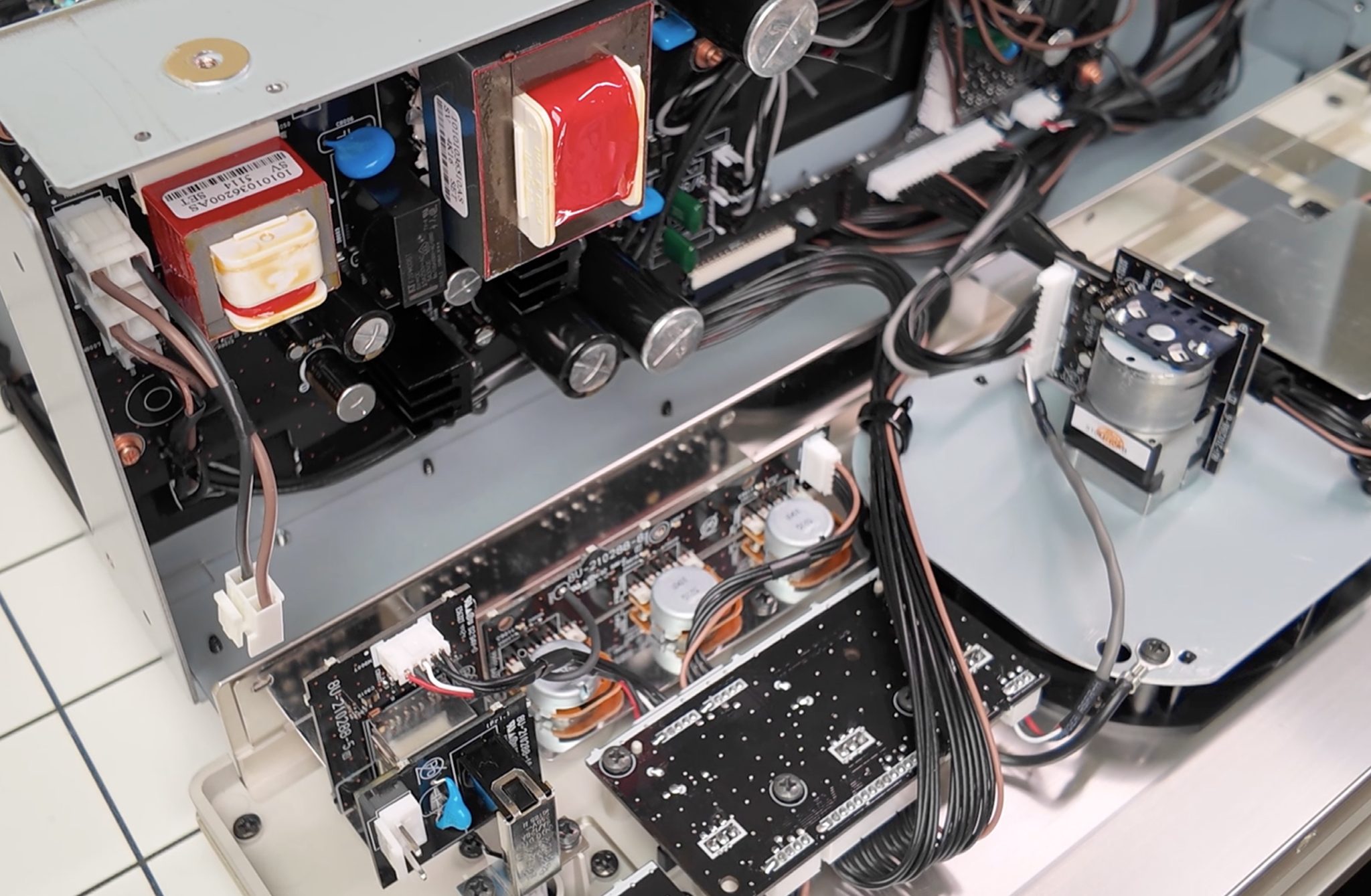
This is all part of Denon’s proprietary system called LC (Leakage Cancelling), which uses power supplies in parallel to automatically cancel each other’s magnetic radiation. Basically, the two transformers are oriented so that their respective stray magnetic fields oppose and cancel each other, instead of adding up and radiating interference to the circuits. The result is a significantly reduced “mains noise” of magnetic origin in the amplifier noise floor. Inside the chassis, Denon has not skimped on conductor quality; all internal wiring is made of OFC copper and the RCA connectors are machined brass, while the speaker binding posts are the same as those used in theAVR-A1H. The connections of the power stages to the binding posts use copper rods and screws, also exploited in the high-current parts of the power supplies for the power stages.
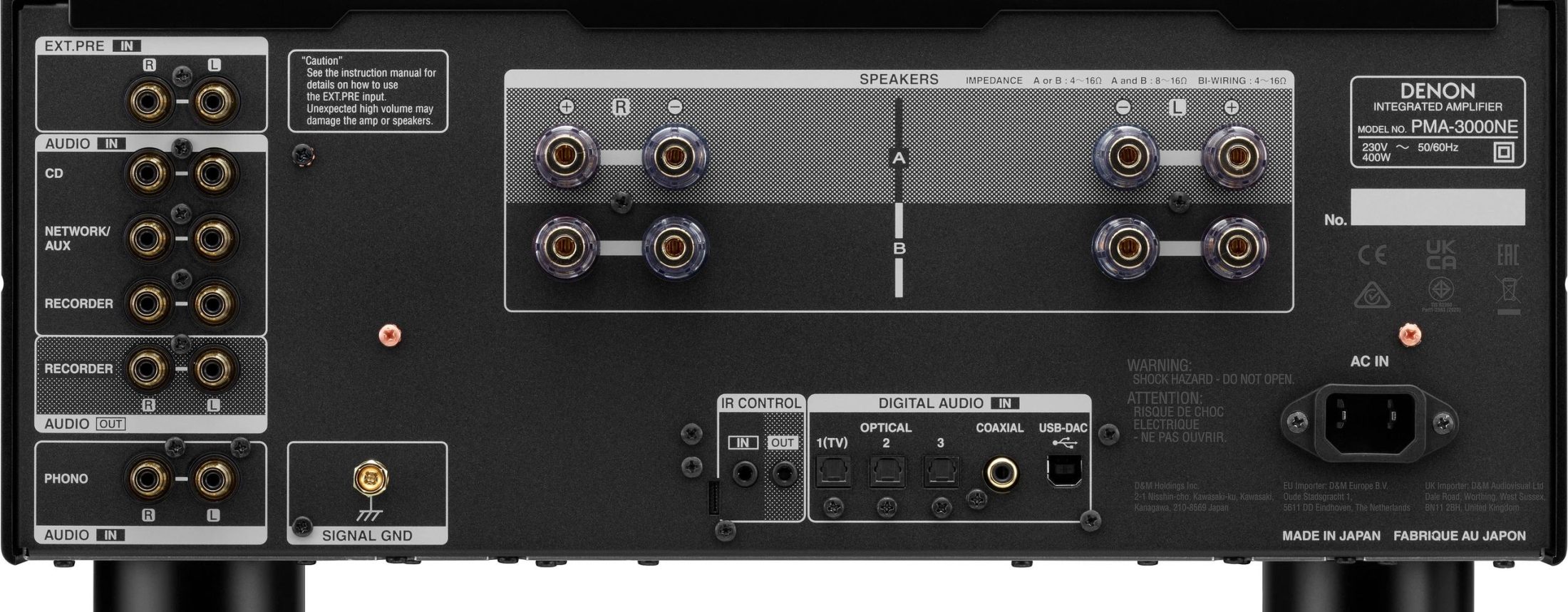
In short, PMA-3000NE uses solutions that are very difficult to find in competitive products in the same price range. This is possible only because of an economy of scale that only very few manufacturers can afford, due to the number of parts and models produced, which gives them purchasing power, storage and cost optimization second to almost none.




GIPHY App Key not set. Please check settings