

 Audio 2G
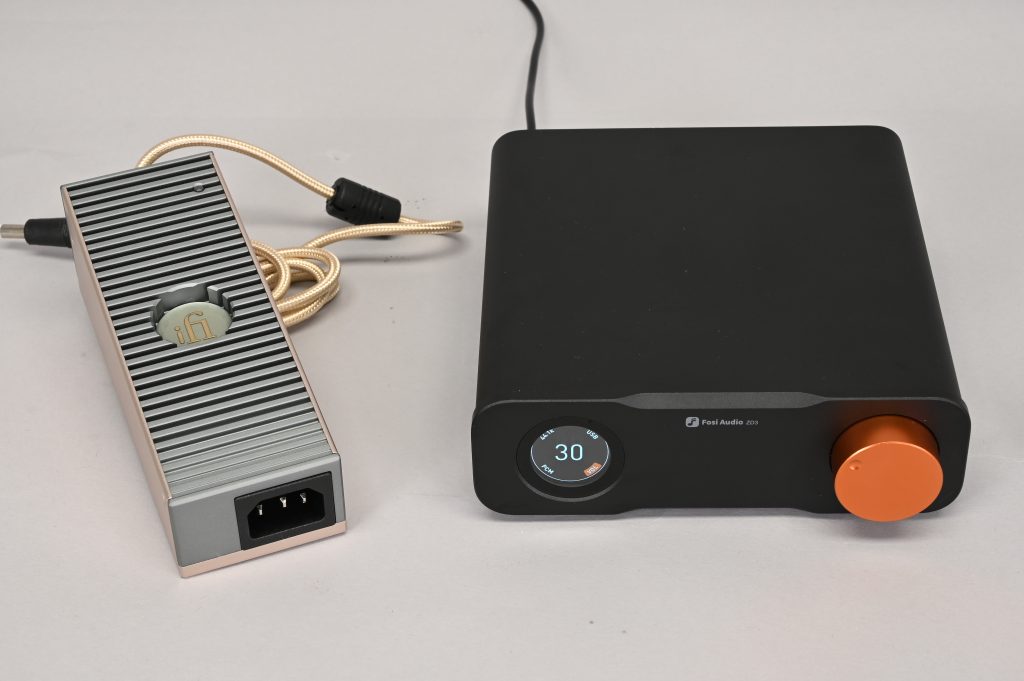
Fosi Audio ZD3, DAC with Sabre ESS9039 chipset and ability to change op-amp and power supply. We tried it, with interesting results.
Fosi is a company started in 2017 by an idea of Ryan Huang with the goal of improving the home audio experience at affordable prices. Its product range is now very broad, including power and headphone amplifiers, DACs, preamplifiers, and some accessories. Absolutely Chinese, as indeed are its two main competitors, namely SMSL and Topping, it is sold through Amazon or EBAY, and has no other means of marketing, putting into practice what is an increasingly established sales system, which skips at least two steps, namely the local distributor and the store, thus being able to offer significantly more aggressive prices. The flip side of the coin, of course, is a different kind of support, lacking the shopkeeper who advises and helps, and the distributor who provides high-level service and technical support. Fosi actually offers e-mail support, support@fosiaudio.com, but we tried writing simulating a simple question in English and received no response.
The change of op-amps on the Fosi Audio ZD3
A highly manned workhorse of Fosi, and thus also of the Fosi Audio ZD3, is the swapping of op-amps. But what are op-amps? Integrated circuits, typically with 8 pins, that provide in our case for audio preamplification, and that manage to compress costs considerably, since they replace outright at least ¾ of the circuitry required to build a stage, from phono to the output ones of a DAC and/or preamp. They are found far and wide in many, many realizations even of blazon, and only in hi-end products are discrete circuitry, that is, made from standard components, used instead. In fact, the op-amp replaces a good chunk of circuitry-20+ transistors plus accessory components-with the advantage of containing all the semiconductors in the same silicon chip, providing superior component similarity and more linear thermal behavior, the elements being very close together.
Op-amps, a nearly 100-year history that has come down to the Fosi Audio ZD3
The operational amplifier, whose name comes from the fact that it inherently can perform numerous operations on signals, i.e., sum, subtraction, derivative, integral, etc., etc., made its first appearance in the 1940s made with thermionic tubes, but it was an expensive and bulky device. The evolutionary leap came with solid-state semiconductors in 1963 with the introduction of the first integrated-circuit operational amplifier, the u702 designed by Bob Widlar and made by Fairchild , followed by u709

in 1965. Bob later moved on to National Semiconductors and there created in 1967 the LM101, the first true metal-case op-amp. A little less than a year later Fairchild responded to National with the uA741, which immediately caught on in the audio world as well. It took 10 years, however, for total clearance in our world with the TL071 debuting in 1975 and then to follow TL072, 081 and 082 from Texas Istruments, and later NE5532 (1977) and all others to follow to the present day. There are, just for the sake of disclosure to readers, single op-amps, that is, which internally contain only one amplifier cell, and others, those of the Fosi Audio ZD3 for example, which contain two.
Does it make sense to replace one op-amp with another ?
The vast op-amp market, with thousands of models and dozens of manufacturers, allows the substitution of one particular type for another -within certain limits-. Beware, therefore, of changing (without being properly informed) one op-amp for another, you risk burning out the integrated and perhaps even the circuit around it. From this point of view, Fosi is precise, it publishes the models that you can interchange, and thus gives certain indications.
Then the reference must be respected, that central notch that is normally placed next to PIN 1, if you reverse the op-amp you will burn it out practically for sure, injecting the unfortunate person with the supply voltage where you would expect the input voltage instead. But that is another story. The rampant phenomenon of appearance marketing that Fosi relies on is to propose the replacement of op-amps subsequent to the purchase of the product. And the manufacturer does this not only with our Fosi Audio ZD3 but also with virtually all other products in the catalog, and this generates in the buyer the expectation that he or she can improve performance later, with relatively little expense. The op-amp, however, like DAC chips to varying degrees, needs a solid surround to work at its best. It is not necessarily the case that a relatively old op-amp sounds worse than a very modern one; there is the power supply circuit, the lay-out, the components, and above all the circuit design. The Chinese-and Fosi does not shy away from this rule-use schematics from the op-amp manufacturer’s application literature without any particular imagination.

A designer who knows audio makes an artistic portrait, an interpretation often far removed from measurements or even formulas, and can skillfully put the right component in the right place. The Fosi Audio ZD3 by the way, but this is understandable given the cost, has a very simple power supply path, 12V input from a lousy plug-in power supply, LM317 (variable voltage stabilizer), which delivers 8.5V and then DC-DC converter up to the op amp supply voltage, in this case of +9/0/-9, so 18V. In the path a few and not very capable capacitors to ensure stability during absorption peaks. Not a bad system for a DAC costing just under $200, but a long way from an ambitious line, which sees transformers employed and then large-capacity leveling and filtering circuits in both current and filtering. This makes the Fosi Audio ZD3, but like many other DACs in this range, extremely dependent on the quality of the primary power supply, the plug-in one in the case of ZD3 and the internal one in the comparable SMSL or Topping models (which is worse because even if you don’t want to, you can’t replace them). So-and we have tried it-perhaps an external power-supply of great quality as well as capacity is capable of greatly improving the sound, perhaps more so than op-amps, after all, the voltage that reaches the latter is what is then “modulated” into a sound signal. If from the beginning it is of poor quality…. And by the way, such a modest path does not allow great performance even at the head of the maximum voltage that can be delivered at the output, and in fact we talk about 2.5V or 5V depending on whether the output is RCA or XLR.
Fosi Audio ZD3 compact yet versatile
Aesthetically, the Fosi Audio ZD3 is very well built, typical manufacturer’s distinctive orange “bubble” the volume knob, then circular display on the opposite side indicating in the center the volume and coaxially the input, resolution and a few other information, to assist operations the compact remote control.
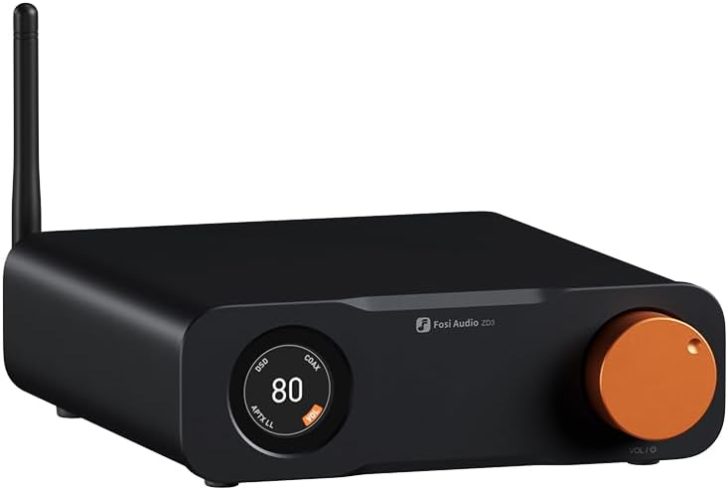
Aluminum front and case, centrally, below, a switch that enables volume control, on bypass is not active, while it is on OFF. USB inputs reporting to XMOS’s XU316 chipset, Bluetooth with Qualcomm QCC3031, HDMI with ARC, coaxial, optical, trigger input/output, and finally XLR and RCA outputs. What we really appreciate is the lack of filter selection on the output, which definitely simplifies life and should not be seen as a lack, since very often they only succeed in confusing and you end up using only one anyway. The DAC chipset is the ESS9039Q2M, also common to the competitors of this ZD3, namely SMSL DO100 and Topping D50, which for about 50€ more offer two 9039 chips in differential configuration, while the cheaper SMSL D-6s has a single chip.
A few experiments
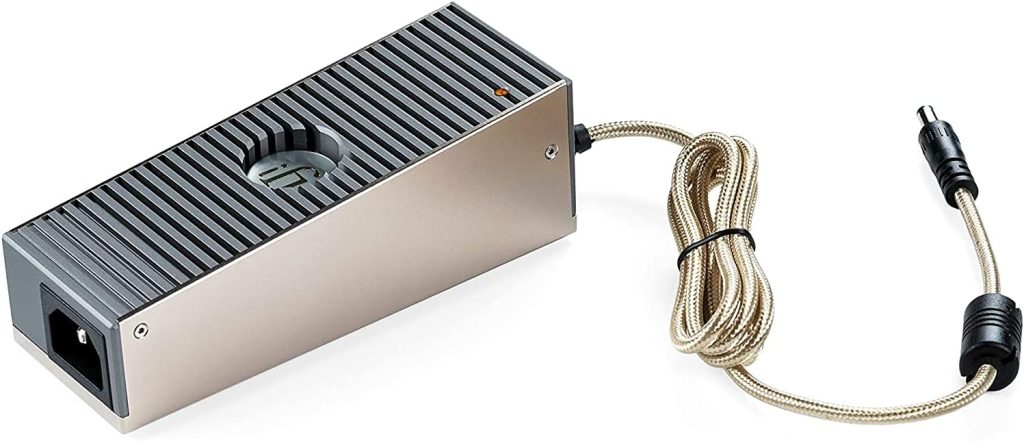
We took the opportunity to do some experiments not only in chief changing op-amps, standard are National LME49720 but also replacing the power supply with one of much higher quality, putting us in the most onerous conditions. So op-amp Spakos SS3602 built to discrete and costing between 90€ and 170€, the market is very swinging: coming from the U.S. also watch out for customs (low prices hide later traps), and the 299€ iFi Elite X power supply, but there is also a cheaper version, the Power X, from just over 100€.

The evidence we have done
We then proceeded to try ZD3 out-of-the-box, as is, with its op-amps and modest power supply, then changed first the op-amps and then the power supply, and then went back using the stock op-amps with iFi Power Elite making many considerations. Mind you, there is no need to get 3 new op-amps, if you are using the unbalanced output you only need to change one, the one close to the RCA pins, but if you are using the XLR you need to change two.
Many ratings
Listening in basic configuration, it is decent, the product shows acceptable characteristics in chief of focus, timbre, dynamics, ance if it does not particularly excel in any parameter, but we have to keep in mind the class of the product, and for a little less than 200€ one can be already very satisfied. Things change completely if you replace the op-amps; we did so by changing the XLR pair and using, of course, that connection. The thing that is immediately apparent is the great intelligibility of the low range, which becomes recognizable, focused and articulate, something that was not the case in the basic configuration, where it appeared confused and relatively unintelligible. But none the less, the mid and high spectrum come to life, participating convincingly in the reproduction and completely losing a certain edginess that had marked the first listening. We then replaced the supplied power supply with iFi’s Power Elite X. The sound took a really substantial leap forward by taking an extremely pleasant turn. Restful, rhythmic, with sculpted bass and perfectly focused mid-highs: a beautiful sound in short, which accompanied the listening in an extremely pleasant way.
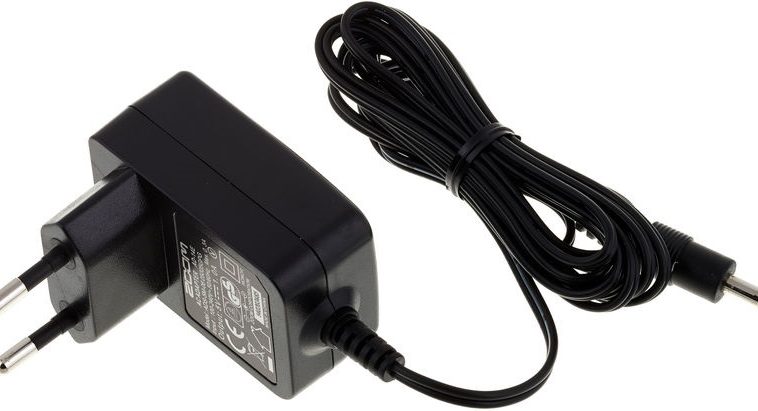
Of course, at this point we need to do the math and ask ourselves whether it is worth buying ZD3, pair of op-amps and Power Elite, or directly a more high-performance DAC, since the sum is well over €500, and there are numerous high-performance products on that price range. We then took a step back, reassembled the supplied op-amps, which by the way are very good products, and used the super-power supply alone, witnessing a not too dramatic downgrade, estimating the contribution in improving the power supply a 60 percent, and the op-amps alone a 40 percent. Then it might make sense, to keep the final price of the combo in a reasonable range, to adopt instead of the Power Elite the $119 Power X or even the $79 Power 2 (but we recommend the X version)

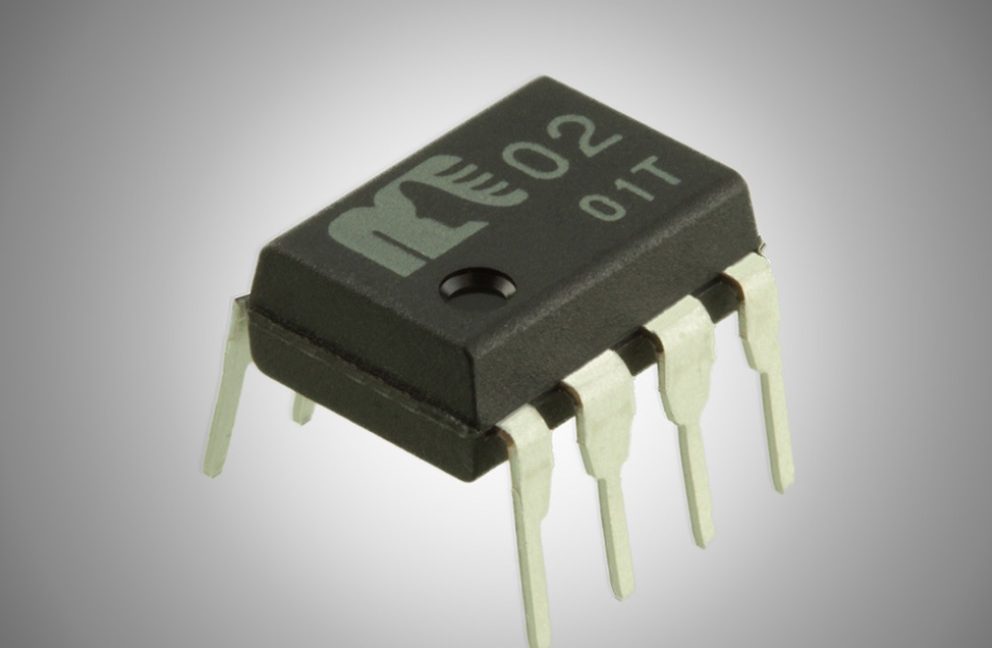
In this way while we do not reach the excellent performance heights of Elite, we undoubtedly make a big leap from the accompanying plug-in power supply, which is really terrible. Regarding the op-amps on the other hand, we think the Sparkos are really “too much” for ZD3, especially if using XLR connection where two op-amps are needed, but it might make sense to experiment with other models, such as NE5532 or MUSES02, although in the latter case there are very different prices and equally varied provenances, some dubious. MUSES02 in fact is an excellent op-amp, which is manufactured by Nisshinbo Microdevices (which, by the way, also offers absolute level volume controllers, one even used in the Marantz Model 10)
Beware of copies !
Muses can only be bought on Mouser, Digikey, and Profusion. Mouser’s price is 45€+VAT and shipping each, but they can be found on Aliexpress, for example, at prices ranging from 10€ to 25€ a piece, but here you have to be VERY careful about copies and scams. There could be another op-amp “inside” while the affixed label is that of the Muses, and sophisticated measurements would have to be made for the average enthusiast to notice. Less difficult is the 5532 market; one of the best manufacturers is Texas Instruments, and the product can “certainly” be bought true and to spec on Farnell, as on Farnell one can also find the 49720 also from Texas, and costing about 7.50€. Do those bought from Farnell branded Texas sound better than what comes with ZD3 ? It often happens to find in Chinese production components that only outwardly are “equal” to the original, and we are not referring only to op-amps, but also to capacitors for example. The red WIMAs are very expensive capacitances, now used everywhere, even where the economy of the product would definitely prevent it, how is that possible ? But then again there is almost no means-especially for a capacitance-to trace the actual origin.
Concluding
Let’s sum up. ZD3 is a DAC that is at least worth all the money it costs even without any further “modification,” for less than 200€ it does its job without a doubt, honestly. What we recommend, however, before you get your hands on the op-amps, is to change the power supply, the one supplied is of poor quality and the improvement is stark. Opt for iFi’s if you want a compact and very high performance solution, or rely on the many linear power supplies that are also sold directly on Chinese marketplaces. In the second option it makes sense to change the op-amps, but without necessarily resorting to the Sparkos which are the most expensive, you can try a “definitely” original version of the 49720s or the Muses02s. Then of course it depends very much whether you take advantage of the XLR connection for which you need 2 op-amps, or the RCA connection which needs only one unit, and then the expense is reduced. Our choice would probably be to replace the power supply immediately (without even using it once) and then possibly think about op-amps in the future. Happy listening !
Technical characteristics:
- Chip Set: XMOS XU316 + ESS 9039Q2M + QCC3031 + LME49720
- Compatibility:
USB: PCM 32bit/768kHz; DSD512
OPTICAL/COAX: PCM 24bit/192kHz
Bluetooth: PCM 24bit/48kHz - Output level: XLR: 5Vrms RCA: 2.5Vrms
- Inputs: USB, HDMI (ARC), Coaxial, Optical, Bluetooth
- Outputs: XLR, RCA
- S/N ratio: 126dB
- Distortion THD: ≥120dB
- THD+N: <0.00008%
- Dynamic range: ≥123dB
- Noise mat: ≤2μV
- Bluetooth: 5.0
- Bluetooth formats: aptX HD, aptX, AAC, SBC
- Power supply: DC 12V 1.5A
- USB Compatibility: Windows 7, 8, 8.1, 10, 11, MACOS
Manufacturer/distributor: Fosi Audio, WhatsApp: +8613716612254, support@fosiaudio.com




GIPHY App Key not set. Please check settings