



 Audio 2G
Highly evolved network streamer thanks in part to the new Volumio AI software release promises excellent performance, certainly superior to its smaller brother Rivo, thanks in part to the pairing with the Lineo5 power supply
Volumio is in fact the only Italian reality that “deals” with streaming. It has developed and continues to improve a software that has now become a reference for the market and that was born from an idea of Michelangelo Guarise, CEO of Volumio and its creator, who from his university benches (faculty of psychology, in the end not too far from certain logics) was thinking about how he could make any computer suitable for listening to music with the highest possible quality. It was the era in which there were beginning to be computers that were no longer suitable for the office (obsolete, slow) but still could “do things,” and there were no compact computing platforms like the Raspberry. Passionate about programming, Michelangelo developed the primitive Volumio software, when there was hardly any talk of it yet; back then it played digital files that had been extracted from CDs, and were being exchanged, often in an “unofficial” way; the on-demand services of today did not yet exist; we were in the early days of digital music. He made that streaming software freeware right away, creating a community that supported it and still supports the development, with an installed base that is huge today, and that is the real strength of the Florentine company. That’s right: started from a university desk, Volumio is now a structured reality with two EISA awards won, and offering not only software, quite the contrary.

Among Michelangelo’s ideas was and is to make quality listening usable to any audience with affordable costs. After all, Volumio was and is downloadable from their site and installable on any computer (MAC/PC,UNIX) or mini-processor, such as Raspberry. So, following this idea, he developed the first Volumio signature hardware, the Primo V1, a streamer without even an LED to attest its power on and based on an Asus Tinker Board S mini-computer where the software ran, with an ESS9028 DAC integrated. It cost just under 600€ and enabled any enthusiast, with stunning quality, to listen to any digital source. From the first versions of the Volumio software to the Primo V1, meanwhile, the digital music market and offerings had grown exponentially, Spotify, and then Qobuz, Tidal, Amazon Music, Internet radios, and Primo V1 was a complete, high-performance gateway with all these sources with which to experiment. Any enthusiast, in short, by plugging their Primo V1 into an AUX input could access the world of streaming, with one difference that has always distinguished Volumio: the user interface.

In Michelangelo’s idea it was to be simple, intuitive, and usable from any device. In fact the HDMI output of Primo V1, but as of all current Volumio devices served and serves to connect a TV or monitor, and if you have a touch device it was and is possible to use that function as well. Equally with any browser, pointing to Volumio’s IP address gives access to the user interface, so much so that for a long time there was no app developed specifically for cell phones or tablets, which was later prepared instead, but more to make any monitor resolution of the mobile device suitable to hold the whole user interface. The idea on the block of Primo V1 was so successful that Volumio won an EISA as the best streamer in 2020/2021. The tracks then of development became two, that of software, incessant, with continuous releases and insertion not only of new functions but also at the level of presentation of information, research and from relatively little insights, such as reviews and cross-connection, and on the other of advanced Hardware products, focused -obviously- on streaming, and with an excellent quality/price ratio. Since Primo V1 many products have debuted.

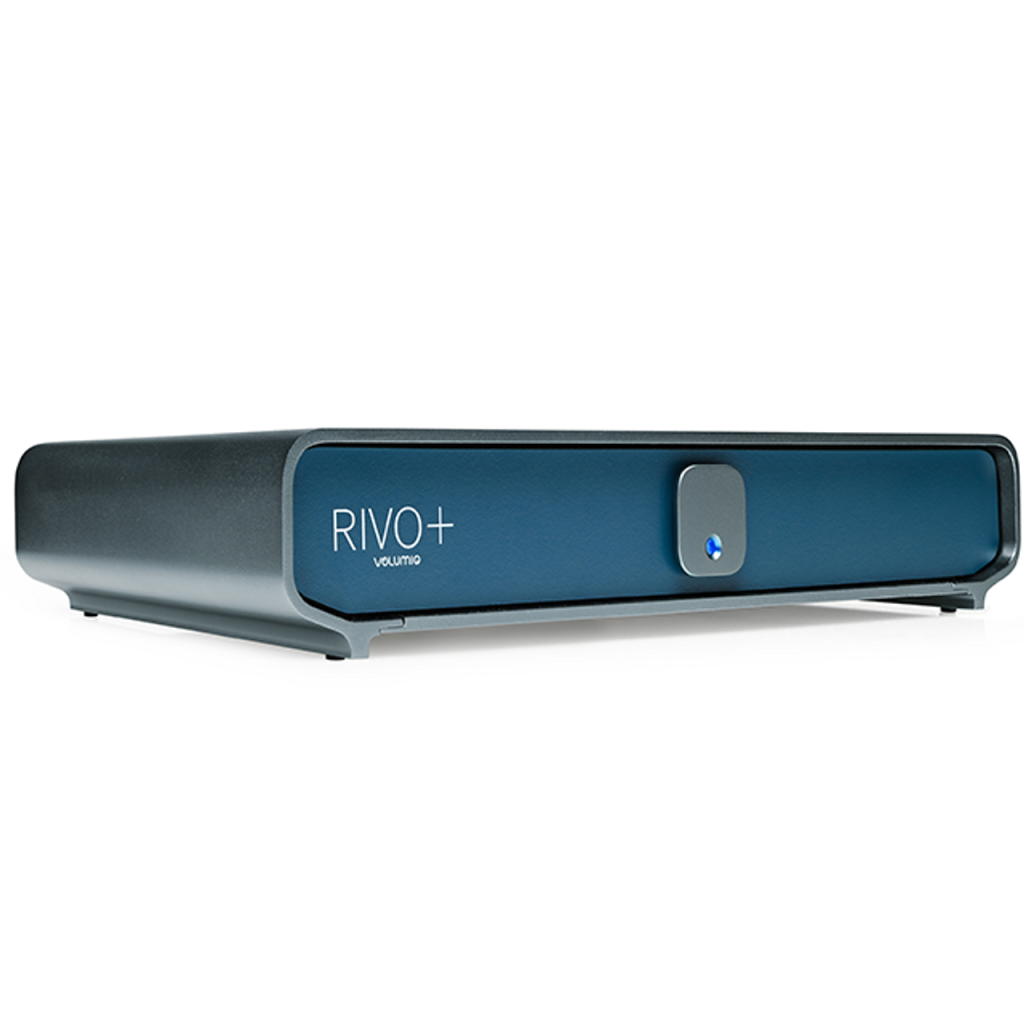
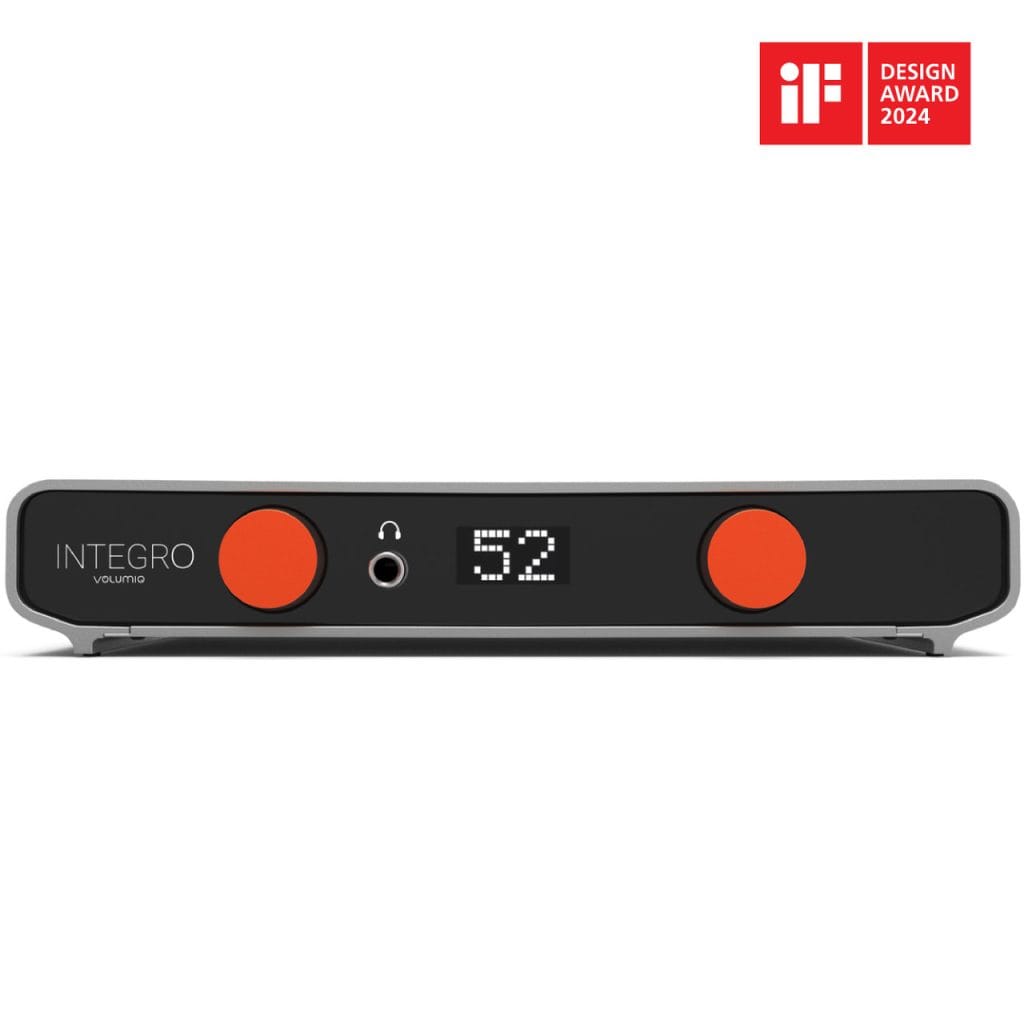
But to do this the first thing Michelangelo wanted to address was the form-factor, the container common to the products had to be different from the usual, distinctive, able to agree on different tastes. And so he commissioned the studio Narratives Ltd.(which has signed off on some wonderful items for HiFi use) to design something for them that was really different. And without any doubt the aesthetics of all the current products are at least original and out of any canon, so much so that they won the Rivo the iF Design Awards for 2024 (as well as the EISA for best streamer last year, 2023/2024). So, Primo V2, then Integro, streamer and amplifier, Rivo only streamer and Motivo only with different form-factor, but could not be otherwise, with a nice touch display and an amplifier for headphones as well. Finally this new Rivo+, which does not replace the Rivo, but rather complements it.
A pure streamer
Rivo, like Rivo+ do a very specific job, namely as “concentrators” of the various services that offer digital music, and/or of one’s own files contained on any media, from NAS to a USB, disk or storage. But, operationally, how is this achieved ? Certainly there are those who, for good measure, are wondering. Rivo+ has a business card in the box with a QR code that you simply frame to access the online manual, which is very simple thanks to the successive evolutions of the software and hardware for configuration, which is done in minutes. We recommend Ethernet cabling but if you really want to use WiFi-we can’t stop that-once Rivo + is on the network you can configure your own services. If you have music on disks, you add them by plugging them on the two USB-A, or USB-C (or on NAS via network), while in the case of subscriptions, you can enter username and password so that you can navigate within the contents of Qobuz or Tidal for example, as if you were using their apps or their WEB interface, as of course you will equally be able to listen to Internet Radio. All “aggregated” in a single interface, and also in a multi-room environment since the Volumio software allows this as well; not long ago reviews, cross-connections, and other information about the music you listen to are also offered, including suggestions about authors you don’t know but akin to your tastes, this thanks to the latest version of the Volumio OS, Volumio AI which incorporates the Supersearch function. This added value (some of you may think Spotify already does this for example) actually originated with Sooloos and the enlightened vision of Enno Vendermeer founder of Roon, who in the early 1990s developed software that could do just that. He was passionate about music, and with the help of Danny Dulai he set up a system, Soolos, with monitor, processor, and record stack, which was physically cumbersome and extremely expensive. All this later evolved into Roon, with which Rivo+ is compatible.

Hardware is indispensable
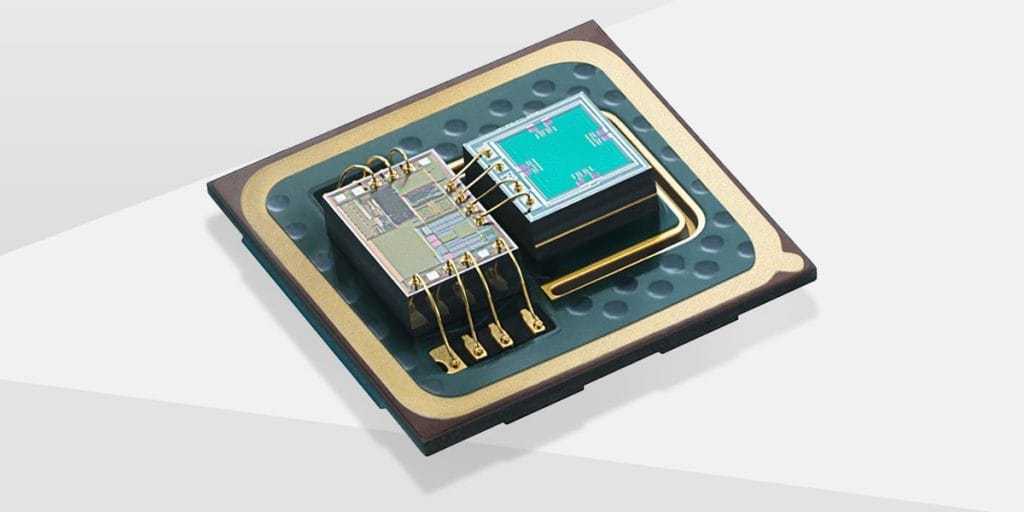
So far we have talked about the Volumio software, we have mentioned Roon, but these are programs. There is a fundamental piece missing, the one that makes the music material, that makes sure that eventually we get signals to connect to our chain, and that makes the music we want to play. Rivo+ obviously does “also” this. It takes the bits, from an HDD, or from an on-demand service it matters little, those that contain the music we have selected through the software, in short, and turns them into physical, real, digital signals to send to the DAC. The Rivo+, like the Rivo, does not have this built in, as the Primo V2 does, which is instead capable of being directly connected to the sound system. Rivo+ thus has coaxial, AES/EBU, USB-A, and i2S outputs (new compared to the classic Rivo) with the ability to carry DSD. So Rivo+ (and Rivo) like all streamers, what exactly does it do ? It organizes the files, packages them according to the output used, normalizes them, and then sends them to the DAC. On this path there can be numerous “stumbles,” that is, errors that can be introduced. Noise, generated by the power supply or picked up from outside, which pollute in general and introduce jitter, the latter of which can also be introduced by inaccurate clock management. Rivo Plus has a dedicated ASIC processor for S/PDIF and AES-EBU outputs, MEMS (Micro-Electro-Mechanical Systems) clocking in the USB HUB, more carefully crafted power rails, and on the connectivity side, we mentioned it, a DSD-compatible i2S HDMI output, these are the new features compared to Rivo, which costs about €300 less.
The Limitations of the Super Audio CD SACD
DSD seemed buried under a thick blanket of dust, and yet not only is there still a market for the media, but more importantly there is great interest in SACD players and DSD format files. And notwithstanding the fact that it has been more than 20 years since its introduction, and at least 5 years since the de facto abandonment of the standard by Sony and Philips who devised it, there is still a lot of buzz, not so much and not only about the media itself, but about the many tracks being sold online, for example on NativeDSD. For copyright issues Sony and Philips limited the playback of the medium to analog outputs only, and in fact if you connect a DAC on the optical or coaxial output of any SACD player it will play any CD, but no SACD. Inside that player, in fact, as in all SACD players, is a Sony chip

which inhibits playback to prevent a conforming copy of the media can be made digitally and thus to limit piracy, which has always cheerfully happened anyway through cumbersome processing through computers, it is true, but it has always been possible to copy DSD files from media, and so the intent of the two majors has never been as successful as hoped. Limitations remain to this day, of course: if you buy a SACD player, even a state-of-the-art one such as the Marantz SACD 30n or SACD 10, it is not possible to connect to it a DAC capable of decoding the DSD stream. This is all unless the player itself has an HDMI output that carries the i2S digital signal, such as the PS Audio PerfectWave SACD Transport (which in addition to that also has a dual AES/EBU or dual coaxial, which carry the channels separately, the only commercially available example of an AES/EBU or coaxial that also carries the SACD stream), and only then is the SACD stream guaranteed. Rivo+, among the few, has i2S output that can carry DSD as well as normal PCM, and thus allows any enthusiast to be able to enjoy the quality of that type of signal. Of course it is, but this is a different consideration, the titles available in DSD are a laughable number compared to those in PCM, you end up listening not to what you want but to what is available, on the altar of “better quality,” by the way, all to be proven.
Any requirement
Connectivity-wise, Rivo+ lacks nothing. Two USB A and one USB C for storage media, Ethernet RJ45, a MicroSD slot, another USB (white) for connection to the DAC, the HDMI i2S, AES/EBU, coaxial, trigger out on 3.5mm mini-jack, and the power input. On the front panel only a rectangular-shaped button with a multi-color LED indicating status. Guaranteed compatibility with any streaming service, Tidal (also connect), Spotify, Qobuz, Youtube, dlna, TuneIn, DMD2, SHOUTcast, Radio Paradise.
Lineo5, the linear power supply
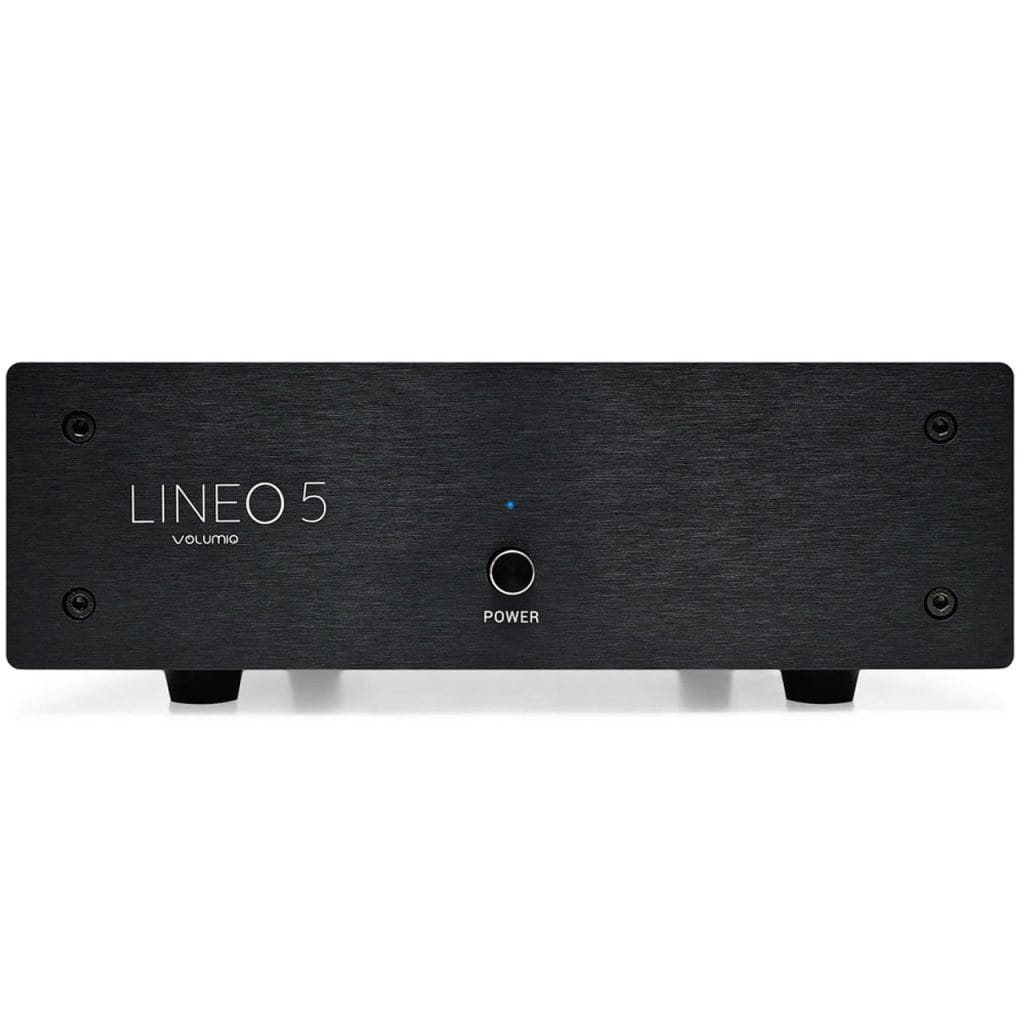
Rivo+ comes with a plug-in power supply, but it can also be combined with the Lineo 5 linear unit, which by the way is sold only on the Volumio site and at a rather competitive price, €349. 5V and 5A of current delivered, which might seem like a lot but it’s not since Rivo+ if external disks are connected to it could draw up to 3A, and abounding in the case of power supplies is never wrong. Of course if you don’t use USB-powered media, the draw drops below 1A, and then a smaller power supply might suffice, but in Volumio they wanted to go big, and we can’t blame them. The structure of Lineo is simple, toroidal transformer, stabilization with an LM317, a big power transistor and lots of filter capacitors. And between with and without the difference is really there !
Listening, a step forward
Rivo + is definitely better than the basic Rivo. The most striking feature is the transparency, like a veil, thin but perceptible, that is lifted from the message, making every note and every spatial location clearer and more defined. The substance is what is striking, the weight, the materiality, placing this streamer in the high end of the market, even if the price is not one to turn heads. Obviously, to appreciate Rivo+ over Rivo requires a level-headed system that can bring out these differences, that can best interpret the excellent sound characteristics of the +. The presence of the Lineo 5 confirms our impression that a level linear power supply is significantly better than a plug-in power supply. And this, both for the better functioning of the Rivo +, and for that of the other equipment, since a standard switching is also capable of fouling the mains voltage supplying the other equipment, and this should be a rule to be applied especially in the case of other level systems. In short, once again Volumio has hit the jackpot, with the Rivo it had convinced us, as well as having convinced the journalists on the EISA panel who in fact had given it the best streamer award last year, 2023/2024.
Rivo+ technical characteristics:
- PCM audio output: up to 768/32, DSD256 (i2S/USB)
- USB DAC 2.0
- USB HDD 1X2.0, 1X3.0
- LAN: Gigabit 10/100/1000
- Wi-Fi 802.11 2X2MIMO
- Bluetooth: 5.0
- Supported formats: DSD, WAV, FLAC, Alac, Aac, Vorbis, MP3
- UPNP DLNA: renderer with Open Home support
- Services: Airplay via Shairport Sync, Spotify and Spotify Connect, TIDAL and TIDAL Connect, QOBUZ
- CPU: Amlogic S905D3, Quad Core 1.9 GHz
- RAM: 2GB DDR
- Memory: 16Gb
- Power supply: 5V, 3A
- Dimensions: 27X15X5
- Weight: 2.25kg
Lineo5 technical characteristics:
- Switchable input voltage: AC110/120V-220/240VCA
- Output voltage: 5V DC
- Max output current: 5A
- Power consumption at full load: 90W
- Dimensions: 27X22.7X7.7
- Weight: 4kg
Prices:
Rivo+: €1299
Lineo5: 349
Manufacturer: Volumio Srl, Borgo Albizi 15 50121 Florence www.volumio.com
Distributor: HiFight Srl, Via Enrico Fermi 20/2
35030 Rubano (PD) www.hifight.it






GIPHY App Key not set. Please check settings