



 Audio 2G
The Technics SL-1300G is the new turntable from Japan’s Technics, which celebrates, with this model, three million units sold, a milestone never equaled by any company and a testament to the goodness of the design.
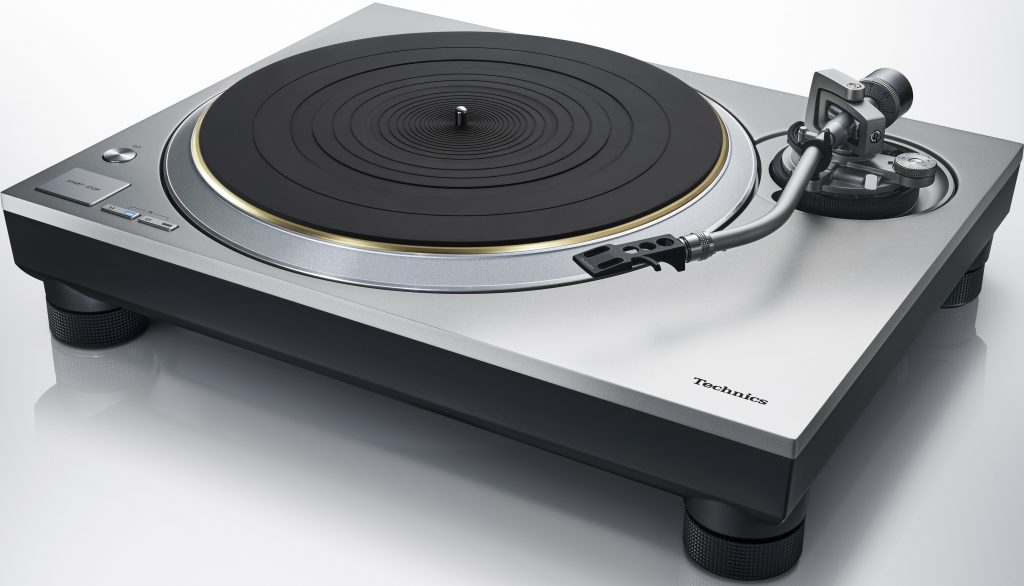
It was born in 1972 riding on the Japanese manufacturer’s great success precisely on turntables, but not only, having at the time Technics had a very large catalog, which included many products, including speakers, amplifiers and tuners. From the start, however, success on turntables was overwhelming, aided perhaps by the strobe “carved” into the edge of the platter with the large bulb illuminating it. The primitive 1200 was not like the current one, all controls were on the left, two small knobs for RPM control (+/- 6%) and the strobe turret.
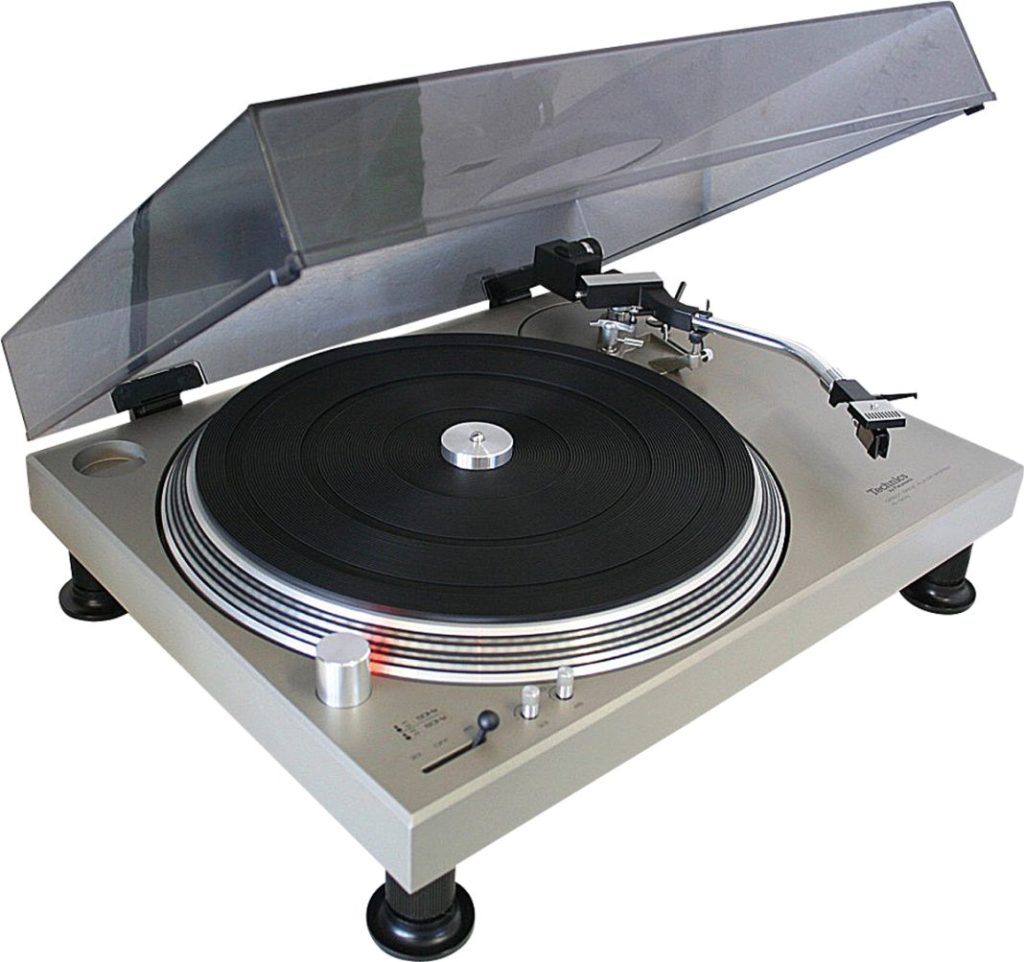
The real revolution came with the MKII version because the 1200, which began as a Hi-Fi turntable, was a huge success in the professional market, especially because of the particular speed at which it started and the torque of the drive motor, which allowed (and allows) DJing and scratching. This and other feedback was considered by Matsushita (which only in 2010 became Panasonic, and then Technics), which completely redesigned the turntable. Thus in 1979 the MKII debuted with the current aesthetics, more powerful motor, redesigned electronics, new isolation system, lighting turret, and finally, very important, completely new tonearm with finely adjustable VTA.
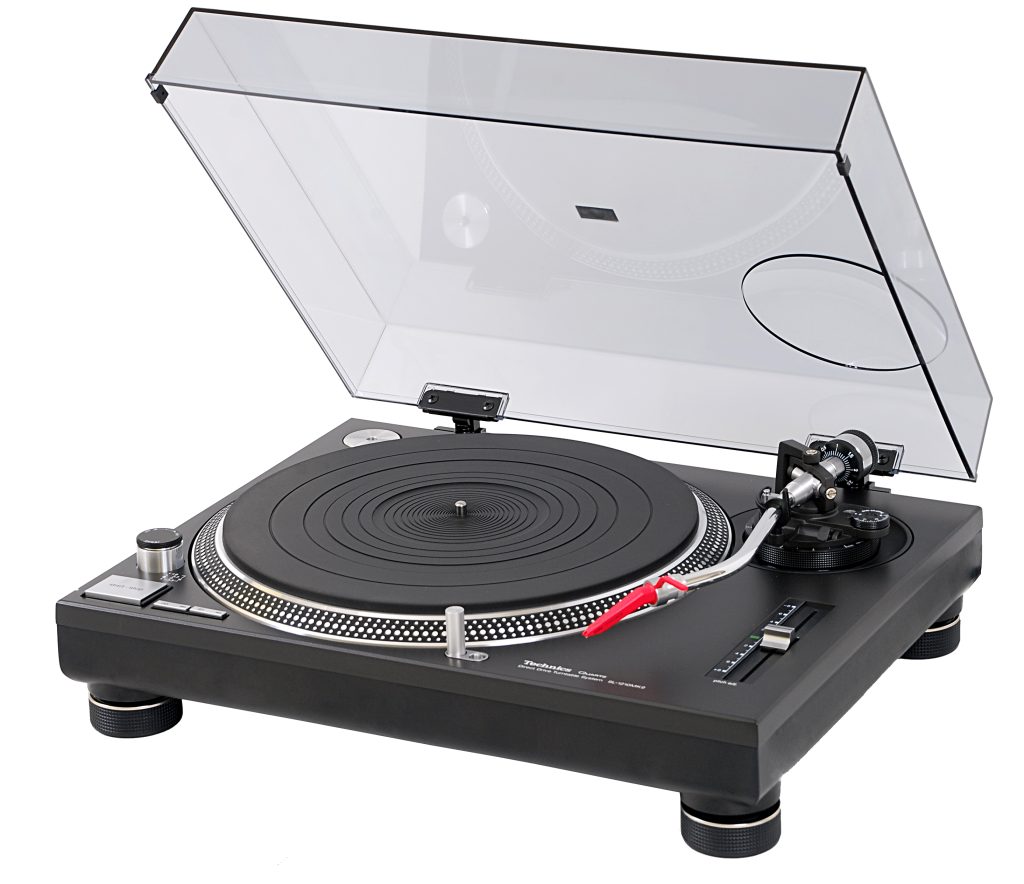
Many subsequent variants with marginal changes, such as LED instead of lamp in the illumination turret and antiskating with increased range, finally in 2009 the 40th anniversary celebration version. October 2010 sanctioned the discontinuation of all analog products by Panasonic including the 1200, a foolish decision since interest in vinyl had resumed in those years. In 2016, after 6 years of gestation, theSL-1200G debuts, same look as the previous models but based on a totally new design and with a high price (3500€)
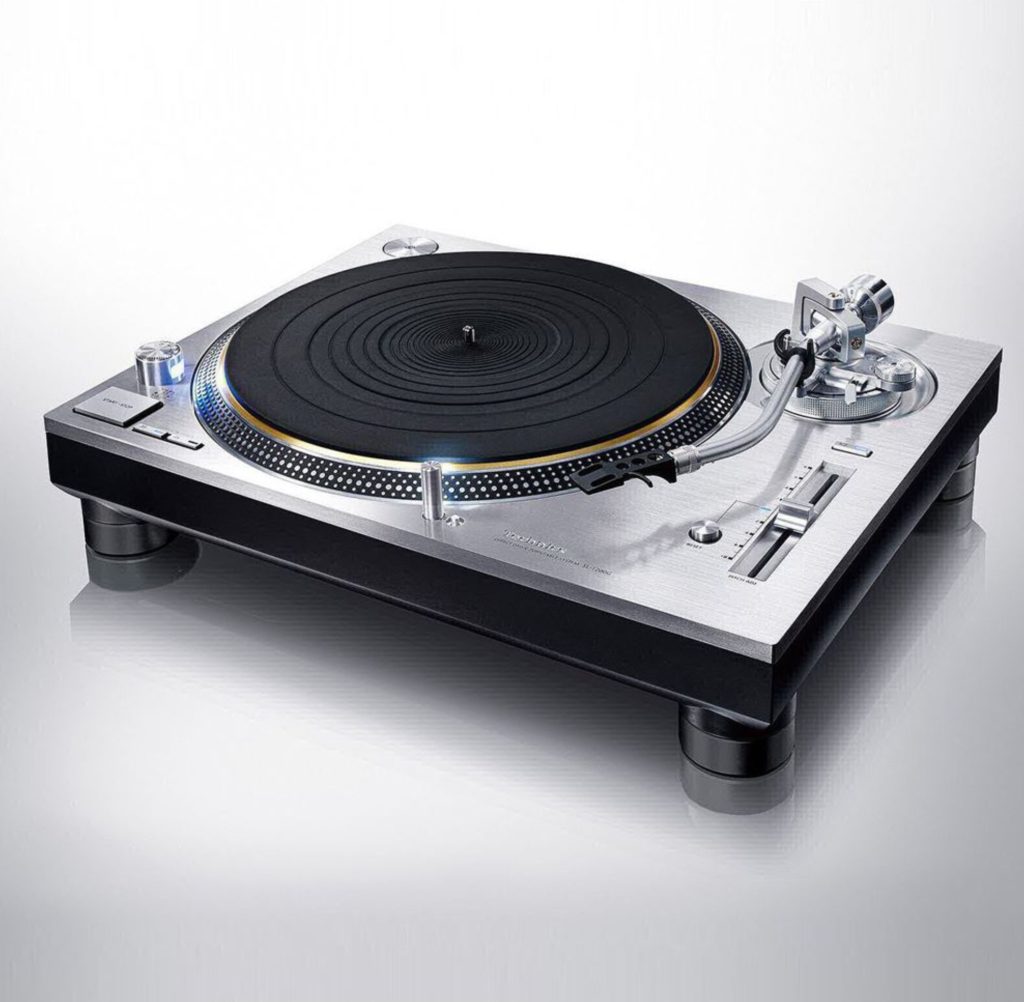
which is followed by the 1200GR, cheaper, and then the 1200G and 1210G we tested from 4500€ with magnesium arm. This 1300G under test is the contraction of the 1210G, with some simplifications, lack of the turret for illuminating, pitch, strobe on the platter, nothing important for non-professional use. But aluminum arm instead of magnesium and lack of additional damping bottom the only details that substantially differentiate it from 1210G and change, down, musical performance. But all this has meant a price decrease of more than 30 percent compared to the 1210G, costing €3000 instead of the rich sibling’s approximately €4500.
Technics SL-1300G: smart choice
That of simplifying for audiophile use the turntable, so as to leave only what is really needed is very clever, after all to hear a record at an amateur level there is really no point in the stroboscope and speed control, among other things we are faced with an extremely precise system of verifying the accuracy of the rotation, in real time, and that is enough for the audiophile. The only thing could have been the illumination turret, which, however, in “real” life unless one is completely in the dark really is not needed. On the other hand, a very clever and convenient thing is the adjustment of the VTA, Vertical Tracking Alignment, basically how much the arm is parallel to the record, and it depends on one hand on the height of the cartridge, the height between the actual pick-up and the clamping base but on the other hand on the thickness of the vinyl. And precisely in “audiophile” use this aspect is of no small importance, since normal 80 gr. records are much thinner than those of 180 gr. or more and therefore the VTA changes considerably and it would be a good rule to vary it according to the thickness of the record. The difference sonically is remarkable, and more importantly it is easily audible with a turntable of a certain level like this one.
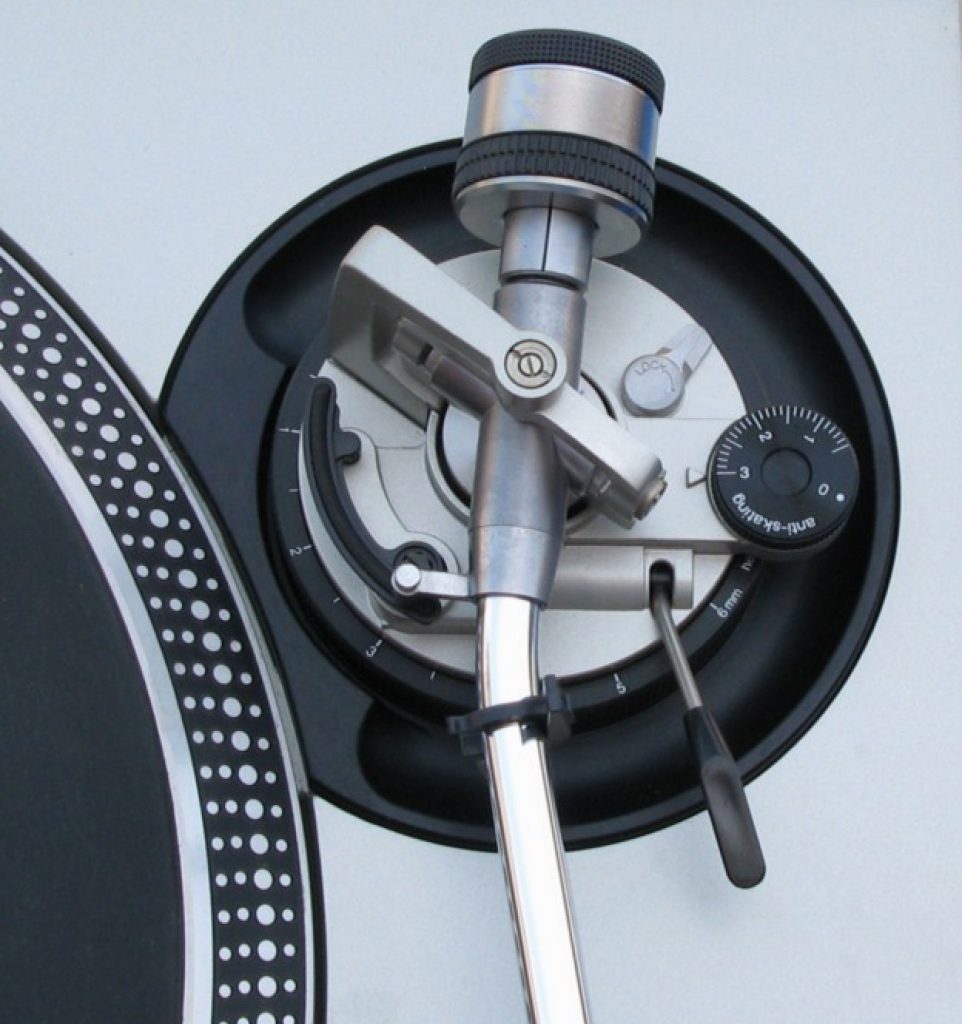
Many arms allow VTA adjustment, no doubt, but they do so in a rather cumbersome way, and one that often requires unscrewing pins to move the arm without then having a numbered dial to give a real reference of the displacement, so it is something that has to be done once the cartridge is installed, and usually at an average value between an 80 gr record and a 180 gr record. With 1300G, on the other hand, it is possible very simply to vary the value as desired very quickly and with the reference of the graduated scale.
The head, another tradition
Shortly after the debut of the 1200MKII, the Ortofon Concorde was also born, not specifically for that turntable, but accepting the demands of a market full of SME-type screw mount arms and requiring an easy to replace cartridge that eliminated the problem of diming the pickup, which is not easy to do and has to be done in two planes. There were still a few arms(Linn Exos for example still in production in the SE version) that had the integral shell and did not allow replacement, effectively eliminating a mechanical fracture element; today the concept of an integral shell is much more widespread but that is another matter.
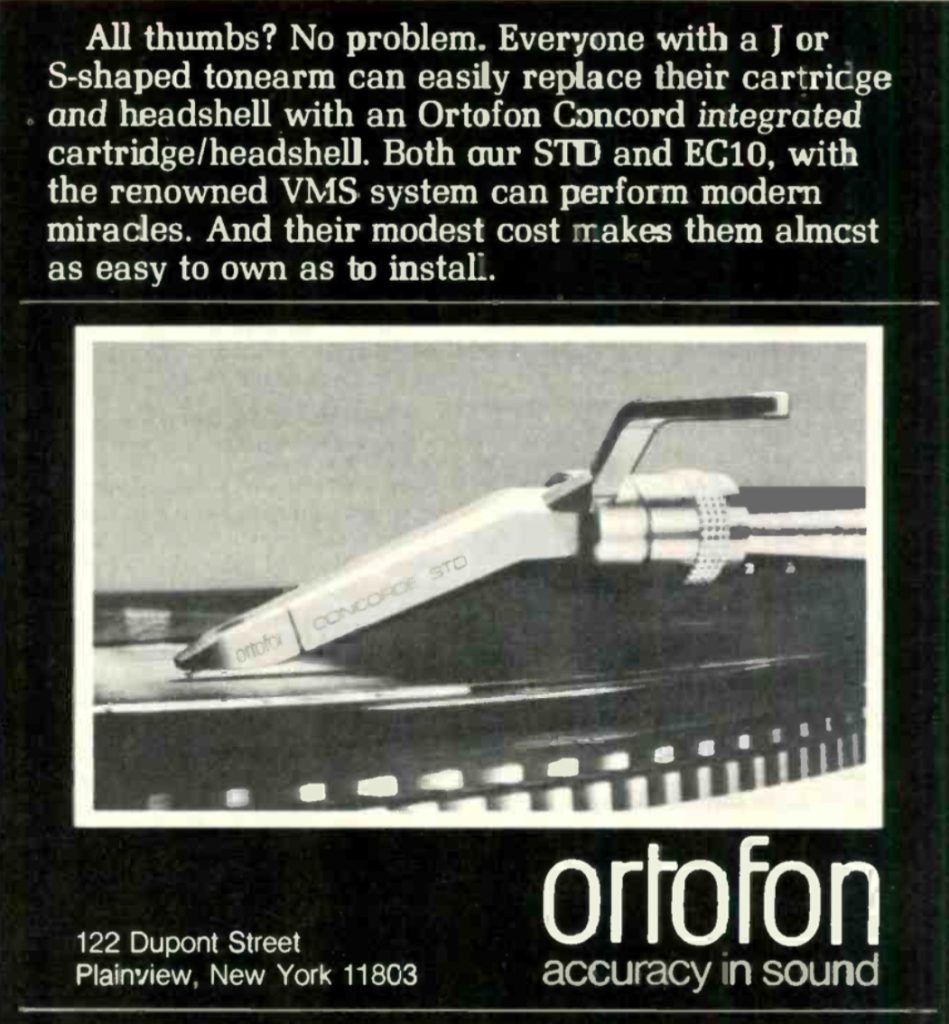
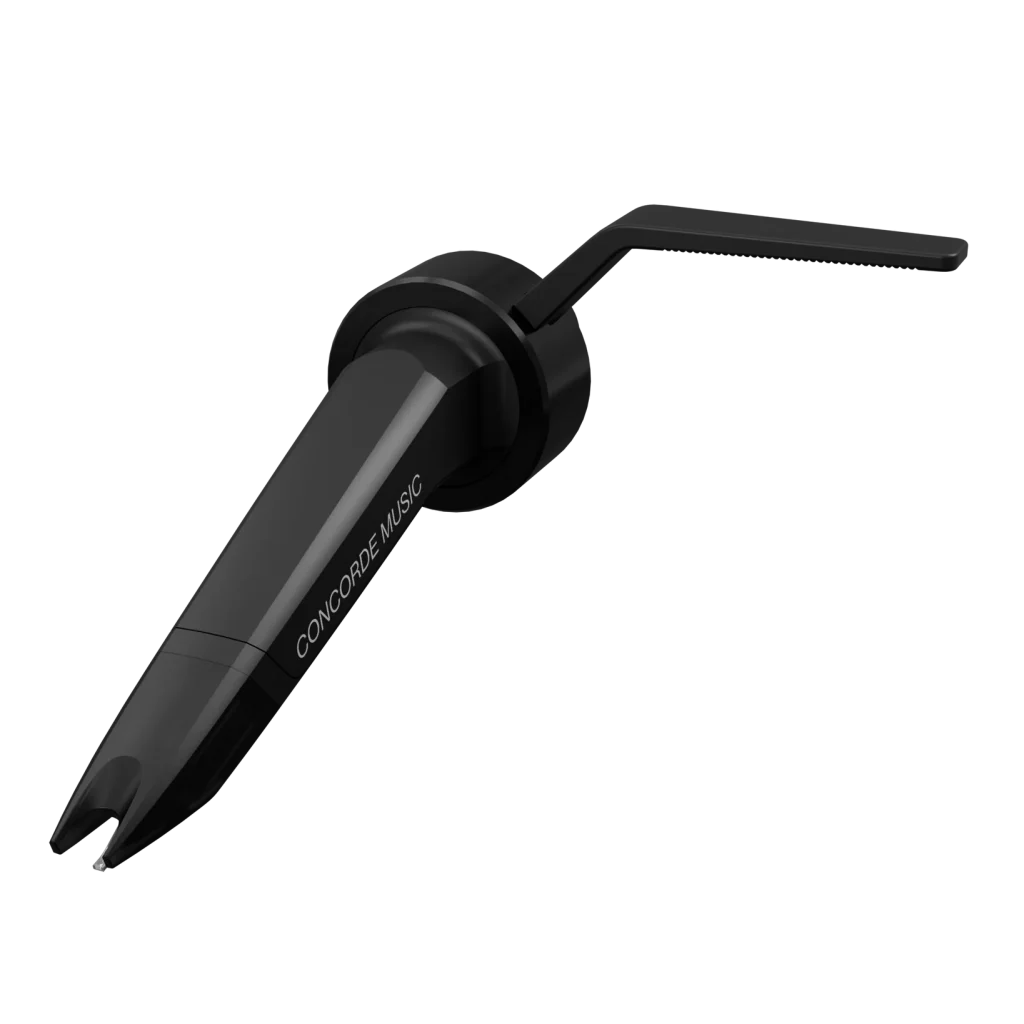
Concorde was inspired as a design by the well-known airplane, copying much of its shape, and was immediately adopted by the professional market -the 1200 already was-, which saw in that cartridge the solution to all problems. Extremely easy to change, relatively inexpensive, requiring no calibration, and so over the years numerous PRO versions were developed, until the manufacturer was pushed to separate it from the consumer line and even entrust it to separate distributions, so as to reach its market of choice on time. Today the range of Concorde Pro cartridges is very wide, but Ortofon about a year ago wanted to dignify the product for Hi-Fi use as well, given also the strong growth of vinyl and turntables that is taking place, and so the Concorde Music line was born 5 models declined in price and performance, from 189 euros of the RED up to 999 euros of the Black LVB250. We used for our tests the 649 euro Music Black, which seemed the right middle ground.
Another turntable
This Technics SL-1300G, but like the 1210G we tested about a year ago have very little to do with the older versions, and thus MKII onwards. The writer (Gia) who used to enjoy re-wiring the old models, and some times repairing or servicing them (the filament bulb in the turret in the older specimens burns out and has to be changed to a high-brightness LED), can materially testify that the similarities are only cosmetic, and in the mold of the base, which is very similar, but everything else, from the control electronics, to the power supply, to the platter, are completely different. The differences between this 1300G and the 1210G, besides, we have said, the “useless” ones and thus turret, strobe, pitch, are in chief the aluminum arm in place of magnesium, an additional very strong and heavy damping base present in the 1210G, and a compartment
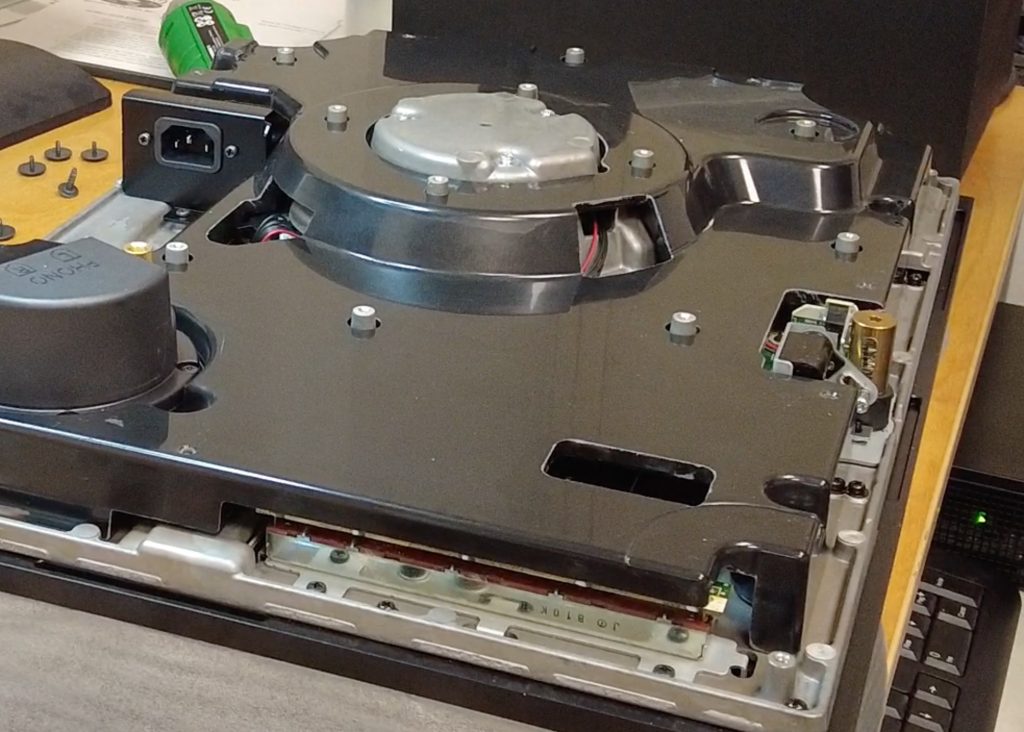
electronic especially of the slightly different power supply, probably more powerful in the 1210G. We do not believe this last aspect affects sound performance, while for certain magnesium arm and damping base certainly do. Magnesium, in particular, is the lightest metal used in metallurgy, and compared to aluminum it weighs 35 percent less as well as being more durable.
Very similar to the "rich cousin"
The turntable adopted by Technics SL-1300G has a three-layer structure, brass and aluminum with high rigidity and underneath a rubber damping layer, so as to achieve great rotational stability. Fine calibration of the platter’s mass balance is done at the factory, using a specific instrument, at the end of the operation, a label with the inscription “BALANCED” is affixed to it, testifying that the calibration has been carried out. The power supply is particularly generous, which is essential to keep up with the motor, and with an operation at 100 kHz so as to be far from the audio band. A special circuit, then, of active noise elimination, allows by means of an error amplifier, to detect residual noise with great precision and then apply an inverse phase signal that removes any spuriousness. The feet are another novelty, and are the same as those on board 1210G, they use a special silicone rubber that ensures damping and reliability.

An enigmatic arm, the importance of resonant frequency FR
It is likely that the 1210G’s arm is made of Peraluman, an aluminum-magnesium alloy, but in any case, and here it opens a question that has had almost no answer since the 1200 was born, that is, for 53 years: how much does the arm barrel weigh ? Whether it is 1210G or 1300G or any other model in the family ? It was stated in some manuals of many years ago, they mentioned 12 grams, but they were referring to the “old” MKII model, and in the absence of this data it is difficult to be able to orient for a correct arm-cartridge interface. The chart that can be consulted onVinylEngine (VinylEngine) and where only the arm mass has to be entered, relates the weight of the cartridge and shell (in the case of Concorde it is 0) to compliance.
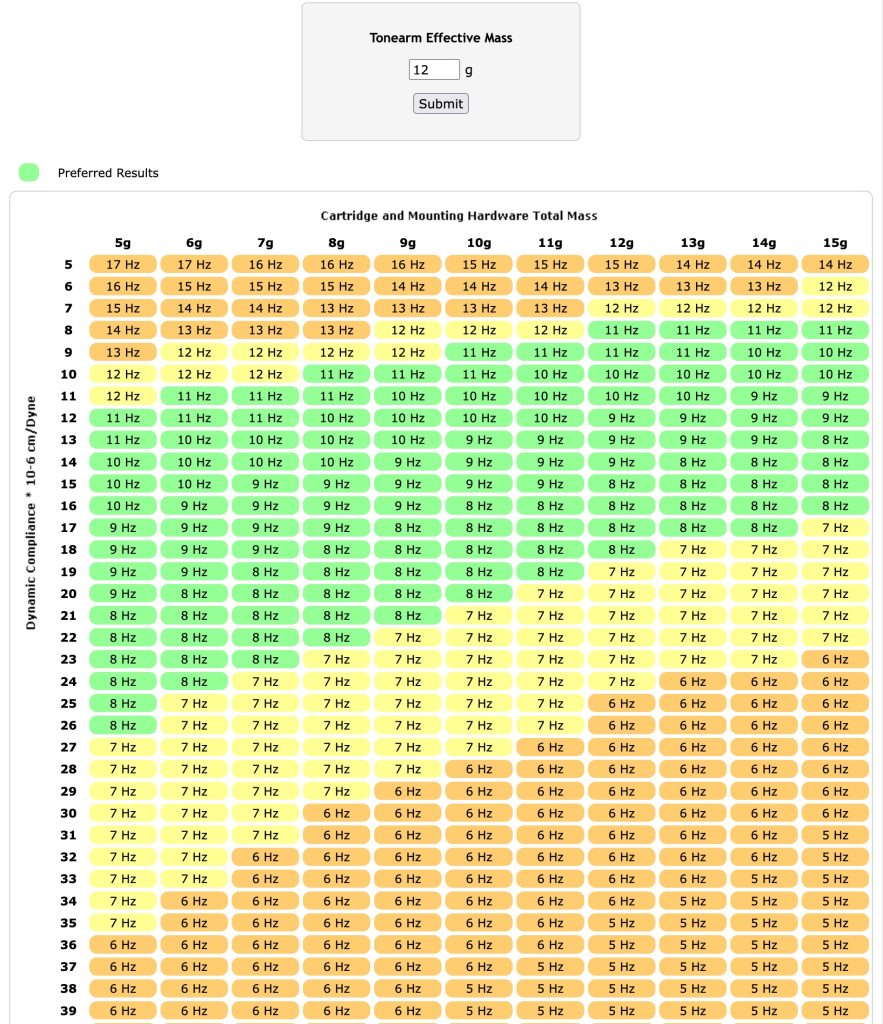
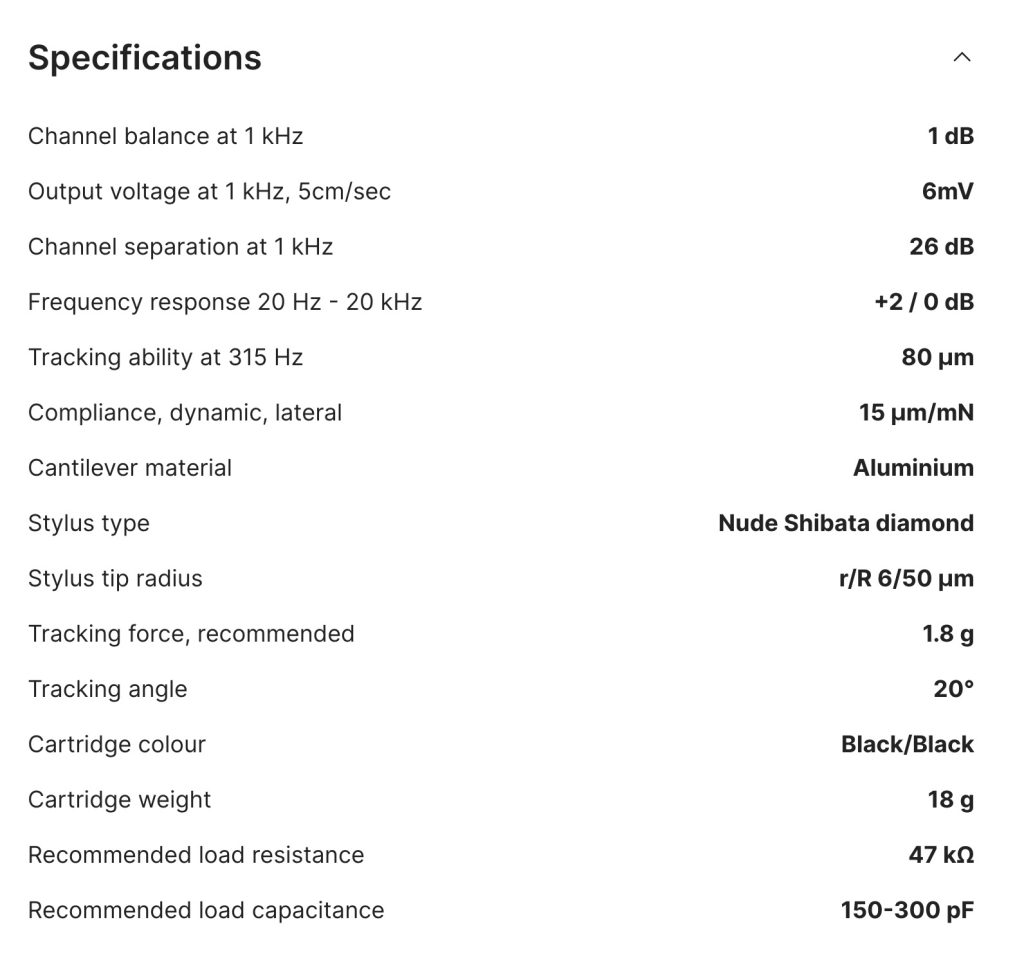
Each cartridge has one, of compliance, and it expresses how much the assembly formed by the stylus, cantilever, grommet, coils/magnets, and everything rigidly attached to it, “yields” to mechanical stress. It is easy to understand this by imagining the behavior of a tire on a curve. It indicates by how much the whole assembly moves if you apply a certain force to it constantly or with a certain frequency. This parameter should be as constant as possible in each direction. And the resonance frequency of the arm-cartridge assembly (FR) is very important because it must fall within a precise frequency range, which is 8-12 Hz, this is because if the FR is too high the cartridge/arm assembly may move inappropriately (entering resonance) because it falls into the lowest frequencies of the musical message, heavily altering the reproduction. If, on the other hand, the FR is too low, the cartridge will resonate at frequencies where LPs are often affected by spurious printing. Between 8 and 12 Hz, on the other hand, there is no signal whatsoever, and so it is the right region in which to make the FR fall. Technics’ failure to state the mass of the tonearm means not giving enthusiasts the opportunity to be able to choose the most appropriate cartridge according to their needs and pockets. Incidentally, to make sure that the mass of the cartridge and the shell is the appropriate one, there are also small metal plates that can be interposed between the shell and the cartridge and that weigh down the assembly by one or two grams and that often prove very useful in the search for the most appropriate FR. In our case, the Ortofon Concorde Music Black has a compilation of 15µm/mN, assuming a mass of 12 grams of the tonearm and 18 grams of the cartridge (stated) we are in a “green light” condition from 8Hz to 12Hz (although in the picture it is displayed for a total mass of 15 grams, since VinylEngine shows values between 5 and 15gr maximum) and therefore we are perfectly in the recommended range. Of course, all this if the mass is actually 12 grams, in the case of the 1210G it might be less, given the lower mass of magnesium compared to aluminum, but we would still be in a favorable situation. In any case you well understand how important this kind of verification is, which can be done very easily and completely free of charge: it will allow us to better design the cartridge to be adopted.
Listening: forget the old 1200MKIIs !
These new “1200s” have nothing to do with the older MKII generation. Nothing at all. We had seen this with the 1210G, we find in this 1300 the same stylistic figure albeit with some differences. A sound of a “real” turntable, of a product for music listeners, not that the other one did not perform the function, but although with the many advantages of a direct drive (immediate start, torque pull, reliability) it did not know how to offer great listening performance. This new course, on the other hand, is able to express remarkable gifts; a modern, rhythmic, fast, overbearing listening experience that thrills and engages. It is certainly not the turntable that inspires relaxation, there is no doubt about it; it drags, it leads you to tap your foot, to follow the rhythm, to be enveloped by the sounds. Rock, Metal, but also Jazz, and why not classical ? Where 1300G takes you between instruments with a peremptoriness that has few comparisons for the price it costs. It lacks in little delicacy, in a rather violent way of delivering notes that leaves little room for sweetness and grace. But reproduction is a photograph, a way of seeing, of framing music, and this 1300G makes a contrasting and overpowering portrait of it, no doubt of great appeal.
Technical characteristics:
- Traction method: direct
- Motor: brushless DC
- Speed: 33-1/3, 45 and 78* rpm
- Starting torque: 0.32 N・m (3.3 kgf・cm)
- Start-up time: 0.7 seconds at 33 rpm
- Braking system: electronic
- Wow&Flutter: 0.025%.
- Turntable platter: brass and alliminium, 332mm, 3.6kg
- Statically balanced arm
- Length: 230mm
- Overhang: 15mm
- Tracking error: 2° 32′
- Compensation angle: 22°
- VTA adjustment range: 0-6mm
- Head weight adjustment: 0-4gr
- Weight of the headshell: 7.6gr
- Audio output: phono Pin Jack with grounding
- Power supply: 220-240Vm 50/60Hz
- Power consumption on/stby: 10W/0.3W
- Dimensions: 453X173X372
- Weight: 13 kg
Distributor: Panasonic Italy, Via Fulvio Testi 280/6 20126 Milan tel. 0267881





GIPHY App Key not set. Please check settings