

 Audio 2G
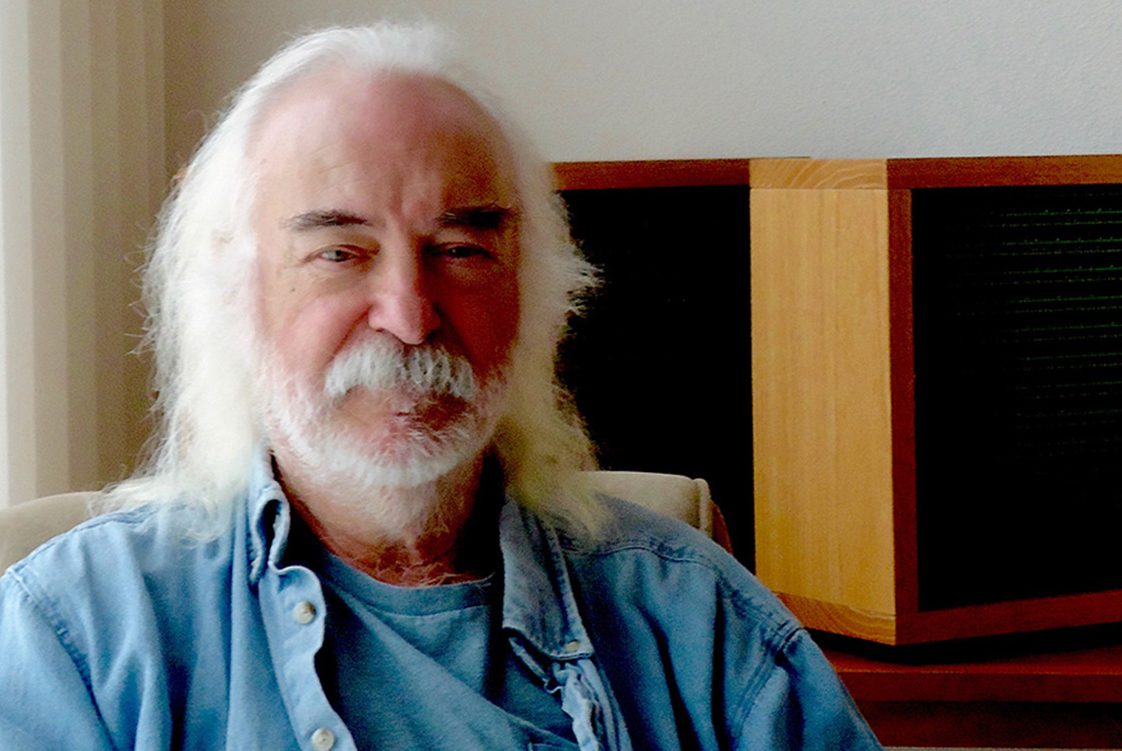
Nelson Pass was born on June 27, 1951, in Massachusetts and grew up in Santa Rosa, California. As a boy he was already fascinated by electronics and music, two worlds he would never stop holding together. He chose to study physics at the University of California at Davis-a choice seemingly distant from audio, but one that would prove crucial: that education would make him a designer capable of combining the rigor of the theoretical physicist with the practical sensibility of the engineer. Already during his college years, Pass co-founded the small loudspeaker company, PMA, with Mike Maher, and in 1972 he joined ESS Speakers in Sacramento, where he worked with the legendary Dr. Oskar Heil-the inventor of the Heil Air Motion Transformer-to this day a widely used tweeter in the audio world-working on crossovers and cabinets. In parallel, he works as a technical manager at Sun Stereo, repairing amplifiers of prestigious brands such as McIntosh, Phase Linear and Pioneer, understanding the choices of others and maturing his own.

Threshold Electronics: the consecration
In 1974, fresh out of college, Pass co-founded with René Besne Threshold Electronics, a company that had long since closed but whose amplifiers were still highly coveted with the stated goal of building amplifiers. First produced was the 1975 Threshold 800°, a 200-watt-per-channel class A with an entirely original dynamic bias system: instead of keeping the bias in class A continuously, Pass devised a variable scheme that brought the output stage into class A following the dynamics of the signal, saving heat without sacrificing sound quality. And it wasn’t a trick ! Then the legendary Stasis. The idea behind it was relatively simple: all distortion arises from changes in voltage and current in the amplifier device; if you can keep voltage and current constant at the working point of the transistor, the distortion disappears. Pass thus developed the “current bootstrap,” an external current source in parallel with the gain stage, to keep the operating point locked. Brilliant. It was so successful that in 1985 Japan’s Nakamichi contacted Threshold to license the Stasis technology. In the mid-1980s he also designed the highly successful Adcom GFA-555, an amplifier that was both commercially and critically successful and brought Pass’s sound to a much wider audience.

Pass Labs is born, the consecration
In 1991 Pass founded Pass Laboratories, initially operating from his home laboratory in northern California, later based in Auburn. It is a bold choice: he leaves an established company to start over with absolute creative freedom. The first products are the Aleph series amplifiers: single stage, pure class A, with no global feedback. The Alephs remain in production for fourteen years, becoming cult objects among audiophiles worldwide. To this day they are the most cloned ever. In 1998 comes another qualitative leap with the “Supersymmetry” circuit, which becomes the basis for the X series and then the XA series.

In parallel with Pass Labs, Pass runs First Watt, a company that assembles by hand, in very limited runs, minimal low-power designs that it chooses not to mass produce through Pass Labs. First Watt’s philosophy is summed up in a phrase that has become famous: “The first watt is the most important watt.” Here Pass experiments with static induction transistors (SIT), single-stage amplifiers without feedback, circuits stripped down to the bone. These are products for curious and courageous audiophiles, with high-efficiency speakers, and are now the entry level of the range, now incorporated into the Pass offering.

The DIY community
One of the most fascinating aspects of Nelson Pass is his relationship with the DIY enthusiast community. Pass has been an advocate of the DIY world for decades: he published a series of articles in Audio Amateur introducing“Zen” variations-amps that answer the question “what is the sound of a single transistor amplifying?” He then created theCamp Amp for a special event where 20 people built their first amplifier in a single afternoon outdoors in California, taking home a working instrument and a smile. In the DIY world he is affectionately known by the nickname “Papa,” and he has a site full of projects and tips on how to make them.

The real difference: li design philosophy
Pass has always had a clear and countercultural vision. His philosophy is summed up in the idea of simplicity: “the goal is to explore simple designs in terms of sound quality.” This is coupled with the belief that electrical measurements alone are not enough to describe the sound of an amplifier, and that listening tests retain irreplaceable value. In his own words, “it is essential that the design of an audio component follows a philosophy that puts the listener’s perceived listening experience first, thus the subjective aspect of sound. In addition, the entire path the music has gone through-recording, production, and playback-also matters, because each step leaves an imprint on the final result and should be considered an integral part of the sound experience.”
An unparalleled legacy
In a career spanning more than four decades, Pass has been awarded seven U.S. patents in the field of audio circuits. His path is studded with brilliant and innovative designs, each of which would have alone guaranteed a place in hi-fi history. Despite his success and legendary status, those who met him describe him as a person devoid of ego and pretension-rare in the high-end audio industry-with a deeply curious mind and a rare generosity in sharing his knowledge.




GIPHY App Key not set. Please check settings