



 Audio 2G
he French brand ATOHM is still relatively unknown to many enthusiasts in our country. Personally, thanks to the Italian distributor Audioplus Hi End, starting in 2015 and then in the following years, I had the opportunity to try several models including the GT 1-HD of the most expensive series, of which I keep a very good memory, as well as the previous version of the ATOHM Sirocco 2.24 protagonist of this article. Initially, not knowing much about this company, I read up on it and discovered that at the helm of ATOHM is a technician of the highest caliber: Thierry Comte.
Profile of ATOHM
Comte was for years the technical director of Triangle, a prestigious French manufacturer of loudspeaker systems. Later he worked with Onix and Waterfall (perhaps some will remember his transparent loudspeakers), and finally he founded Welcohm Technology, registering the ATOHM trademark under which he began operating in the loudspeaker construction business, either as a third-party supplier or by selling his kits directly to DIYers. Together with compatriot Focal and a few others, ATOHM is one of those loudspeaker system manufacturers that designs and builds the drivers itself, instead of relying on the usual Scandinavian companies that, while willing to make versions to customer specifications, have a catalog of predefined models from which to choose the one best suited to the design requirements. The design and construction of the drivers, on the other hand, require know-how and manufacturing skills that are not within everyone’s reach.Thierry Comte uses sophisticated simulation systems and laser interferometry measurements to define and optimize the geometry of all moving mechanical parts, with the goal of achieving maximum linearity across the entire bandwidth before resorting to any corrective elements on the crossover filter. Complex research on loudspeaker mechanics has convinced him that although the physical properties of the diaphragm undoubtedly influence the frequency response of a driver, the overall result is strongly influenced by many other parameters such as, among others, the stiffness and length of the voice coil, the characteristics of the windings, the type and amount of glue used for the mounting of the driver (but also for the cabinet panels), and finally by the geometry, weight, and viscoelastic properties of the driver suspension.

ATOHM Sirocco 2.24: Construction
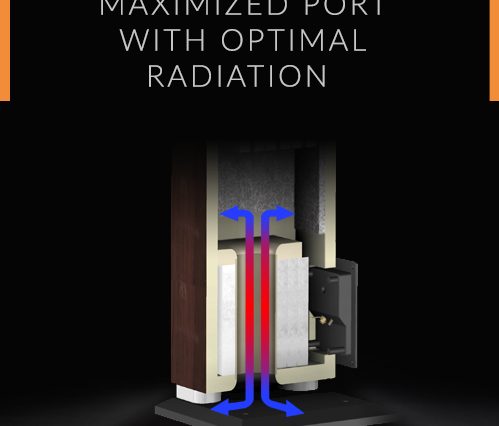
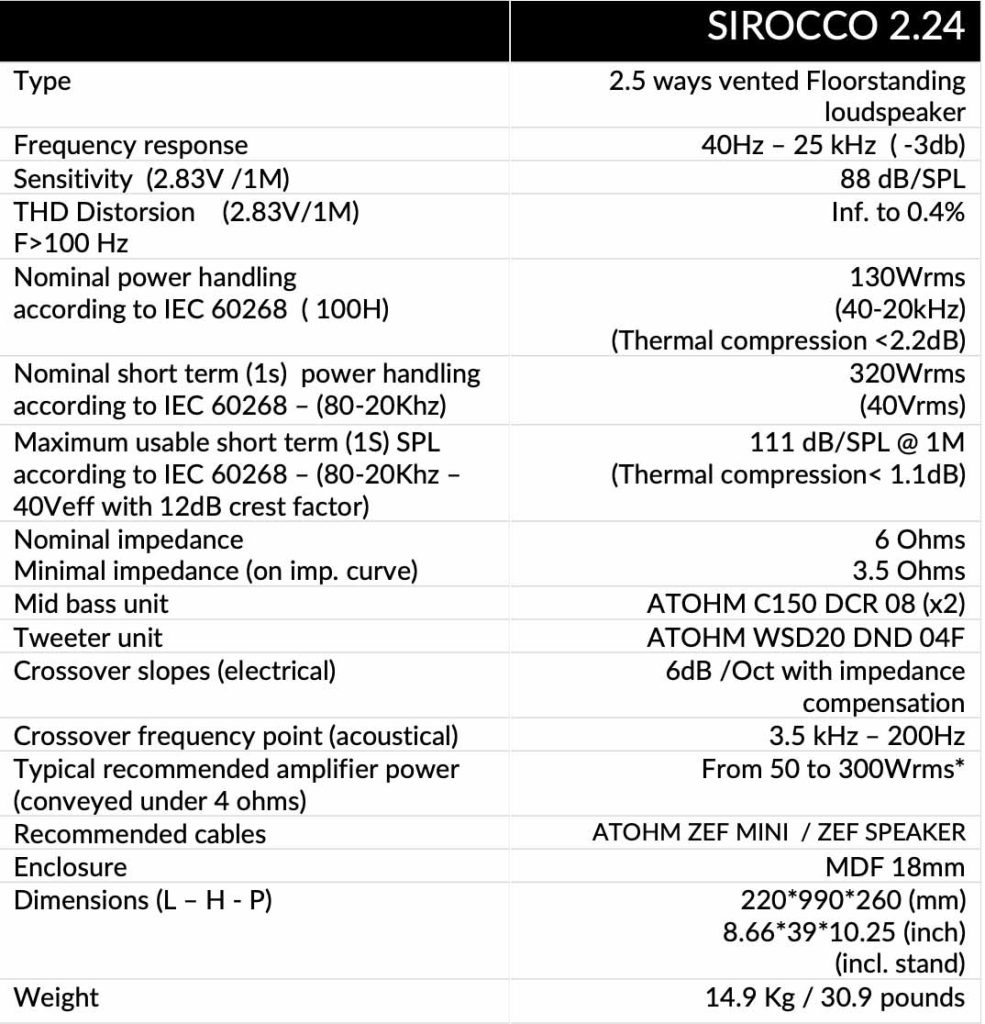
The speakers featured in our test are the largest model in the revamped Sirocco series, consisting precisely of the 2.24 and a smaller stand-mounted model, the 1.24. Recall here that this series constitutes the manufacturer’sentry level . The cabinet, though simple in its height-developed parallelepiped shape, is made with considerable care from 18 mm MDF. In the white finish we were granted for testing, it is appreciated for its compactness and pleasing aesthetics that increase its compatibility with home environments. The white/satin lacquer finish and the small circular cloth grilles covering the two cone drivers lend a modern and light touch that makes the speaker, which is just under a meter (990 cm) tall, 22 cm wide and 26 cm deep, seem even more streamlined. Typologically, the system is defined as two-and-a-half-way, that is, one tweeter and two bass reflex-loaded mid woofers with the conduit outlet placed on the bottom face of the cabinet. This in turn is positioned, by means of metal spacers, at a predetermined distance from a square base that forms the ground plinth of the speaker. The stated sensitivity is 88 dB/2.83V/1m with an impedance of 6 ohms (min. 3.5 ohms) and a maximum recommended power of 300 W. Frequency response ranges from 40Hz to 25kHz (-3dB). The interior of the cabinet has reinforcing ribs with the enclosed volume largely filled with two different types of acoustic absorber; at the bottom, at the tuning tube, there is a chamber filled with sound-absorbing material with the function of impedance adaptor, acoustic filter and standing wave absorber. The solution, also applied in other ATOHM loudspeakers is called SWDTM™(Standing Wave Damper) and is intended to limit resonance modes along the vertical axis typical of tower systems. The crossover of the ATOHM Sirocco 2.24s, is mounted at the connector tray, articulates on two boards and performs the crossovers between the drivers at frequencies of 200 Hz and 3500 Hz. It is based on simple 6 dB/octave cells supplemented by impedance compensation circuits to ensure precise electrical slopes, optimize the resulting acoustic slopes, and maintain compatibility with a wide range of electronics. As for the components used, they are carefully calibrated and meet specific quality standards according to their application (air inductors, MPT capacitors, inductors with low-resistance laminated steel core, etc.). The internal wiring is made with a specific 1.5 mm² multi-wire OFC cable. On the connection tray we find gold-plated Binding Posts not arranged for bi-wiring and a tweeter emission attenuation switch with three steps of -2 dB each.
ATOHM Sirocco 2.24: Drivers
Atohm is primarily a loudspeaker manufacturer and therefore has made available to us a paper full of technical information by which to frame the remarkable peculiarities of the drivers used and of which we provide the link for those who wish to consult it.
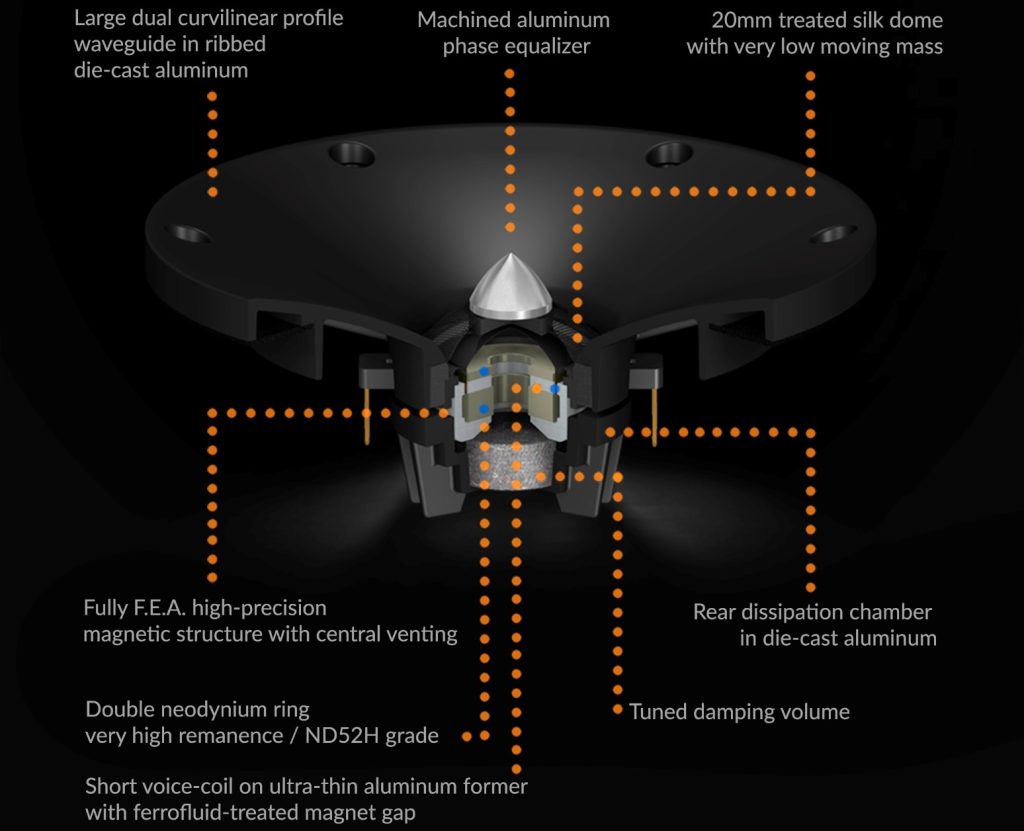
In the ATOHM Sirocco 2.24, the upper frequencies, from 3,500 Hz to 25,000 Hz, are handled by a tweeter (WSD20DND04F) with a silk dome equipped with a powerful double circular neodymium magnetic complex and a 20-mm voice coil made with CCAW wire (a copper and aluminum alloy that provides a good balance between lightness and conductivity). By virtue of the lightness of the moving crew this component has a sensitivity of 97 dB / 2.83 V / 1 m, achieved without horn or compression chamber loading. The front flange is made of die-cast aluminum to eliminate vibration and is an optimized waveguide to temporally align this tweeter with the C150 mid-woofer. Combined with an ogive with a phase equalizer function, it improves efficiency and provides nearly constant directivity over the entire frequency range. Each component of this tweeter is manufactured with extreme precision, and its assembly receives meticulous attention to detail. Quality control includes frequency sweep tests and five measurements conducted in a small anechoic chamber. These checks allow the manufactured tweeters to be classified according to sensitivity and matched with +/-0.25 dB accuracy before being inserted into the speakers.

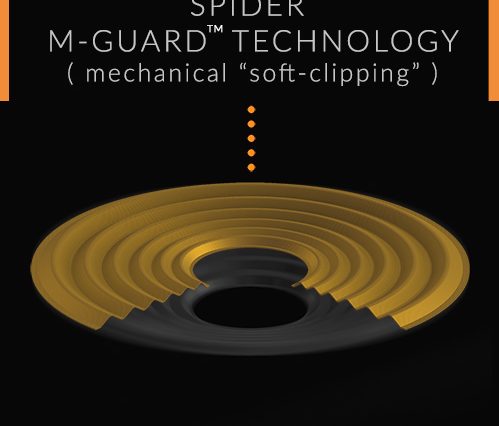
Let us now turn to the unit used as the midwoofer in the ATOHM Sirocco 2.24: this is a 15-centimeter component called the C150 DCR, equipped with a paper cone made from oriented short fibers. A specific treatment on the back face is applied to optimize and dampen cone breakup at higher frequencies, thus improving the linearity of the response and simplifying the crossover tuning process. The rubber suspension incorporates LDS™(Low Diffraction Surrounding) technology, which enables progressive behavior as the midrange breakup approaches so as to achieve the most linear frequency response possible. Its optimized geometry ensures symmetrical stiffness during maximum excursions while reducing moving mass. The development of the motor assembly benefited from the experience gained over many years of design and advanced electromagnetic simulations (F.E.A.); it features an 84-mm ferrite magnet combined with optimized polar expansions and a 25-mm coil. The chosen geometry maximizes the concentration of magnetic flux in the air gap, offering a high, constant and symmetrical force factor (BL) over a wide range. There are many technological peculiarities of this component, which you can find extensively documented in the paper we referred to earlier. However, we like to mention the M-GUARD Technology that combines a specific “progressive” spider geometry with a material with special mechanical properties. The result is a spider that maintains an almost constant stiffness coefficient over the entire nominal excursion range (+/-6 mm) and gradually increases it beyond this point, reaching more than three times its value at +/- 12.5 mm. In practice, a kind of “mechanical soft clipping” is achieved, allowing the driver to handle up to an additional 6 dB of voltage (4 times the power increase) without significant audio degradation, thus extending the absolute limit by an additional 2 dB and greatly improving reliability. Finally, we mention the technology called TICR™ (Thermal & Inductive Control Rings), which involves the use of two copper rings placed symmetrically around the voice coil. This arrangement improves electromagnetic control and thermal dissipation.
Listening
The system with which the ATOHM Sirocco 2.24 was tested consisted of the Marantz Model 10 integrated amplifier, as a digital source we used the Aqua La Scala MKII DAC connected via USB to an Audiolinux-based Audio PC, with JCAT USB XE card, JCAT NET XE network card both equipped with dedicated power supply. Instead, as analog source we used New Horizon 303i turntable with Ortofon M2 Bronze cartridge. The signal, power and power wiring was Neutral Cable from the Reference series. From the point of view of room placement we had no particular difficulty except to find a spot where the distance from the rear wall was such as to balance the low frequency response and the size of the virtual soundstage image. After a few attempts-not even too many actually-we settled on about sixty cm from the back wall and about eighty from the side walls. In this sense the presence of the reflex port on the lower face proves to be of great help in the installation phase in the room. I’ll start right away by saying that from the very first bars the Siroco 2.24s sounded like a mature, complete loudspeaker with all the credentials to be placed in the group of speakers far more expensive than their list price. In particular, we were astounded by their ability to return orchestral forts credibly, without compression, flattening and various forms of distortion. The presence of the Marantz Model 10 as our test amplification allowed us to push the Sirocco 2.24s to really very high pressure levels without, however, ever perceiving a hint of compression or hardening. On the contrary, it almost seemed as if the mid-bass section of the French speaker was pushing us to seek the limit without any cause for concern. This characteristic-which, of course, must be indulged by a chain of adequate level-made even me, who is certainly not a lover of loud listening, want to turn the knob to see how far I could go while still maintaining my listening pleasure. I can assure you that the Atohm’s response was truly rewarding. The interesting thing, however, is that this speaker does not just know how to be loud, far from it! With just as much class, it is capable of weaving refined sound textures at very low levels while retaining timbral rigor and intelligibility. In addition-and this is a typical trait of ATOHM’s loudspeakers-these Sirocco 2.24s are also able to exploit every bit of ambience information that the upstream chain and recording are able to pass to them, resulting in a sense of spatiality that has in the focusing and scanning of sound planes its strong point. Another parameter in which these ATOHMs have convinced us is their overall speed, which makes them able to react gracefully and equally firmly to even the most abrupt dynamic changes, both micro and macro, thus doing justice to the most successful recordings. Again, the pairing with the muscular but refined Marantz Model 10 allowed us to explore this aspect to the fullest. From what has been said so far, our more than flattering judgment with respect to some “fundamental” parameters cannot but shine through. However, this judgment still does not account for the aspect that at the end of the listening test seemed to me to be the prevailing one, namely “how” these results are achieved. Certainly the technologies used, only superficially described above, hint at the sophistication and maturity of the design. However, they amalgamate and then disappear during listening, resulting in a system capable of delivering the sound message in a completely natural way, without any apparent effort. From personal experience I know that this is a peculiarity that distinguishes mature systems of high lineage.

ATOHM Sirocco 2.24: Conclusions
After my previous statement, it is worth mentioning the cost of these ATOHM Sirocco 2.24, which stands at €3,900.00 per pair; a price that seems to me not only entirely proportionate, but such that the Sirocco 2.24s are considered a real bargain. Floorstanding systems are certainly more expensive than bookshelves for various reasons related to their bulk, weight, amount of material, etc. Several times I have listened to inexpensive speakers of this type, and almost always I felt that I was dealing with systems that were trying hard to mask their limitations, resulting in sounding less than authoritative. Like the ATOHM Sirocco 2.24s, this feeling could not be further away. Their way of presenting music places them in an economic bracket certainly higher than their selling price.




GIPHY App Key not set. Please check settings