



 Audio 2G

In both the professional and amateur audio worlds, the presence of XLR connectors on a piece of equipment is often interpreted as a guarantee of quality and the presence, internally, of a balanced circuit. But the reality is much more nuanced and, for those who truly seek sonic excellence, this distinction makes all the difference. There are basically two approaches to making an audio device with balanced inputs and outputs, and the differences between these two approaches go far beyond the presence of connectors.
The inherent balance
In an inherently balanced device, the entire signal chain operates in differential mode from input to output (read the in-depth article here ). This means that each stage of the circuit works with two signals in counterphase, maintaining symmetry and balance through the entire electronic architecture.

In a truly balanced preamplifier, for example, the signal coming from the source is received by a differential input amplifier, then processed through fully differential gain stages, by a quad volume control, must handle both poles of the two channels, and finally to an output stage that actively generates the two signals in counterphase on the Hot and Cold lines of the XLR. This approach offers substantial advantages: each stage contributes to common-mode rejection, even-type distortions tend to cancel naturally due to the symmetry of the circuit, and overall dynamics are superior because the signal is actually processed on two parallel channels.
The pseudo-balance: a compromise solution
On the other hand, we find products that we might call pseudo-balanced; in these devices, the core of the circuit works in unbalanced mode, with a traditional ground reference, and only at the extremes of the chain are conversion components inserted. At the input, there may be an op-amp configured as a differential amplifier that converts the incoming balanced signal to an unbalanced signal with respect to ground. The internal circuit then amplifies this signal in the traditional way. At the output, another op-amp (or in some cases, a transformer) artificially re-creates the balanced signal, duplicating the unbalanced signal into two versions in counterphase. This solution is technically functional: the external link still enjoys the advantages of balancing (immunity to noise on the cable, ability to travel long distances), but the internal processing does not take advantage of the benefits of a differential architecture.
Transformers vs. active electronics: an open debate
When it comes to conversion between balanced and unbalanced, audio transformers, Lundahl in primis, also come into play. An input or output transformer can do this conversion passively, offering total galvanic isolation and excellent common mode rejection. But quality transformers, while excellent, can add character and “color” to the sound, and on the other hand, introduce high-frequency bandwidth limitations and can exhibit low-frequency distortion if not properly sized.
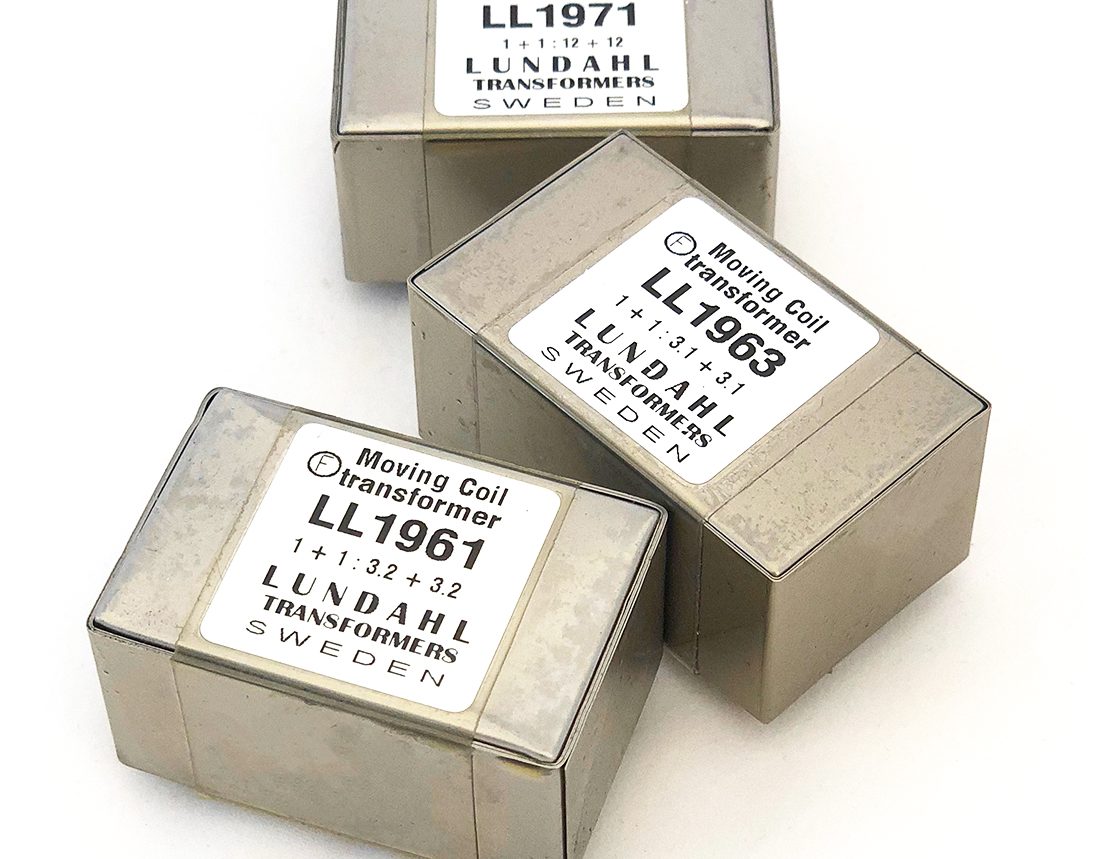
Modern operational amplifiers, on the other hand, offer measurably superior performance in terms of bandwidth, distortion, and noise, but lack the galvanic isolation and that special analog “character” that some designers and users seek. After all, designers of the caliber ofJeff Rowland use transformers in every one of their products, so the solution is certainly valid. And in that case, for example, they are not used to balance the signal, but only to galvanically isolate it.
How to recognize the difference
For the end user, distinguishing an inherently balanced device from a pseudo-balanced one is not always straightforward. But some clues can help:
Price: this is perhaps the most immediate and reliable indicator. A fully differential architecture requires literally twice as many active components (op-amps, transistors, precision-coupled resistors), more complex dual power supplies, and a significantly more sophisticated circuit board layout. All this translates into substantially higher production costs. If a device with XLR costs entry-level figures, it is most likely that balancing is limited to the input and output conversion stages. Inherently balanced products are typically in the mid- to high-end price range.
Power consumption: a fully differential circuit theoretically requires twice as many active components, so it consumes more power and dissipates more heat.
Weight: the presence of quality audio transformers translates into significant weight. A surprisingly light device with XLR could use minimal electronic conversions.
The technical specifications: a CMRR (Common Mode Rejection Ratio) above 80 dB over the entire audio band is an indication of serious differential architecture. More modest values may indicate superficial conversions.
The stated topology: serious manufacturers who invest in fully balanced circuits tend to state this explicitly, using terms such as “fully balanced,” “differential architecture,” or “symmetrical circuit design.”
Convenient ?
It would be wrong to say that only inherently balanced devices deserve consideration. A well-designed pseudo-balanced or unbalanced device can offer excellent performance, especially in situations where cables are relatively short and the electromagnetic environment is not particularly hostile. However, in contexts where sonic excellence is a priority, an inherently balanced architecture is an investment that pays off in quality, reliability, and performance over the long term. The presence of XLR connectors, in short, is only the beginning of the story. What really matters is what goes on behind that chrome facade, in the beating heart of the circuit where the audio signal is actually processed and preserved.





GIPHY App Key not set. Please check settings