



 Audio 2G
Developments
The most significant development of the platform came with the transition from the D2 to the D3; Bowers & Wilkins radically changed its design methodology by introducing three-dimensional simulation using finite element analysis with COMSOL Multiphysics, integrated with the laser measurement system it had already been using for many years. The ability to continuously compare simulations with actual measurements allowed the company to progressively refine each component through an iterative process of analysis and optimization that still forms the basis of the 800 Series’ development today.
The D3 thus represented a true revolution. The new Reverse Wrap cabinet, with its curved surface forming the front of the speaker, significantly increased the cabinet’s rigidity and eliminated the traditional front joints. The Matrix structure was further reinforced with metal components; the Tweeter-on-Top featured a body machined from a single block of aluminum—as did the Turbine Head of the midrange, which in this series featured Continuum FS for the first time—and the Aerofoil woofers further improved control over cone deformation. The D4 introduced the Biomimetic suspension in the Continuum FST midrange, which completely eliminated the spider—a true revolution that remains unmatched to this day. In short, the D4 brought the design to such a level of maturity that further design revolutions became difficult to achieve.
And it is precisely this realization that gave rise to the D5 Series. It is not an entirely new design, but rather a targeted evolution that addresses every aspect of the speaker with the goal of further reducing mechanical resonances and enhancing the overall transparency of the sound reproduction.
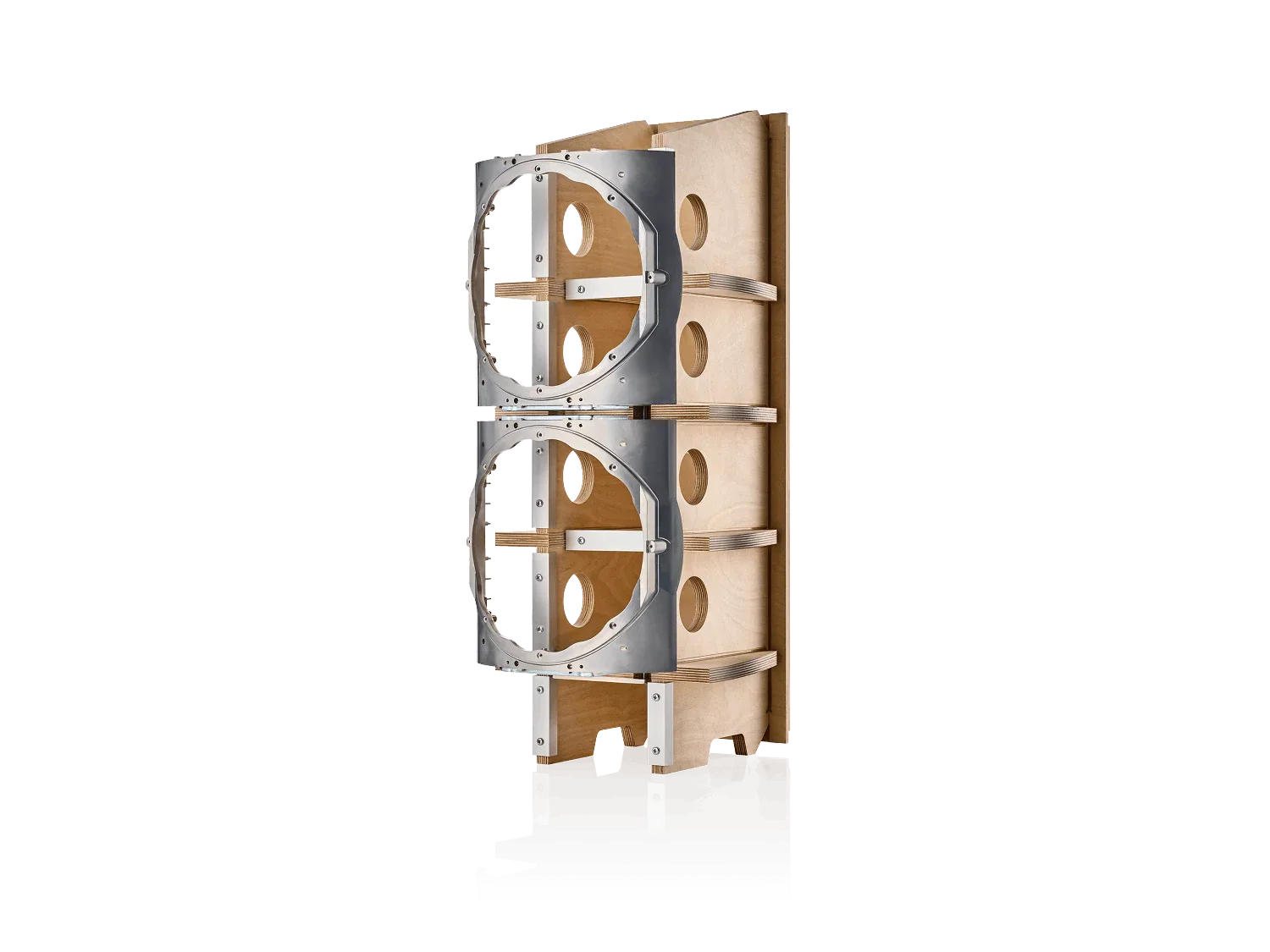
The first area of improvement concerns the cabinet. The aluminum top plate introduced with the D4 is now complemented by a new bracing system consisting of aluminum rails and a new rear Space Frame Bracing that runs the entire height of the speaker. The front brackets and speaker mounting plates have also been reinforced, significantly increasing the structure’s rigidity both longitudinally and transversely. The result is an even more inert enclosure, capable of better dissipating the energy generated by the transducers and contributing less and less to the sound produced.
The base has also been completely redesigned to increase its rigidity and, for the first time, incorporates tuned mass dampers (TMDs), a solution previously used exclusively in the Tweeter-on-Top series. Their purpose is to control the resonances of the aluminum components, which, as their rigidity increases, inevitably tend to shift their resonance frequency upward. The dampers prevent these vibrations from affecting the speaker’s performance.
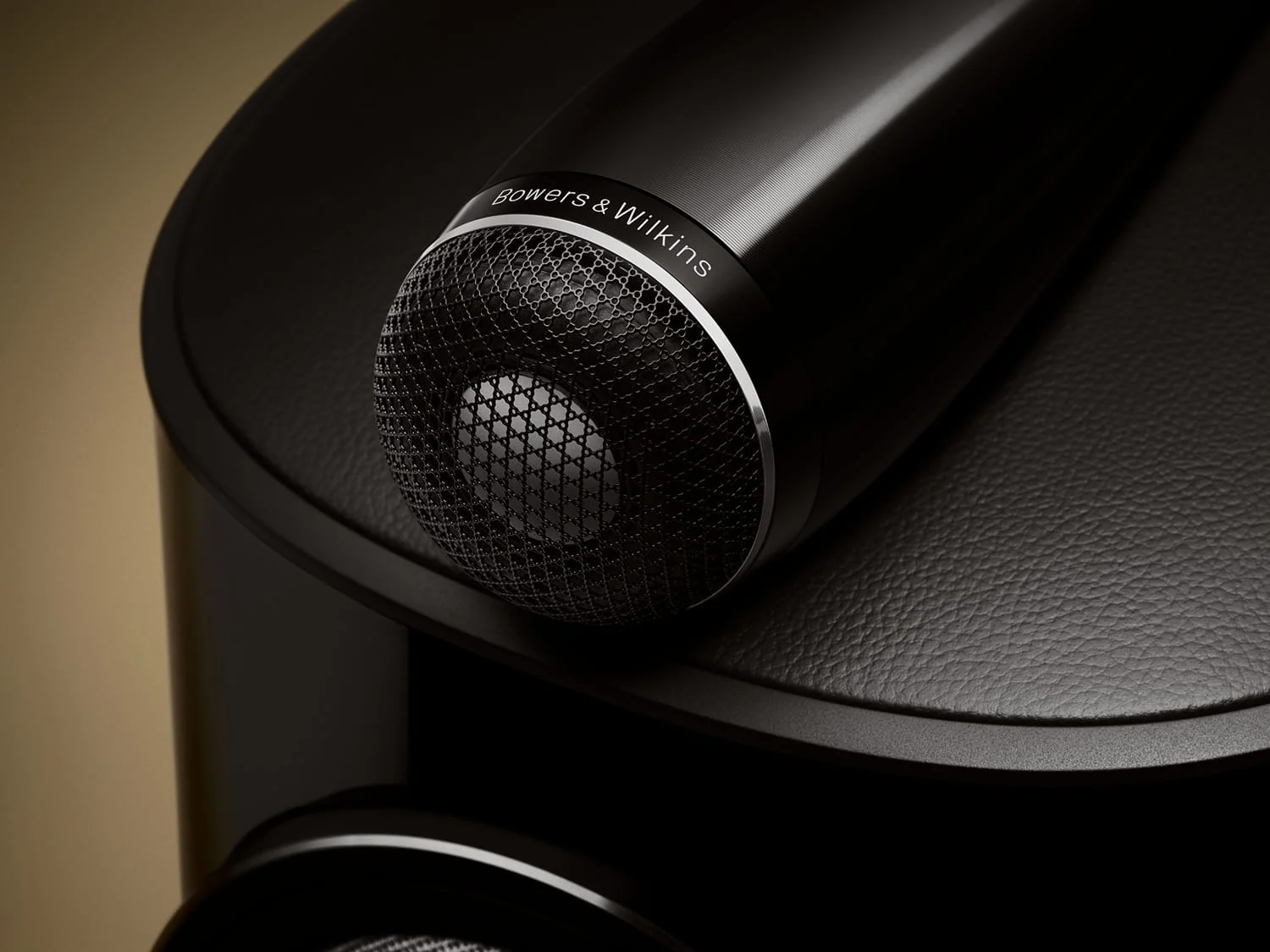
Probably the most significant change involves the chamber that houses the midrange driver. Made of aluminum, this design is based on the experience gained with the Turbine Head found in the higher-end models. In addition to increasing mechanical rigidity, this new structure improves the decoupling of the midrange from the rest of the cabinet, reducing the influence of the high pressures generated by the woofers. After all, as you can read here, the new trend in high-end speaker design focuses on the cabinet; after many years of driver development, it has become clear that residual vibrations are the ones that need to be tackled most vigorously.




GIPHY App Key not set. Please check settings