



 Paolo Di Marcoberardino
Listening
As I mentioned at the beginning, B&W speakers have always had a well-defined and recognizable musical character, and this 707 is no exception in many respects. Since I’m dealing with a small two-way speaker, the first thing I always analyze carefully is the low-frequency response—the Achilles’ heel of this type of speaker. In fact, to compensate for the physical limitations of the small driver and ensure a sense of fullness in the bass, feature a tuning configuration that prioritizes not so much extension as a boost in the range around 80–100 Hz—which often results in bass that tends to be rubbery and somewhat dull. In the case of these B&Ws, however, the focus has been on extension, which in a listening environment can be considered flat at least down to 60 Hz, with bass that is absolutely accurate and well-defined—at least as far as it can go. The result is a “mature” and well-designed speaker—I’d say complete, given its size. To verify this, I immediately listened to a couple of tracks where the double bass plays a decisive and demanding role—namely, the first track from Charles Mingus’s album*Five Mingus*, in which the opening double bass line precedes the horn section, recorded here with great dynamics and power (it’s incredible how records of this technical quality were produced back then). Mingus’s instrument is appropriately defined and well-detailed, and the entry of the horns does not compromise its clarity. Another rather challenging track is“It Ain’t Necessarily So”from Herbie Hancock’s album“Gershwin’s World,” in which the bass is actually a bit muddled and not perfectly in focus, tending to be more of an undefined musical backdrop than a distinct instrument. In this instance, the B&Ws didn’t falter but reproduced the low notes with a discernible edge, actually emphasizing the percussive quality of the strings rather than their vibration. All this is to say that, even at fairly high volumes, the 707s hold their own and manage to deliver a well-defined and dynamic sound, perhaps even exceeding what one might expect given their size.
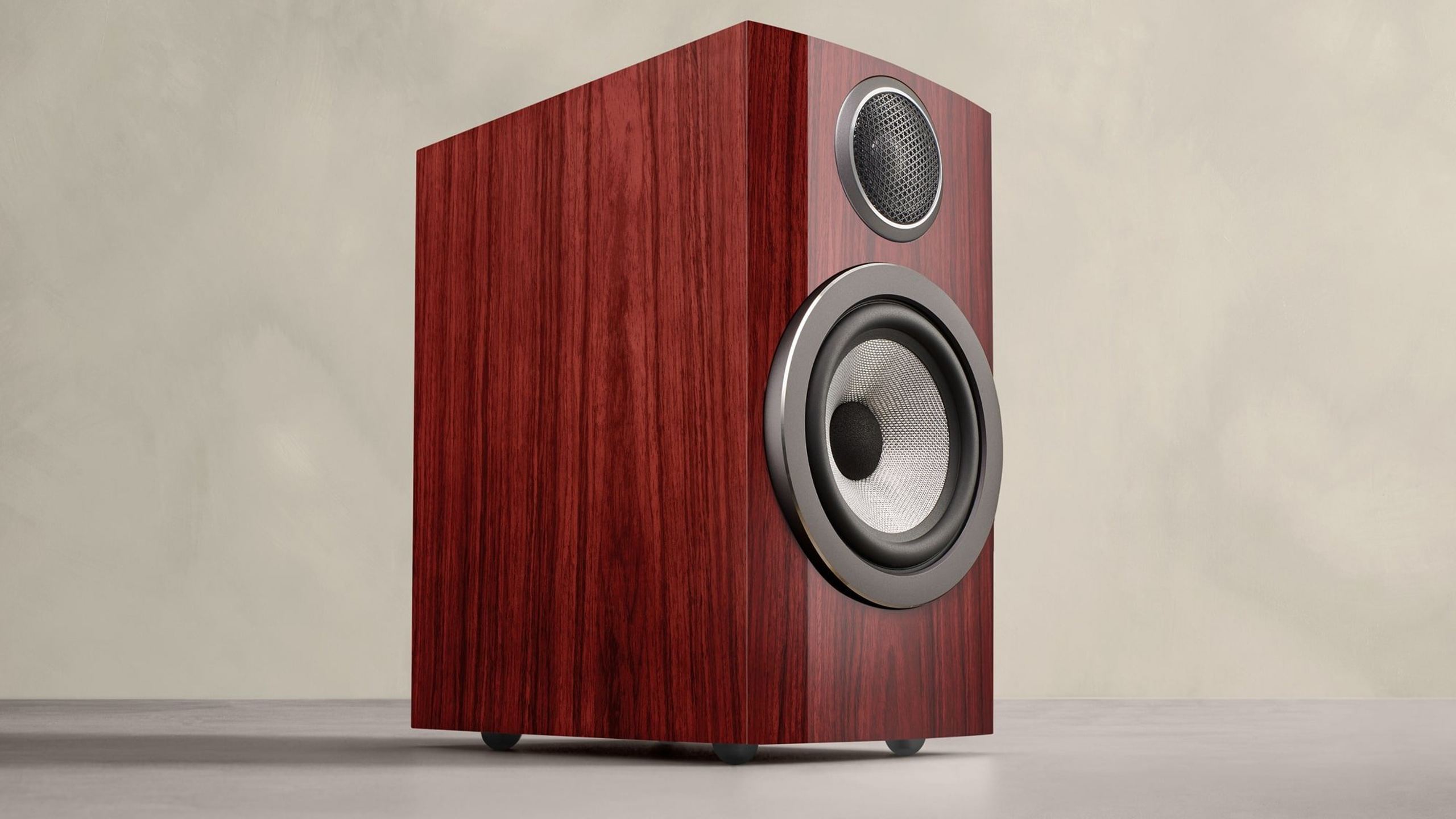
In fact, I’d say this is a speaker that sounds “bigger” than it actually is. The rest of the frequency range exhibits exceptional openness at the high end, which is perfectly in line with the British manufacturer’s tradition, but it must be said that, compared to the past, the tweeter isn’t prone to conspicuous excesses—at least not until the recording itself comes into play. Let’s just say that with some tracks you might wish for a little less brightness, which in some cases comes across as a bit blinding—as in the case of“Take Five,” recorded live on“We’re All Together Again for the First Time”by the Dave Brubeck Quartet (in this case a quintet, since there were five of them), where Alan Dawson’s cymbals come through decidedly forward and in the foreground. The midrange is reproduced superbly, underpinned first and foremost by a low-midrange that’s never emphasized but always solid and substantial, and it offers a substantial amount of detail and sonic clarity, which always ensure the vocals are intelligible in every situation. It’s a midrange that never screams—rather linear and never annoying—demonstrating very fast transient response, which I wouldn’t hesitate to describe as “crisp.” Here, too, B&W’s DNA is preserved—a hallmark that has always made each speaker recognizable for its transparency and introspective quality. The complex reproduction of the piano is handled quite thoroughly by these two little speakers; we’re obviously a long way from the unsettling realism of my Klipsch La Scala 2s, but the instrument possesses admirable harmonic body and detail. In the beautiful rendition of“Stan Meets Chet,”the sensational Getz/Baker duo showcase all their talent with a fluid and airy performance, and Jodie Christian’s piano provides an accompaniment that’s never over the top but always spot-on—with a sound that’s appropriately percussive yet not lacking in harmonic body. Everything is in its place and in order, coherent and musical.
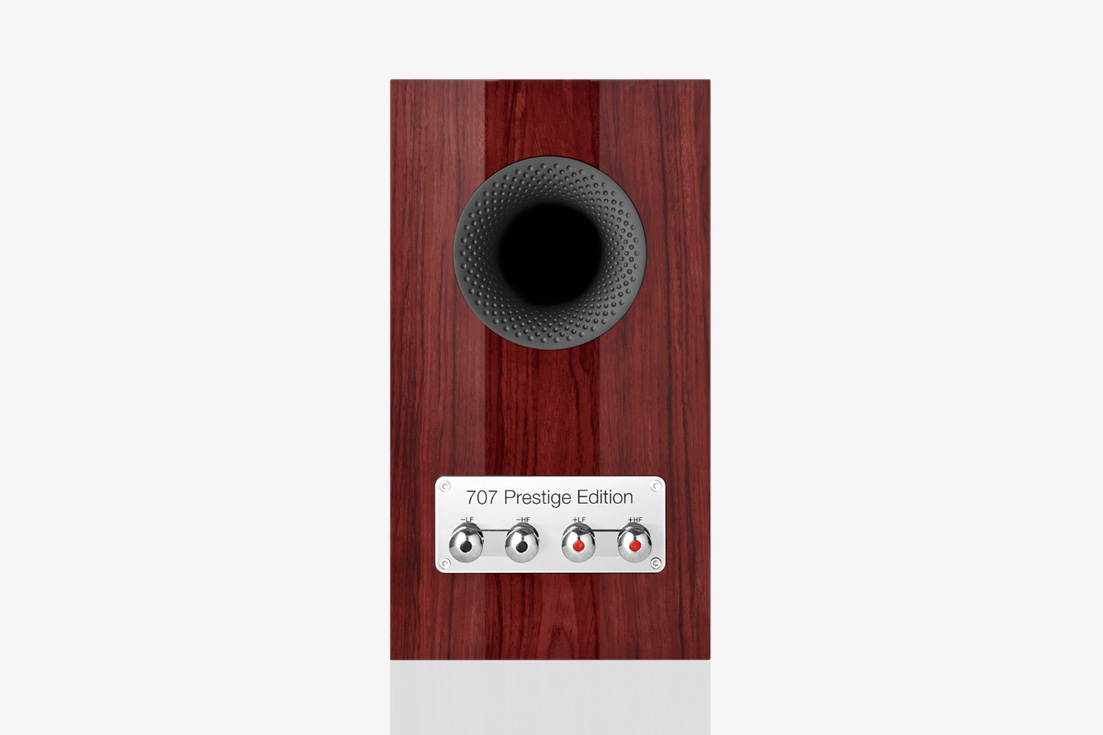
I drove the 707s with both my Mastersound 845 Reference and the small NAD C315 BEE that I use in a second system, obviously with very different results, but even the NAD—though it can’t boast the refinement and magic of a tube amp—managed to bring out the best in the B&Ws and actually proved to be very synergistic in terms of tonal balance, slightly softening the speaker’s high end. Another notable aspect is the soundstage that the small 707s are able to create, especially with classical music. When played“Carmina Burana”conducted by Eugen Jochum in the standard DG edition, at least up to moderate volume levels, the choir is well reproduced, with the ability to distinguish the various sections clearly and precisely. The soundstage is well-defined in all three dimensions, especially in width; with the Mastersound, it decisively extends beyond the listening triangle, reaching beyond the speakers themselves, which seem to disappear entirely. It’s a performance I’d say is noteworthy and unusual in this price class. In terms of dynamics, there are obviously physical limits imposed by the speaker and its drivers, but even at medium-high volumes, the reproduction stays on track and doesn’t show its limits all that easily, delivering a punch that’s at times unexpected. I can confidently say that with these 707s, the sound is never mundane, but always pleasant and captivating, with detail that is at times truly remarkable.





GIPHY App Key not set. Please check settings