



 Audio 2G
A few months after testing the Opera Prima V2, which have since joined the group of speakers we use for our tests, we return to address another model in the same series from the Treviso-based manufacturer: the Opera V v2 floorstanding speakers. These share some details with the smaller model, including the signature of designer Giampiero Matarazzo. Before delving into the analysis of this floorstanding model, let’s start by giving some background on this manufacturer that has been present on the audio market for three decades now.
Opera Loudspeakers: history
Opera Loudspeakers represents one of Italy’s excellences in the field of audio, with a history rich in passion, innovation and dedication to sound quality. The company has a long history that began in the early 1970s, when founder Giovanni Nasta began his experiments that led him to develop the first loudspeaker, La Caruso, which quickly caught the attention of enthusiasts worldwide. The Opera Loudspeakers brand was established in 1989 in Treviso, in northeastern Italy, in an area known for its tradition of craftsmanship and manufacturing. Opera was born from the vision of music enthusiasts and acoustics experts who wanted to create loudspeakers capable of reproducing sound with extreme fidelity. The name “Opera” was not chosen casually: it reflects both the important Italian opera tradition and the company’s ambition to create products that were true sound “works of art.” From the very beginning, Opera Loudspeakers adopted a philosophy aimed at combining Italian and Anglo-Saxon audiophile culture, developing on three fundamental principles: Italian craftsmanship, with each loudspeaker handmade by expert artisans following a well-established tradition of cabinet-making; sonic excellence, with a continuous search for acoustic perfection and special attention to the naturalness of sound; and distinctive design, creating loudspeakers that are also refined and elegant pieces of furniture.
Over the years, Opera has developed several speaker series that have helped build the company’s reputation. These include the Callas/Tebaldi, the Grand Mezza, the Divina and the Quinta Series, considered one of the most successful lines and of which the model under review is the most recent version.
Opera Loudspeakers currently offers two lines of speakers:
- Classic line: characterized by entry-level models that offer excellent sound at affordable prices.
- Callas line: represents the company’s top of the line, with models of the highest quality and outstanding sound performance.
Opera Loudspeakers has distinguished itself by a number of distinctive technical features: the use of solid wood cabinets, collaboration with the best European loudspeaker manufacturers for selected and often customized drivers, the use of minimal crossovers to preserve signal purity, and special attention to bass-reflex arrangements optimized for low-frequency reproduction. The company has over time won a niche among enthusiasts and audiophiles worldwide, with particular success in Europe, Asia, and North America. Its products have been regularly reviewed by leading international trade magazines, receiving numerous awards. Opera also regularly participates in the most important industry trade shows, consolidating its reputation in the global high-end audio scene.
In more recent years, Opera has continued to renew its product lines, always maintaining a perfect balance between traditional craftsmanship and technological innovation. However, the company’s philosophy remains unchanged: to make loudspeakers that are not just sound reproduction instruments, but true “emotional bridges” between the listener and music, objects capable of conveying emotions through natural, detailed and engaging sound.
Description
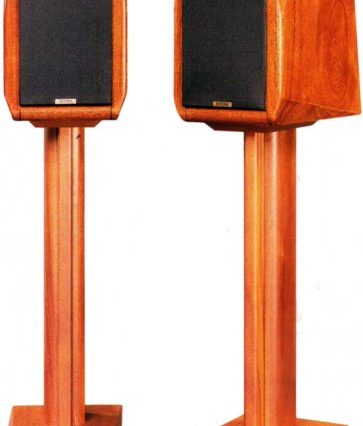
The new Opera V v2 floorstanding speakers arise from the successful synthesis of the configuration of the previous model and the technical solutions adopted for this new product line. In fact, those who will have had the goodness to follow our test of the Prima V2 will not have missed the similarity at the level of design solutions between the two models. Thus, we have a generously sized floorstanding three-way with bass reflex type. Again, the side brushes of the cabinet are finished in PVC with different finishes to choose from. In particular we have two that simulate wood, namely the darker Wood and the lighter Rosewood. Then there is the Cement finish which, as the name suggests, has the appearance of a polished cementitious panel. I personally have not had a chance to see such a finish in person, but it undoubtedly intrigues me greatly, if only because of the utter unconventionality of the proposition. The front panel, the back panel, and the top and bottom panels, all cleverly joined together, are finished in faux leather, generating a pleasant effect. On the rear panel we also find the two tuning ports for the bass reflex and the terminal block, which does not provide for bi-wiring operation. Of course, included in the package are the classic driver cover grills the acoustically transparent fabric. The ground connection is made by means of an ingenious support system that allows the use of metal spikes(spikes) or supports, also metal, with a larger ground contact surface, which allowed us to find the right positioning of the speakers by sliding them on the carpeted floor of our listening room. Note that these supports allow for height adjustment of the individual spikes so that fine tuning of speaker placement can be made.
I will conclude my description-limited as you may have noticed to aesthetic aspects only-to leave room for the technical considerations that you will find in the notes that designer Gianpiero Matarazzo sent us and for which we thank him.

Listening
We tested the Opera V v2 floorstanding speakers by pairing them with several amplifiers including the Copland CSA-100 valve/solid-state hybrid and the Canor Virtus i2 with which, in spite of only 40W of claimed power, we obtained the sonic results we were most satisfied with. As a digital source we alternately used Aqua La Scala MKII and Denafrips Pontus 15th DACs, connected via USB to an Audio PC based on the Audiolinux operating system, with JCAT USB XE network card, JCAT NET XE network card both equipped with dedicated power supply. Signal wiring (both analog and digital), power and power supply was Neutral Cable from the Reference series.
The thing that struck me the most and, I must say, pleased me the most was the continuity I perceived, from the first notes, with the smaller Opera Prima v2 which, I think I can safely say, I am now familiar with. Obviously, in this case, there is something extra, as indeed there should be. Nonetheless, one immediately realizes that the approach, which is very sound and shareable, is the same, and I like to think that such is the “signature,” the designer’s hallmark. Wanting to summarize as much as possible the common traits of the two speakers – I will go into the peculiarities of the Opera V v2 later – I would sketch them as speakers with a sound devoid of their own colorations and with an absolute coherence between the various portions of the spectrum. To put it another way: they are speakers for which sonic analysis based on the usual differentiation between the various frequency ranges is at least difficult to apply, perhaps even inappropriate. Yes because if one listens to them carefully, particularly the model under review, one can realize how seamless the timbral/harmonic characteristics of the various ranges entrusted to each driver are and how effectively the transitions between them are resolved. In this way the proposed sound is very natural, timbrally articulate and very fast. Provided one listens to a well-made recording, one never gets the feeling of a low range artificially shaped to emphasize this or that aspect. In the fine recording of Mahler’s Fifth Symphony with the Tonhalle-Orchester Zürich conducted by Paavo Järvi (Alpha Classics), the trumpet and all the brass present in the first bars of the first part are crisp and bright but never over-emphasized; at the same time, the low register of the timpani and the majesty of the strings are resolved with such mastery that listening to this classic page of symphonic music is an absolute delight. In particular, the sections of the low strings and percussion seemed to me to be characterized by great articulation and clarity such that they help the listener to better understand the structure of the piece.
I turn to another track that we often use in our tests: Lindberg by Ivano fossati in the interpretation of the duo consisting of Fiorella Mannoia and Danilo Rea. The voice is credibly and emotionally proposed, as are the articulate piano harmonies that accompany it. Very beautiful in this particular case is the dimension occupied in space by the voice in relation to the sound of the piano, which is placed slightly further back and to the side. In short, it is not necessary to close one’s eyes and make much effort to recreate an image of the arrangement of the two artists on the virtual stage. In our listening there is no shortage of forays into the most disparate musical genres: among the many I like to mention the track Terrain: 1 taken from the Portico Quartet EP of the same name in which the mixture made up of electronic instruments, metallic percussion and the double bass-cello group moved me by combining speed and harmonic richness.
Conclusions
I do not like to talk first about the economic aspect, in the choice and subsequent purchase of an audio component in my opinion other evaluations also converge, however, it is undeniable that the quality/price ratio of these Opera V v2 floorstanding speakers is truly amazing. To be able to purchase such a combination of design, care in construction and listening performance at 6,000 € is something that does not happen often in our industry. I was disappointed that during our video review of the Opera Prima V2, someone (more than a few actually) complained about the wood-like PVC side panel finish. Frankly, this seems to me a short-sighted attitude, a stance based on a preconceived notion, and all the more unacceptable coming from someone who has never heard the speaker. The Opera V v2s, in my opinion, sound great and are aesthetically very beautiful. In a product of this price class if there is PVC instead of wood on the side panels that is something I could care less about. If priorities still exist, and for me they do, first place is sound.
Giulio Salvioni

Technical Specifications OPERA QUINTA V2
- Type: floor standing bass reflex
- Sensitivity: 92 dB with 2.83 v at 1 meter
- Frequency response: 40 -28,000 Hz
- Nominal impedance: 6 0hm
- Maximum power: 150 watt rms without clipping
- Recommended power: 25 – 150 watts
- Number of routes: three
- Crossover frequencies: 250 – 2300 Hz
- Tweeter: 28mm soft dome
- Midrange: 150 mm with glass fiber mixture membrane
- Woofers: two 180 mm with aluminum membrane
- Dimensions:
- Speaker only: 237x1100x440mm (WxHxD)
- Complete diffuser (with base): 319x1158x529mm (WxHxD)
- Weight: 39Kg
Price: $6,000.00
Distributor for Italy: HIFIGHT SRL, via Enrico Fermi 20/2, 35030 – Rubano (PD)
ITALY Tel. 049.6711087
- Manufacturer: Opera Loudspeakers, Via Barone 4, 31030 Dosson di Casier (Treviso)
ITALY Tel. +39 0422 633547 Email: contact@operaloudspeakers.com




GIPHY App Key not set. Please check settings