



 Audio 2G

The evolution of volume controls tells a less obvious story than that of amplifiers or loudspeakers, but it is no less significant since it has always been the most direct point of contact between listener and machine, the only physical gesture (tone controls excluded) that translates an emotional intention into a real change in sound. Adjusting volume means intervening in the signal path, and this simple action has guided decades of experimentation, compromise, and refinement.
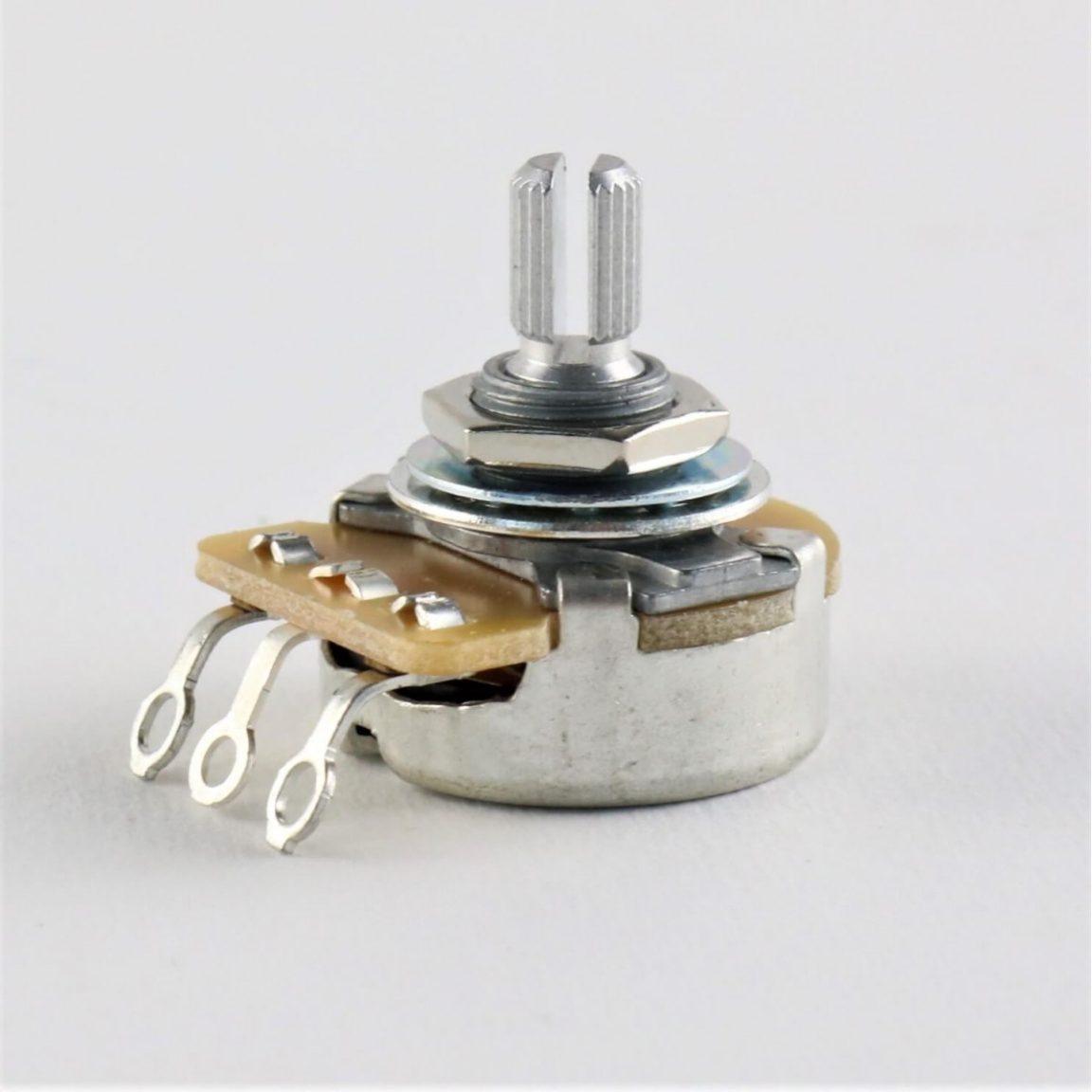
The first potentiometers began as practical, inexpensive and relatively reliable solutions. They were simple components based on a resistive track and a slider that ran mechanically along it. Turning the knob varied the amount of signal that continued to the next stage. For a long time this approach was considered more than sufficient, especially at a time when the focus was primarily on power and robustness. Devices were filled with controls that ran the signal through a potentiometer, yet, even then, sensitive listeners were beginning to perceive that volume was not a simple tap, but an element that could affect all the parameters of listening. Over the years, the limitations of traditional potentiometers became more and more apparent. Mechanical wear and tear led to hiss and discontinuities, tolerance between channels caused annoying imbalances especially at low listening levels, and the quality of the resistive track became a critical factor. This was the context for the long evolution to increasingly refined potentiometers to true benchmarks. TheHQ Pro from ALPS represents, for many enthusiasts and designers, the highest level this technology has reached. It is not only the best-built component, but the synthesis of decades of experience: selected materials, extremely uniform resistive tracks, precise and smooth mechanics, and above all, a consistency between channels that drastically reduced one of the historical flaws of potentiometers. At that moment, the potentiometer showed that it could be not only acceptable but even refined, capable of accompanying high-end systems without becoming their weakest link-it was the 2000s.

In the late 1980s, however, a single, brilliant designer, Jeff Rowland, built a relay volume control and remote control into his Consonance preamplifier. It was a noisy system-the microrelays of today did not yet exist-but it was completely innovative, not least because it used a telephone-derived matrix that ran the signal through a single resistor. Thus the idea grew that volume control could be rethought in a more radical way. If variability and mechanical inaccuracy was the problem, why not eliminate it from the signal path altogether? This is how relay-based volume controls, based on electronically switched networks of selected resistors, began to become popular. In this approach, the knob or control does not act directly on the signal, but controls a series of relays that insert or exclude precise resistors, creating an extremely accurate attenuation scale that is now called RR (relay-resistor). The appeal of this solution lies in its apparent purity: the signal passes through only fixed resistors, often of the highest quality, and contacts that, if well designed, introduce very little unwanted variation. For many listeners, relay controls have been a revelation, offering a sense of control and stability that seemed unattainable with traditional systems.

However, even this route is not without its compromises. Relay controls can be complex, expensive, and sometimes inelegant in terms of user experience. The mechanical click of the relays, the granularity of the volume steps and the need for dedicated control circuitry make them more suitable solutions for a knowledgeable audience willing to accept some rigidity in exchange for maximum precision. In this scenario, evolution has not stopped, but has begun to look toward integration and miniaturization.
Not only relays
Modern chip-based volume controls, such as those in the MUSES, represent an interesting synthesis of all the previous steps. These devices integrate within them extremely precise resistive networks that are digitally controlled but designed with maniacal attention to the analog signal path. The idea is not to “digitize” volume, but to use digital control as a means of achieving accuracy and repeatability impossible to achieve with purely mechanical systems. With MUSES chips, the volume becomes smooth, perfectly balanced between channels, quiet and predictable, even at very low listening levels, where historically the most glaring faults manifested themselves.
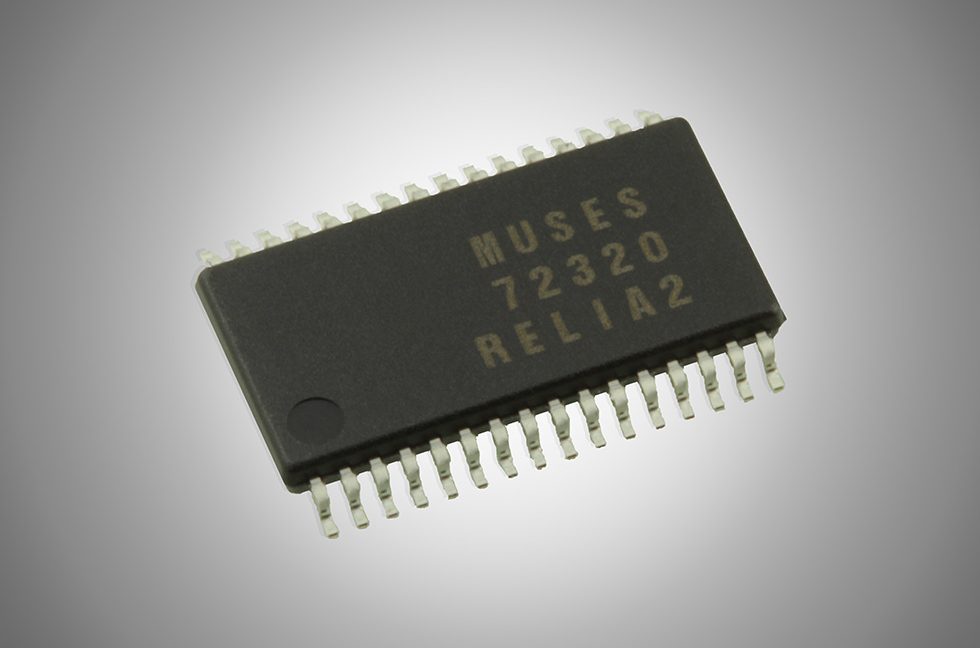
Looking at the entire journey, one can see that each stage in the evolution of volume controls reflects a different priority. Traditional potentiometers were born for simplicity and accessibility, high-end potentiometers such as ALPS’s HQ Pro for refinement and mechanical precision, relay systems for purity and absolute control, the AAVA from Accuphase (here our in-depth review) for circuit coherence and level management without direct resistive signal attenuation, and finally modern chips such as MUSES for integration, coherence, and practicality without sacrificing perceived quality. This is not a straight line leading to a definitive solution, but a range of possibilities that respond to different sensitivities and philosophies. After all, volume control remains a human gesture, even when mediated by complex circuits and sophisticated microchips. Its evolution chronicles the constant attempt to bring the listener’s intention ever closer to the sonic result, reducing obstacles, distortions and imperfections along the way. And it is perhaps this quest, more than the individual component or technology, that defines the real progress in the way we interact with music.




GIPHY App Key not set. Please check settings