



 Audio 2G
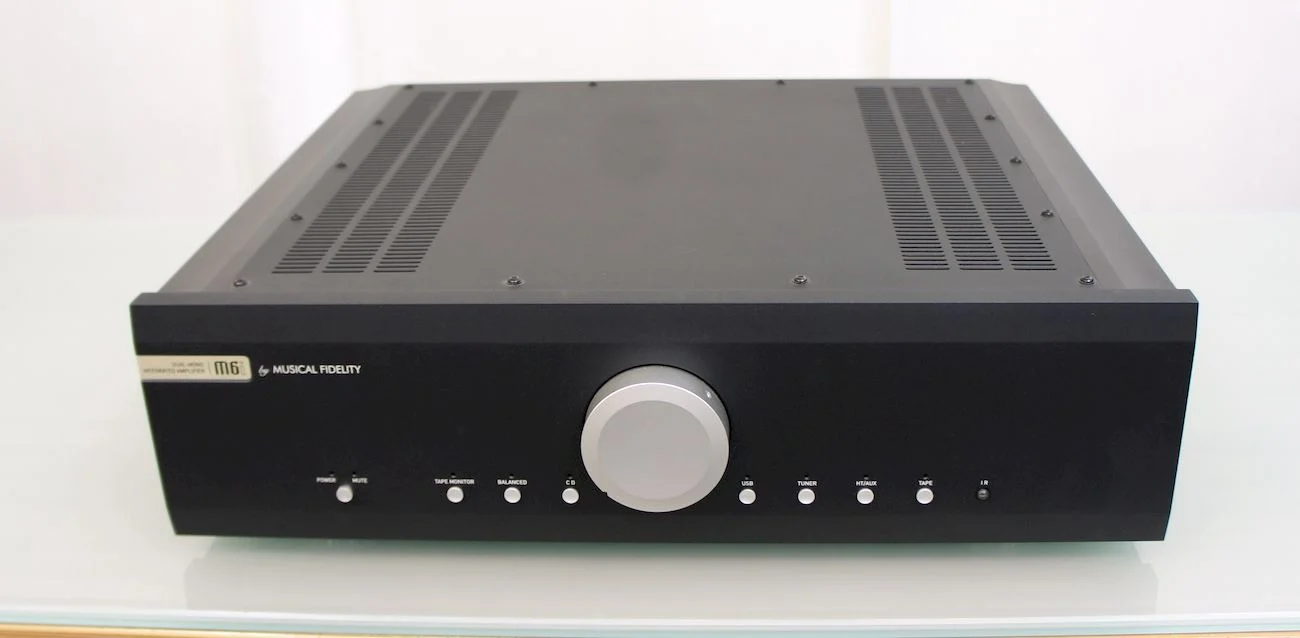
Among the most representative models of this phase were the M3i, the M6i, and the subsequent M3si, M5si, and M6si. The M5si was one of the first major projects overseen directly by Simon Quarry, an engineer who joined Musical Fidelity in 2001 and went on to play a central role even after the change in ownership. Quarry also participated in the development of the M6 500i, a large dual-mono integrated amplifier, and the kW250S. The continuity of Musical Fidelity’s design philosophy cannot, therefore, be described simply as a break between the Michaelson era and the Pro-Ject era: certain engineers and several design concepts spanned both phases.
During the 2010s, the product lineup expanded further. The V90 series featured compact and relatively affordable electronics; the MX series occupied the mid-range segment; and the M3, M5, M6, and M8 families formed the core of the traditional product line. The Nuvistor series returned to the top with models such as the Nu-Vista 800, introduced in 2014 and marketed in the years immediately following. The Nu-Vista 800 was therefore already a product of the Michaelson era and not the result of subsequent ownership. The same applies to the M8 components and to much of the catalog’s structure that Audio Tuning would inherit in 2018.
Michaelson also sought to bring Musical Fidelity into the connected audio systems market with the Encore line, introduced in the mid-2010s. The Encore 225 and Encore Connect combined ripping, storage, streaming, and digital conversion capabilities—and, in the case of the Encore 225, built-in amplification. It was an ambitious attempt to transform Musical Fidelity from a manufacturer primarily focused on analog amplification into a provider of complete systems for digital music. However, the move also highlighted just how complex it had become for a traditional Hi-Fi manufacturer to directly support the development and updating of IT platforms, network software, and user interfaces.
On May 8, 2018, Antony Michaelson sold Musical Fidelity to Audio Tuning Vertriebs GmbH, an Austrian company controlled by Heinz Lichtenegger. The correct statement is this: Musical Fidelity was not acquired directly by Pro-Ject Audio Systems, but by Audio Tuning, the group that also owns Pro-Ject and of which Lichtenegger is the owner. The relationship between the two companies was, however, very close. Audio Tuning had been distributing Musical Fidelity in Austria for over twenty years, and Lichtenegger had been familiar with the brand since he first entered the Hi-Fi industry.

The official press release announced that Michaelson would remain involved as a design consultant, that the core technical staff would be retained, and that the existing production facilities would continue to be used. The change in ownership therefore did not coincide with the launch of a new M series or a complete overhaul of the product lineup. Audio Tuning inherited a company that already had the M3, M5, M6, M8, Nu-Vista, MX, LX2, and V90 series and possessed a very extensive design archive.
The first product fully developed under Heinz Lichtenegger’s leadership was the M8xi, which went on sale in April 2020. Here, too, the story is more complex than it might seem. The general concept for the amplifier had been established between 2017 and 2018 by the previous Musical Fidelity, but the final design was developed in 2019 by a team consisting of Lichtenegger, Simon Quarry, and engineers from the manufacturing partners Canor and HiPro. The M8xi is therefore a true transitional product: it stems from an idea conceived during the final phase under Michaelson’s leadership but was finalized and brought to production by the new ownership. It is an integrated amplifier delivering 550 watts per channel into 8 ohms, featuring a dual-mono power supply, an independent preamplifier section, and an internal DAC. With Audio Tuning, production was gradually transferred and organized through an industrial network in which Canor, a Slovak company specializing in the manufacture of audio electronics, played a key role. At the same time, Musical Fidelity has continued to draw on the expertise of Simon Quarry, who returned to the company in 2019 after a brief stint elsewhere. The new ownership has updated the existing product lines and developed new products without compromising the brand’s traditional emphasis on generous power supplies, available power, analog circuitry, and driving capability. One of the most significant projects under Lichtenegger’s leadership was the renewal of the Nu-Vista family. This was not a matter of reviving a defunct name—since the Nu-Vista 800 was already in the lineup prior to the sale—but rather of transforming Nu-Vista into a more comprehensive and structured product line. This led to the introduction of the Nu-Vista PRE, the PAS and PAM power amplifiers, the DAC, the Vinyl 2 phono preamp, and the new versions of the Nu-Vista 800.2 and 600.2 integrated amplifiers. Continuity with the past is evident in the use of Nuvistors and the hybrid architecture, while the separate power supplies, mechanical construction, and internal layout have been redesigned for contemporary production.
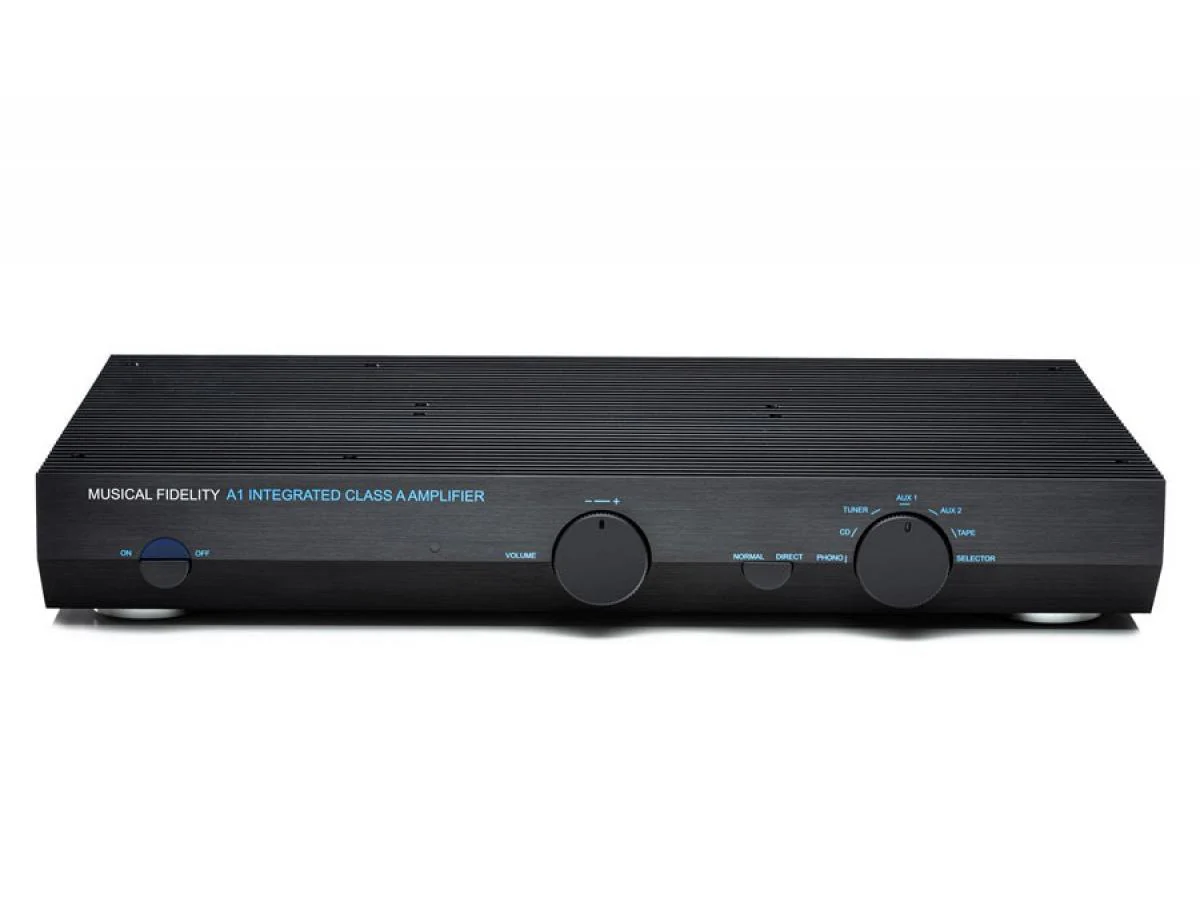
The most striking historical revival, however, was that of the A1 (see the review here). Lichtenegger had a personal connection to that amplifier, which had been one of the first major products he distributed during his early career in Austria. After the acquisition, he wanted to bring it back into production—not simply as a modern device inspired by the original, but as a reissue that was as faithful as possible. Musical Fidelity had already revived the A1 name in 2008, but that model—while reminiscent of its predecessor both aesthetically and conceptually—featured a different circuit design. The 2023 project took a different approach.





GIPHY App Key not set. Please check settings