



 Audio 2G
The new A1 was developed by Simon Quarry based on historical schematics and examples. The preamplifier circuit replicates that of the original model, and the layout of the sections on the board faithfully follows the design of the era. However, this is not an indistinguishable replica. The transistors are selected modern equivalents, the passive components have been updated, the potentiometer is a motorized ALPS RK, a remote control has been added, and a “Direct” control allows one gain stage to be bypassed. The power supply has been modified by adopting separate windings for the two channels; the filtering capacitance has been increased; and noise, hum, and heat dissipation from the transformer have been reduced. The MM/MC phono stage has also been revised. It is therefore accurate to describe it as a faithful reissue in terms of topology and design philosophy, yet technically updated in its components, power supply, internal layout, and functions.
Today’s Musical Fidelity is not simply a subsidiary of Pro-Ject, nor is it an unchanged continuation of Michaelson’s company. It is a brand owned by Audio Tuning, part of the same industrial group as Pro-Ject, which retains its own design identity and independent product lineup. The Michaelson era defined the brand’s design language: the A1 and Class A models, the power of the A370, the hybrid combination of tubes and transistors, the small cylinders of the X series, the Nuvistors, the Tri-Vista and kW series, the Titan, and finally the M families. The Lichtenegger era inherited this legacy, reorganized it from an industrial standpoint, and chose to use it as the foundation for new products and carefully updated reissues of historic models.
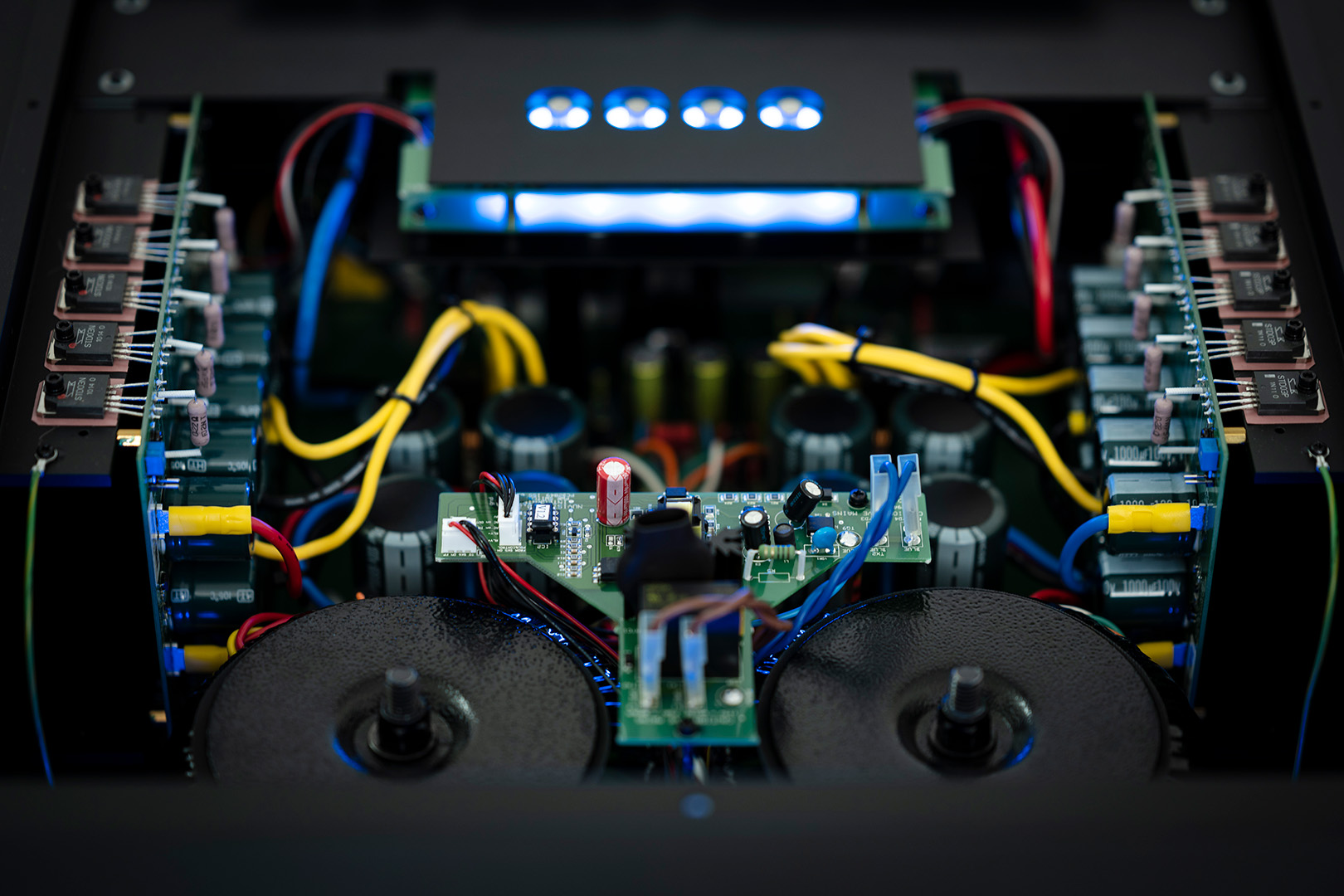
Over the past forty years, Musical Fidelity has frequently changed its form, size, and price range. It has built small, high-powered integrated amplifiers, one-kilowatt power amplifiers, separate DACs when digital audio was still in its infancy, affordable tube buffers, CD players with unusual designs, all-in-one systems, fourteen-tube preamplifiers, and modern hybrid electronics with separate power supplies. Its identity cannot be reduced to a generic “British sound” or to a single technology. Rather, the true common thread has been the attempt to combine musicality, driving power, and value for money, moving fearlessly from the affordable to the most extreme high-end.
The A1 remains the product that best encapsulates this history. It is not the most powerful, the most complex, or the most expensive device ever built by Musical Fidelity, but it is the one that has most clearly defined the brand’s reputation. Its reissue, nearly forty years after the original, is not merely a nostalgic endeavor: it demonstrates how the transition from Antony Michaelson to Heinz Lichtenegger and Audio Tuning has been interpreted above all as a critical continuity, in which the brand’s historical legacy is preserved but not simply frozen in time.




GIPHY App Key not set. Please check settings